

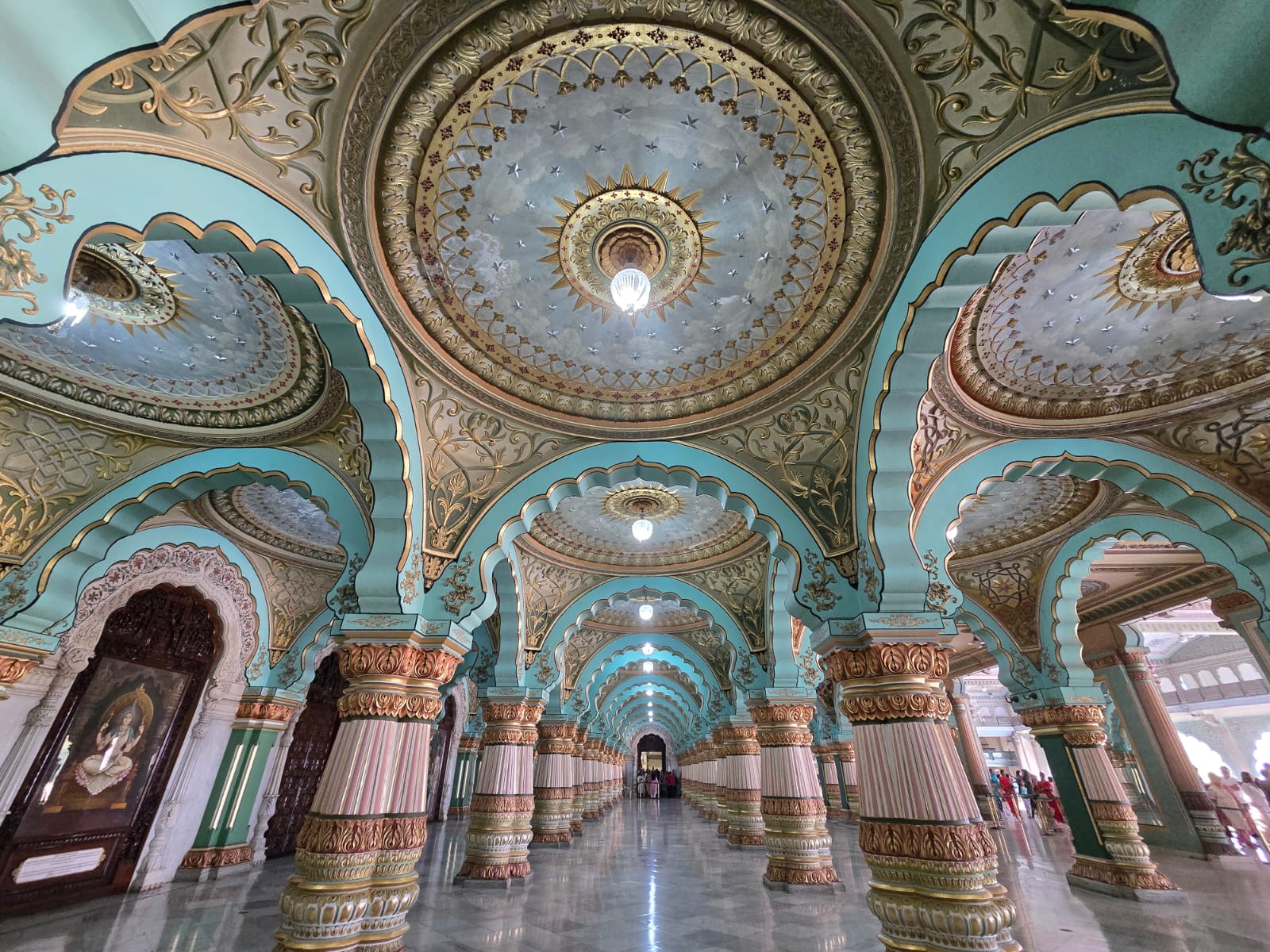
Sunday dawned. We decided to catch up with the world outside and stay put for the morning. After himself had his first-ever ayurvedic massage (he’s now a convert), Suhas gave us a private tour of the palace. The Queen’s room (222) was the one I’d choose. The King’s room next door (333) had carpet instead of a wooden floor and was bigger but not quite as grand.
Then it was back downtown to see St Philomena’s Cathedral. Technically, it’s the Cathedral of St Joseph and St Philomena. Built in 1936 during the reign of the much-loved Maharaja Krishnaraja Wadiyar IV, its architects were inspired by the cathedral in Cologne, Germany. Today, it’s one of the tallest churches in Asia.
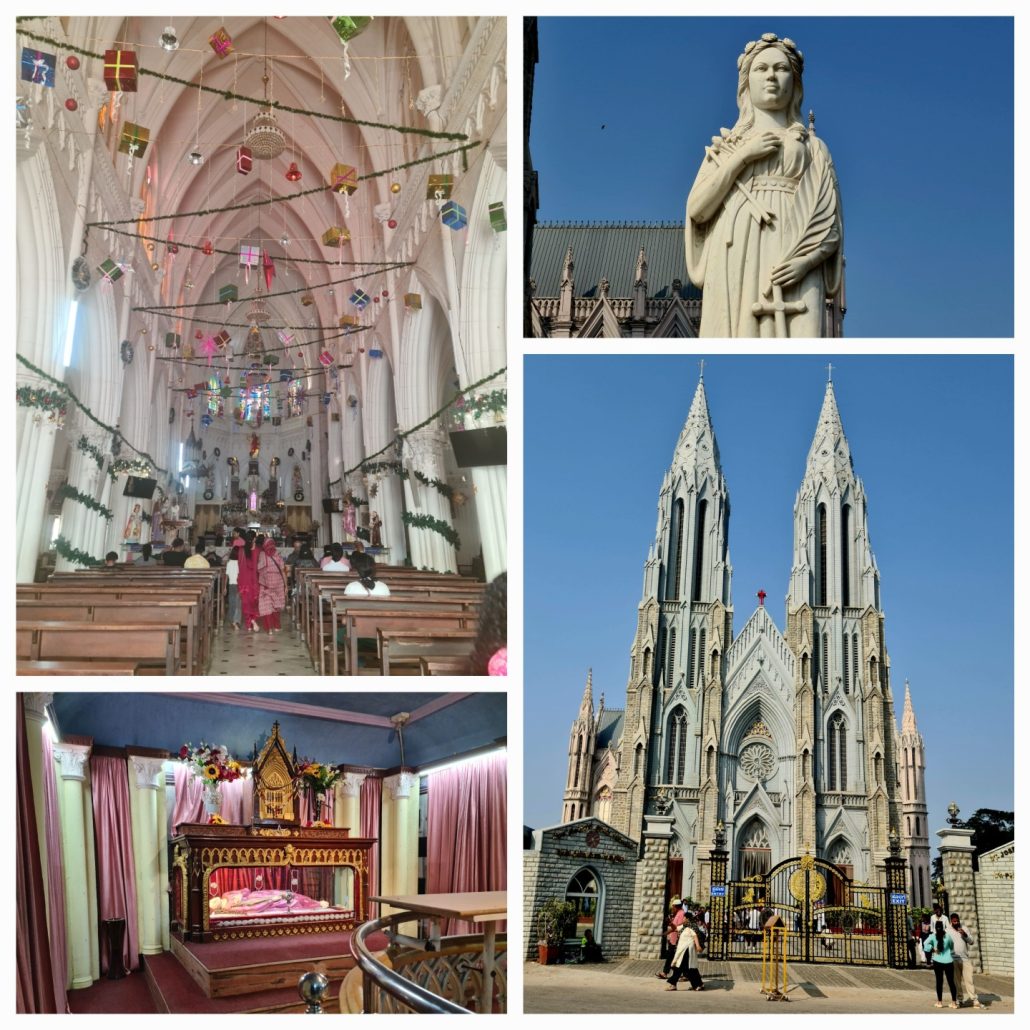
I’ve a fondness for St Philomena as I have my Auntie Phil’s statue of Our Lady in the living room in the village where she recently saved the house from going up in smoke. I couldn’t be in town and not pop by to say hi and pay my respects to her remains, or part of them at least.
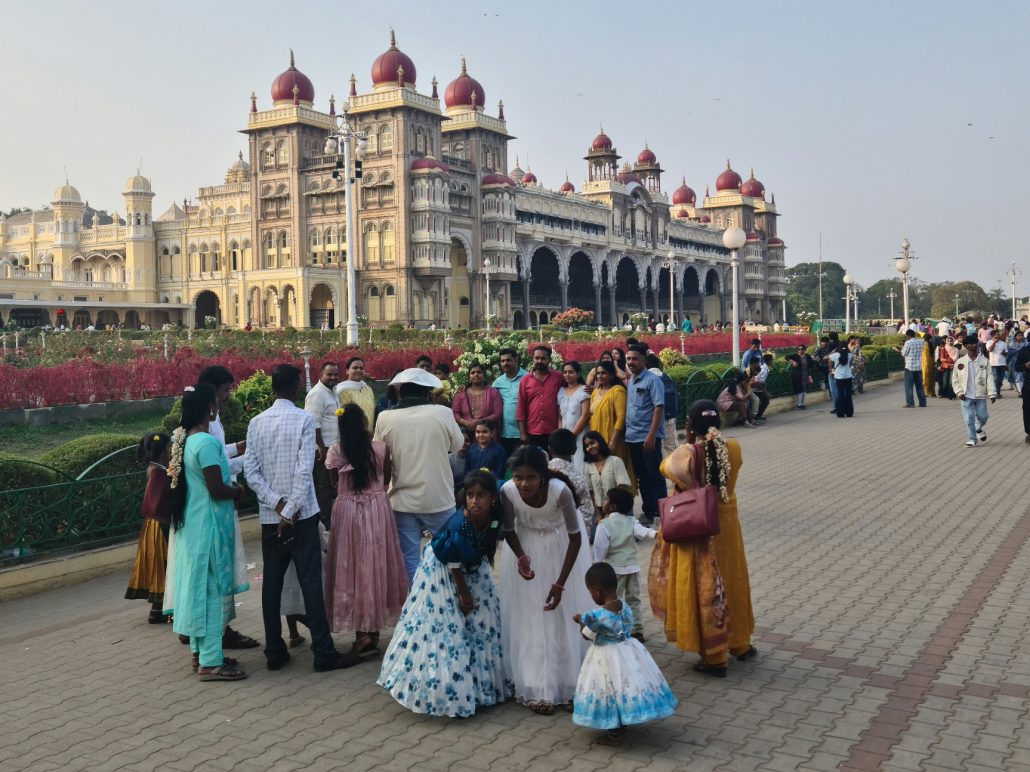
Then it was to see Mysuru Palace – the reason most people visit the city.
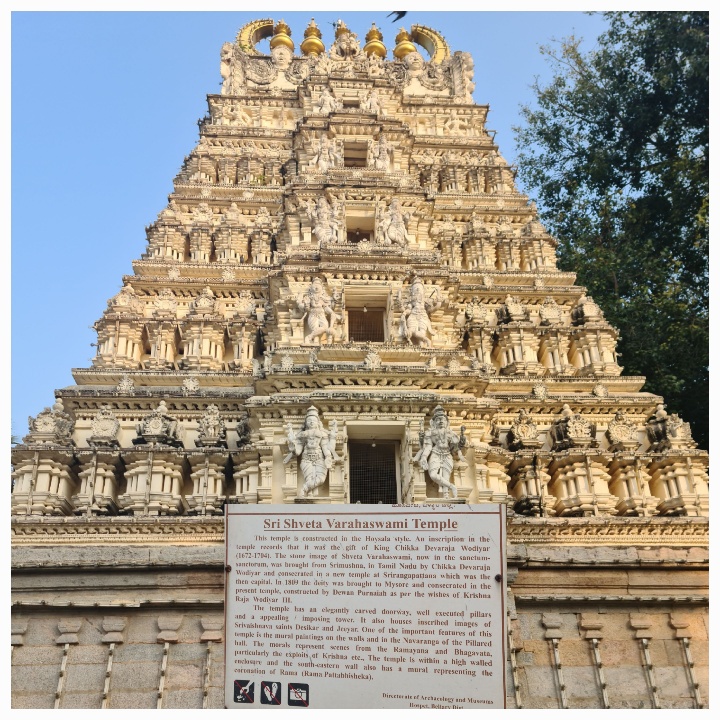
Just inside the gate, we passed the Sri Shveta Varahaswami Temple. These carved temples are a fantastic testament to patience and perseverance. We’d seen another example of this Hoysala style when we visited the Chennakeshava Temple. The detail is gobsmacking.
Most monuments and places of interest have a separate entry fee for foreigners – which is absolutely fine. We got our tickets (€10 each), dropped our shoes at the shoe check, and headed inside.
We turned down the first guide who offered, but something clicked with the second – Nagendra R.
And we were glad. Not least because he walked us through queues and pointed out what we should pay attention to, and even took himself’s phone to take photos, knowing the angles and the settings needed to get the right ones.
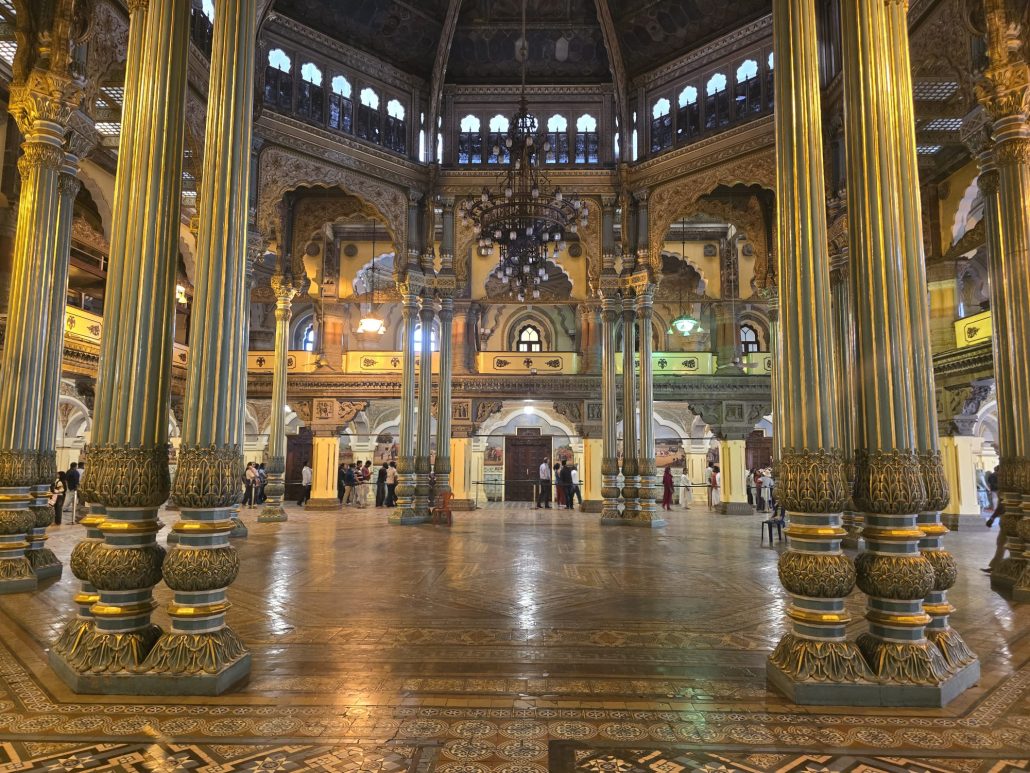
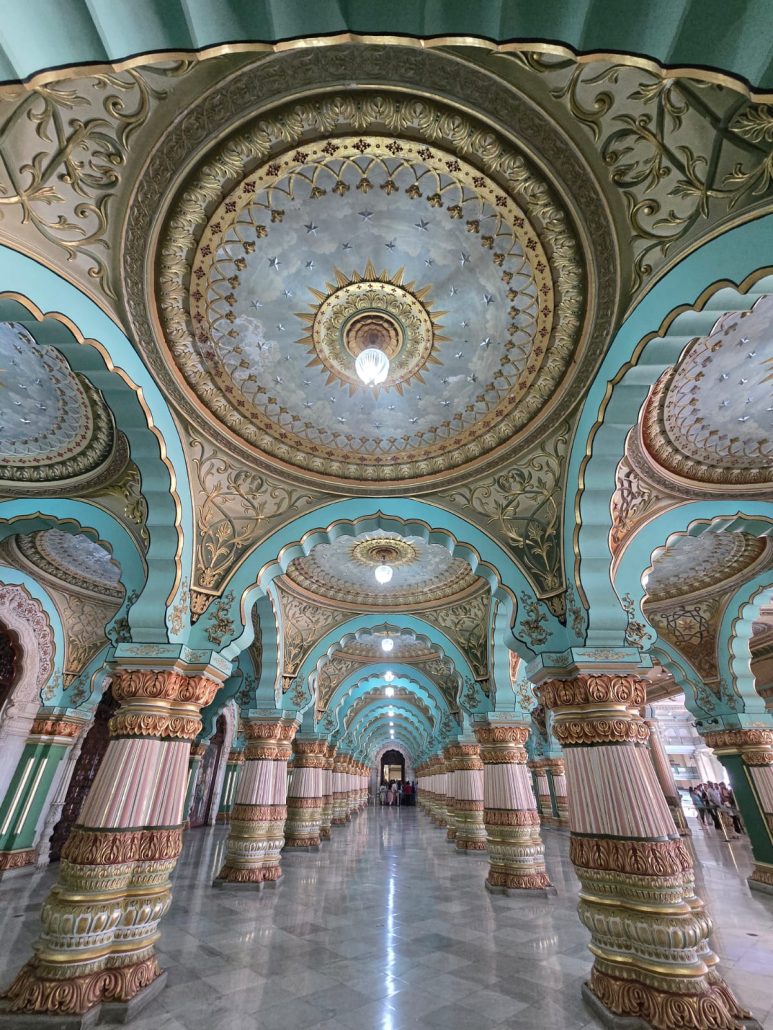
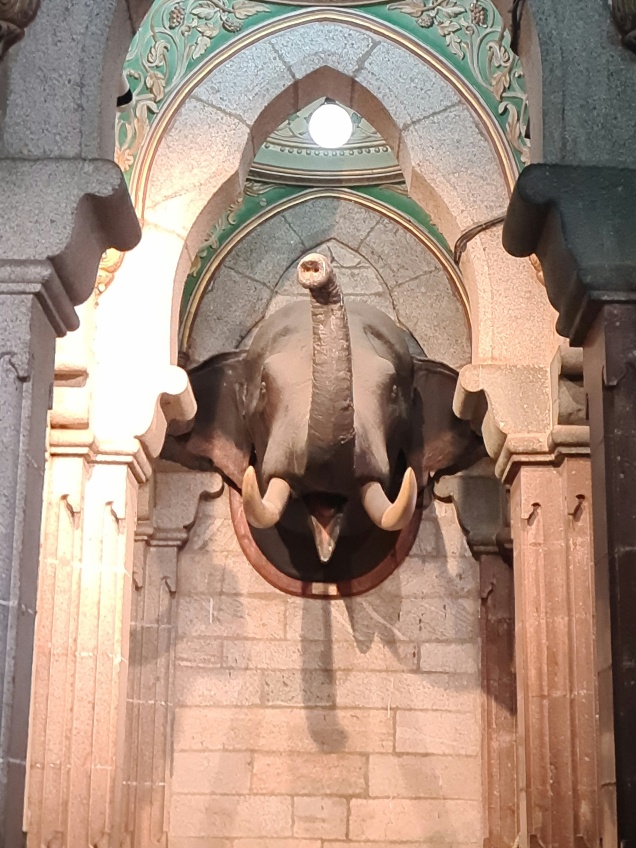
He pointed out the two elephant heads, hunted in 1956, taking care to tell us that the tusks weren’t ivory as since the 1970s, ivory is illegal in India.
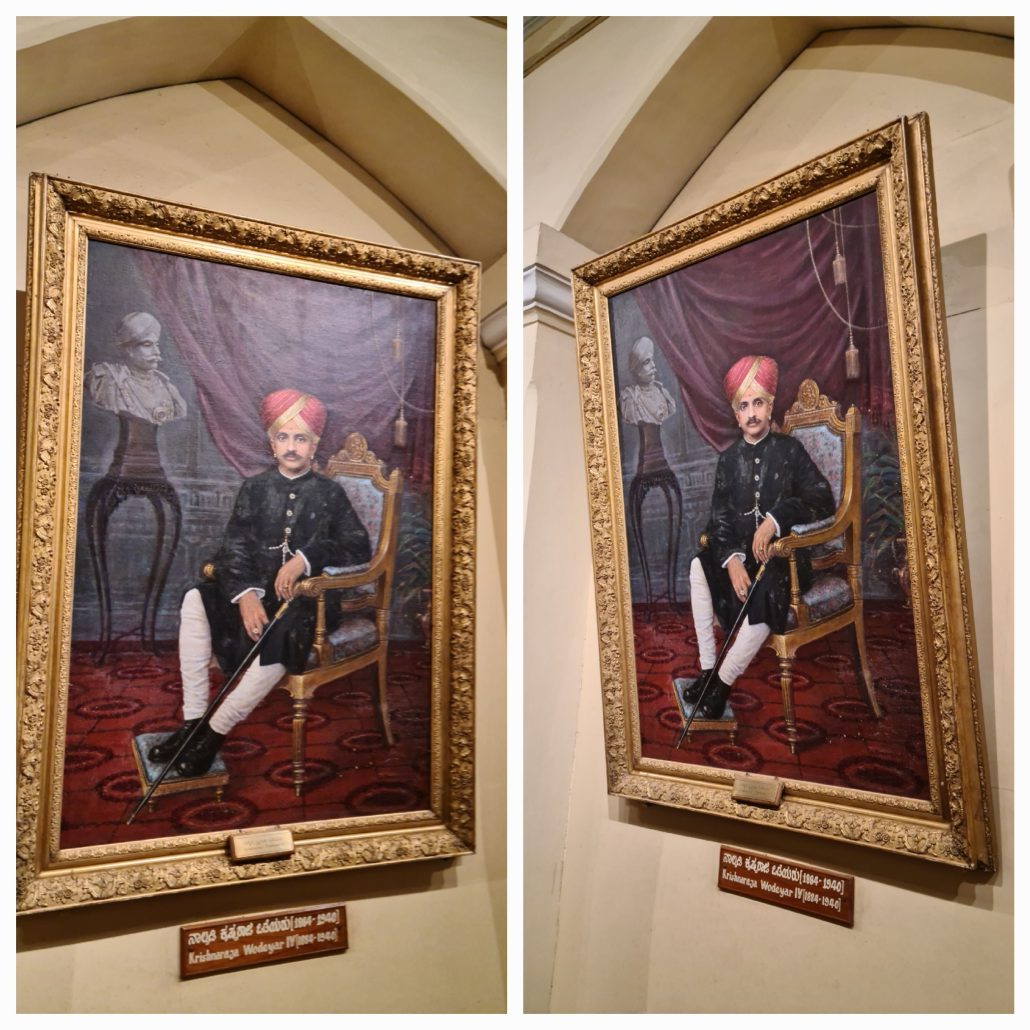
He told us that it took six artists from 1931 to 1944 to paint one of the rooms and that all the faces we saw were of real people, and many were in 3D. No matter which angle you looked at them, the eyes followed you.
Sometimes he would illustrate his story with a short video. He showed us images of the throne that contains 280 kg of gold. And the 750 kg Howdah, which also has 80 kg of gold. Mindboggling.
He pointed out India’s first engineer, Sir Mokshagundam Visvesvaraya (Sir MV), whose birthday, 15 September, is celebrated as National Engineers Day.
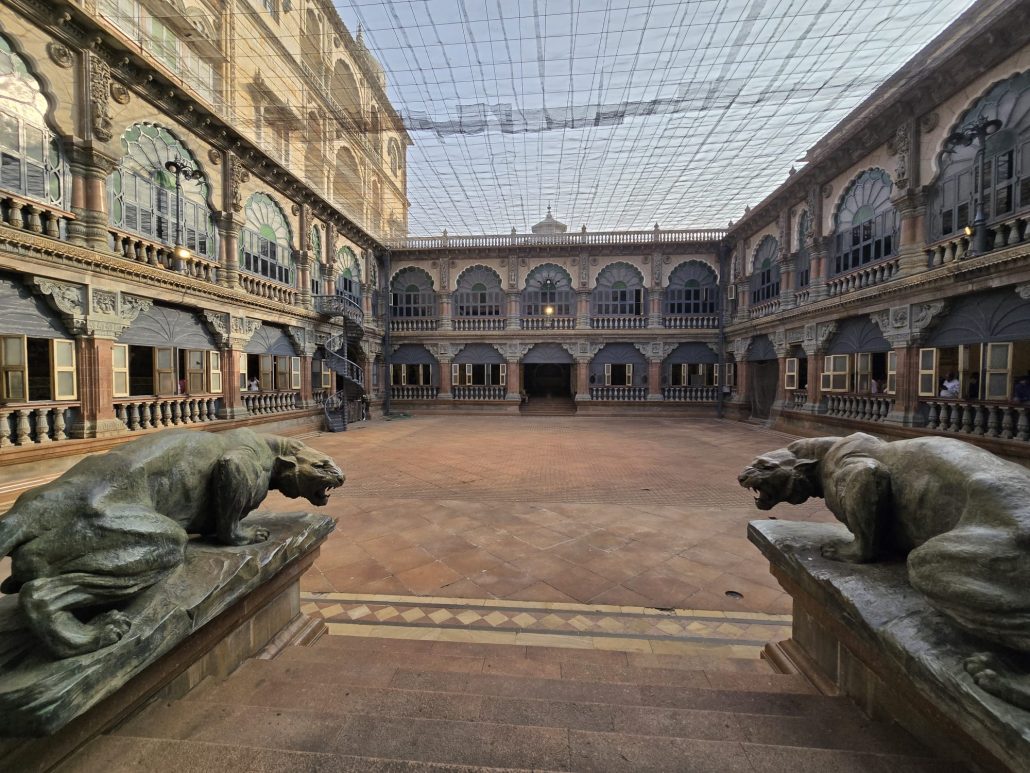
We saw the bronze jaguars in the courtyard and Nagendra R showed us a video of sumo wrestlers doing their thing there in times past.
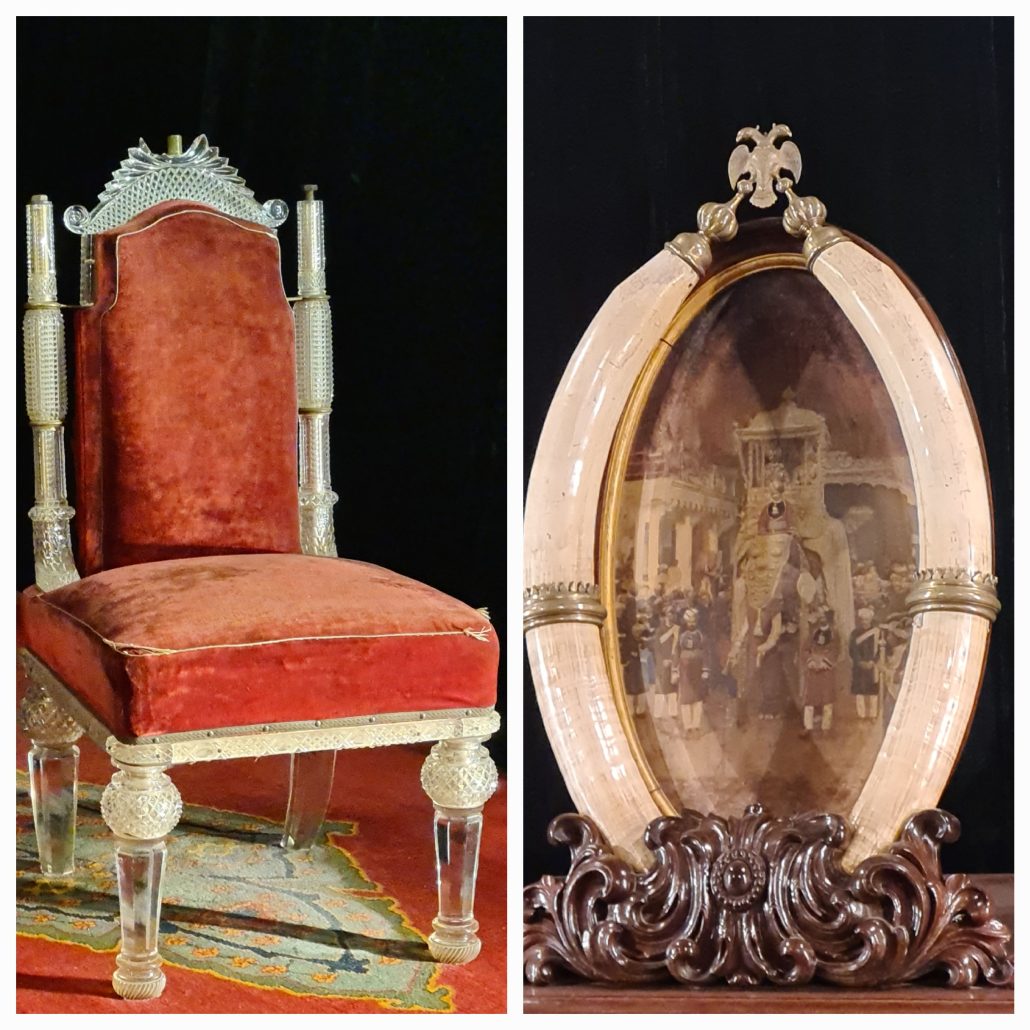
I was very taken with the crystal chair from Belgium and the silver door (not pictured) worth some €15 million. In this old photo in the ivory frame, if you look closely, you can see the Maharaja riding on the howdah. This no longer happens.
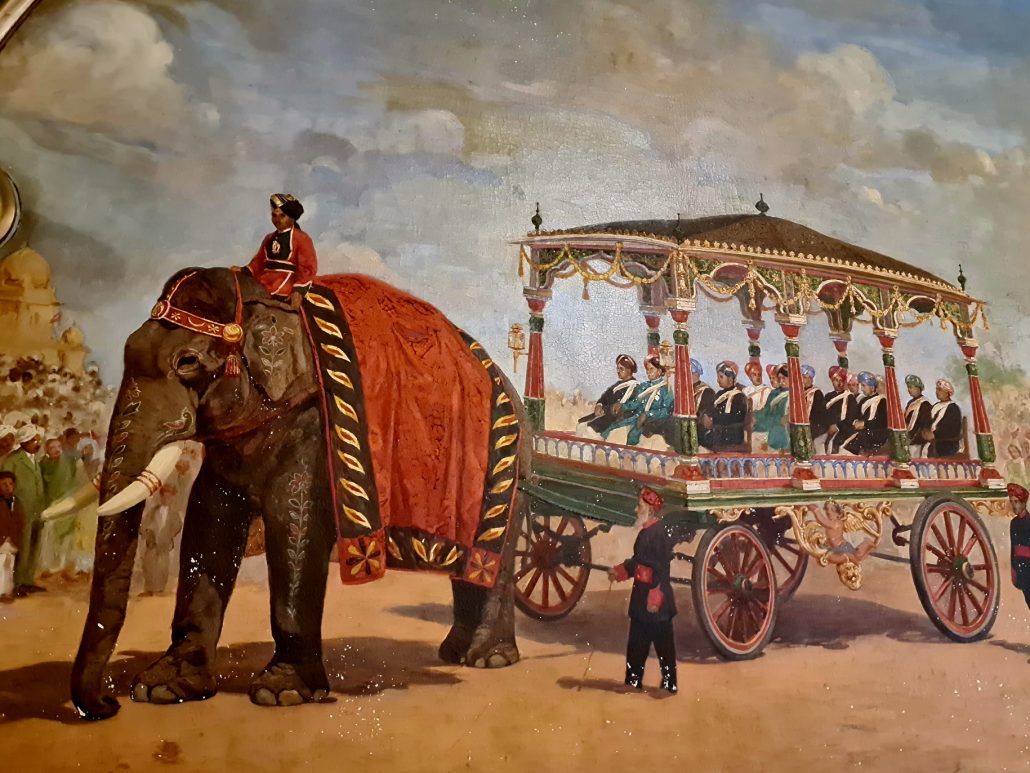
The last Maharaja of Mysore to ride in the howdah was Jayachamarajendra Wadiyar, who did so for the final time during the 1969 Dasara procession. The practice was officially discontinued the following year due to the changing political landscape in India:
- In 1970, the Maharaja placed a sword on the howdah and traveled in a car during the procession, following the central government’s announcement of the abolition of privy purses and royal privileges.
- In 1971, a citizen’s group organized a “Janata Dasara” (People’s Dasara) with a wooden howdah carrying a picture of Bharat Mata.
- In 1972, the state government took over the Dasara celebrations, and an idol of the patron goddess Chamundeshwari was placed in the original golden howdah, a tradition that continues to this day.
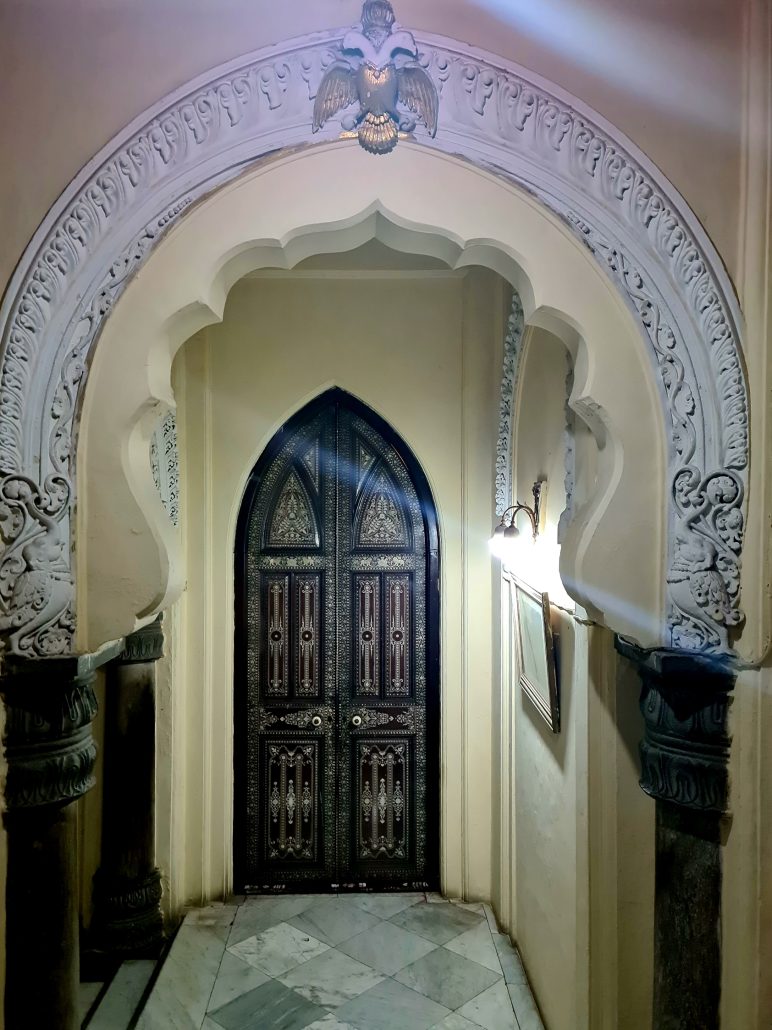
The door to the temple again gave a nod to the three religions – the temple itself is Hindu, the door is Christian and the arch, Muslim.
This is the third rendition of the palace. The first two, made of wood, burned down. One section of the 1804 palace remains, and of this, one room is open to the public. It’s stunning.
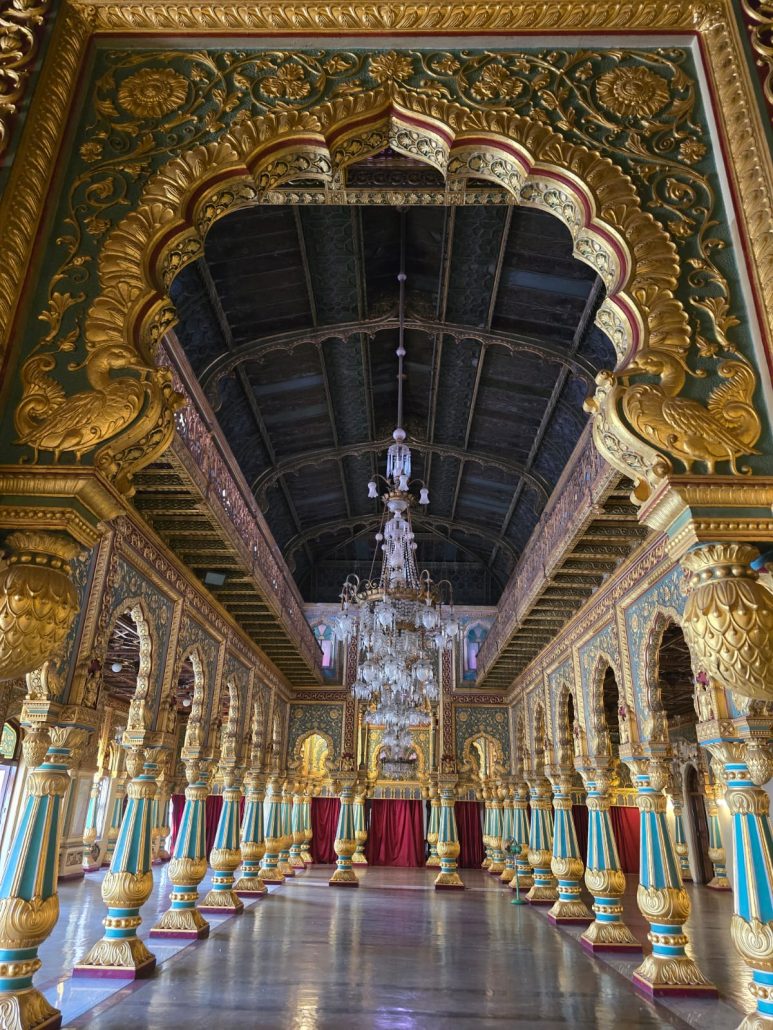
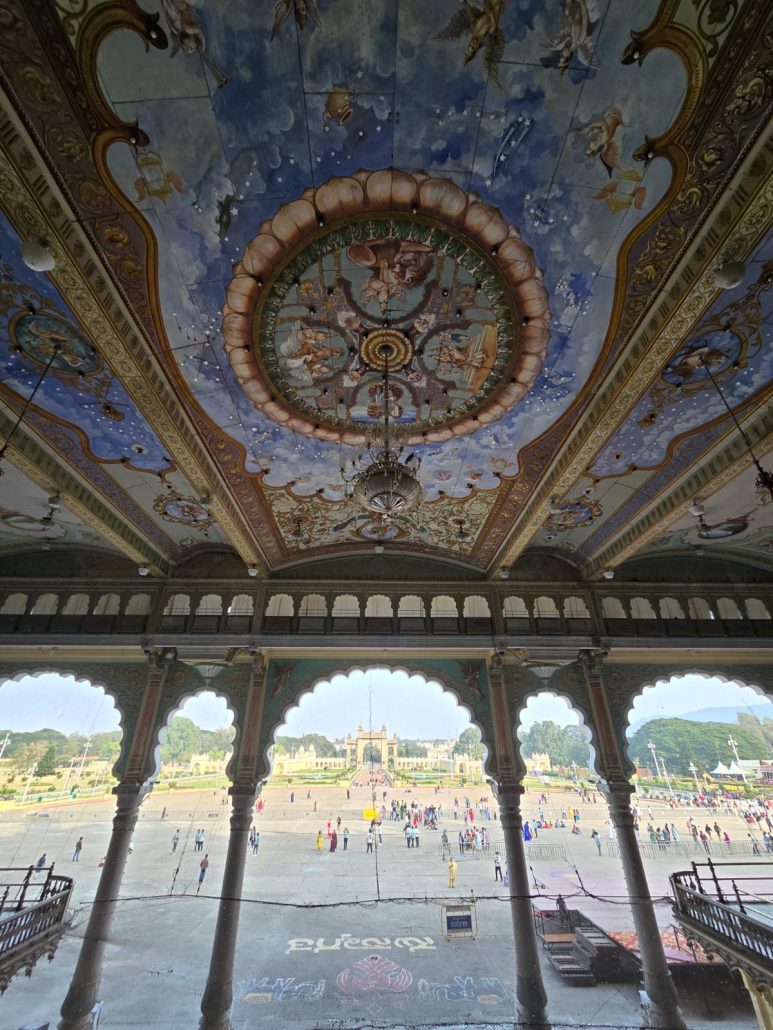
It didn’t take a lot of imagination to see the upper echelons watching the parade from the viewing stands.
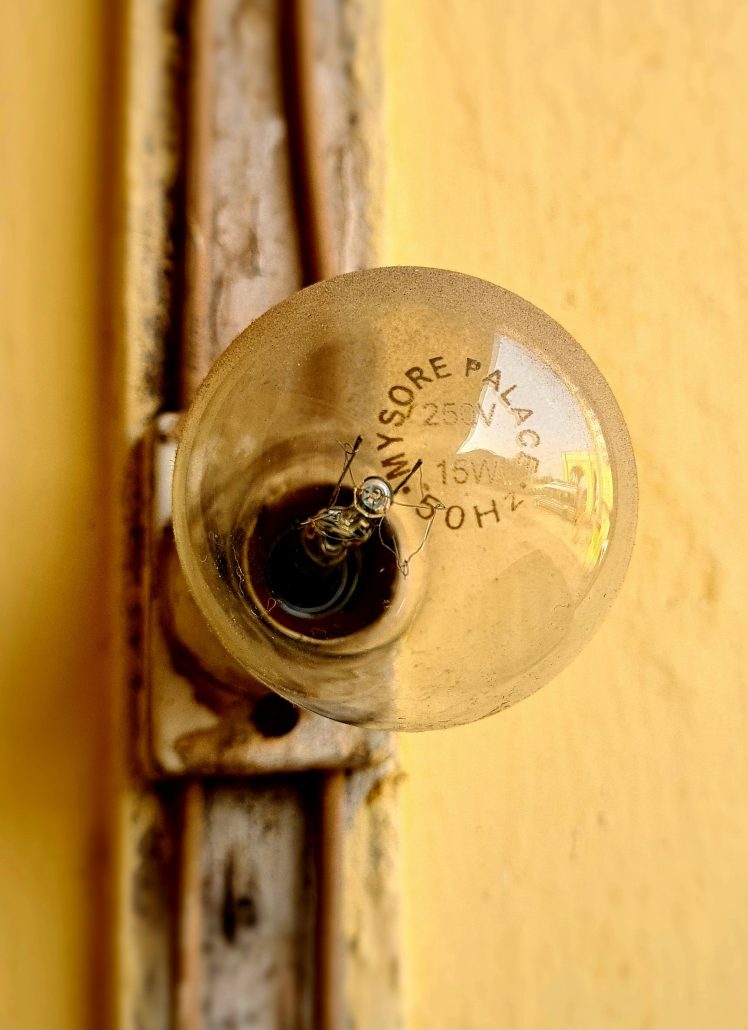
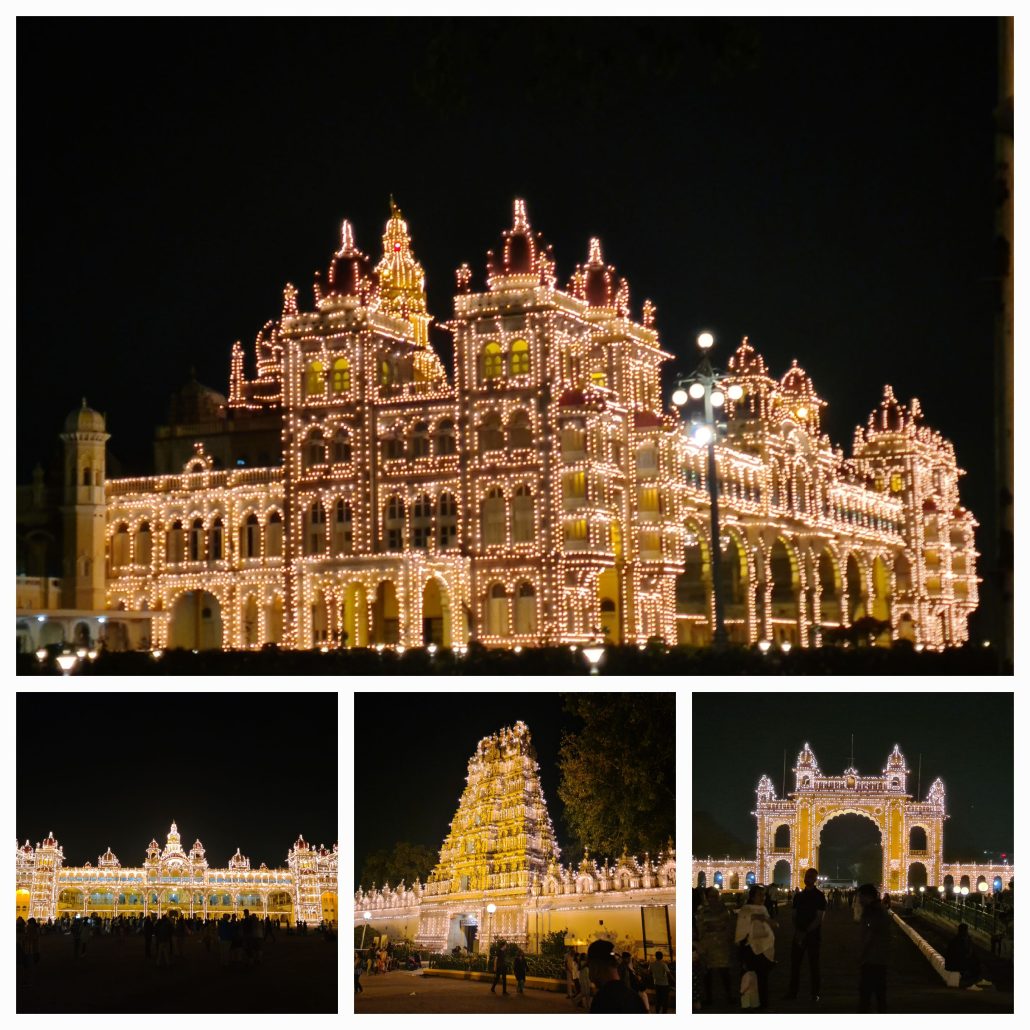
At 7 pm on Sundays and on holidays, the 97,000 light bulbs set on the palace walls light up. The army’s brass band plays live classical music. And the air is positively festive. We were lucky to see it all.
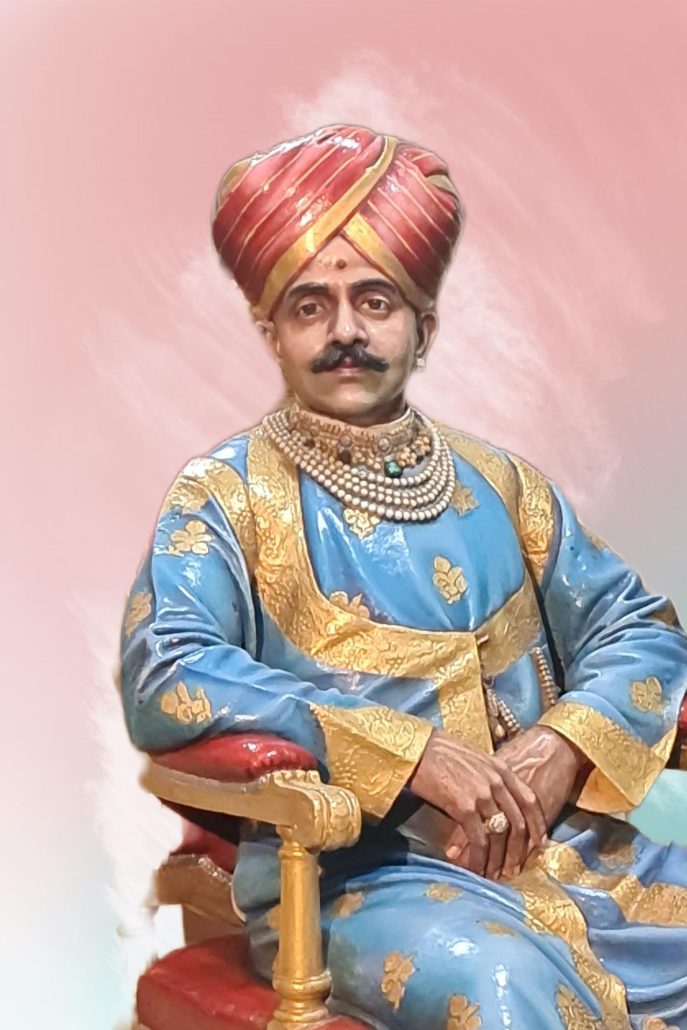
The love that is still felt for the 24th Maharaja, the little chap with a penchant for Rolls Royces (he was known to buy 7 at a time, inspiring the phrase among the company’s executives to describe buying cars in bulk as ‘doing a Mysore), is evident. He’s spoken of with something approaching reverence.
Under his leadership, Mysore witnessed significant progress. It became the first Indian state in Asia to generate hydroelectric power, and Bangalore (Bengaluru) became the first Asian city to have electric street lights, inaugurated on August 5, 1905. The Maharaja also contributed to the development of administrative practices by inviting princes from other regions of India to Mysore for training. Furthermore, Maharaja Krishnaraja Wadiyar IV actively promoted women’s welfare and abolished child marriage during his reign. He died in the year 1940. In an obituary, The Times called him “a ruling prince second to none in esteem and affection inspired by both his impressive administration and his attractive personality.”
He was an incredibly wealthy man who, back in 1940, was worth about US$400 million (that’s about $10 billion in today’s money).
Today, Mysuru is the yoga hub of India.
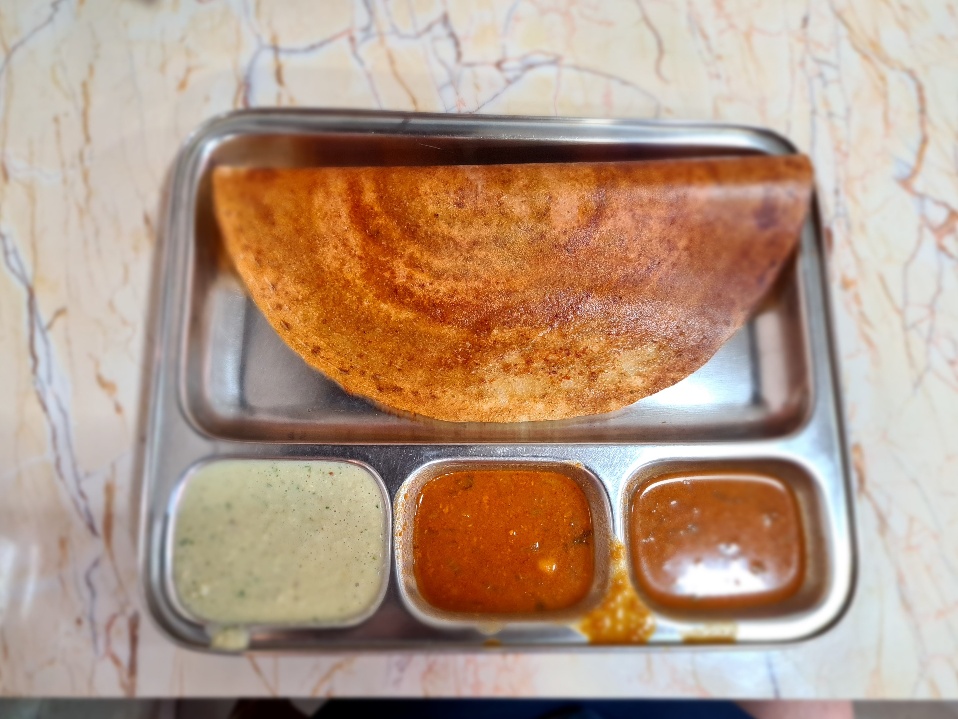
We ticked 4 of the 5 must-do boxes while we were there. We ate Mysore masala dosa (I’m a fan) and Mysore pak (not so much), and we visited a Mysore sandalwood workshop and Mysore Palace.
We missed out on doing anything related to Mysore silk.
Our three days in Mysuru were a great acclimation to the country. Left to fend for ourselves, we managed admirably. Himself found his feet in no time. He’s going to wait till the end of the trip to decide if he could live in India.
Watch this space.
Next up, it’s Bengaluru (formerly Bangalore).

One Response