
I’d been looking forward to our three days in Jaipur, mainly because of Judi Dench and Maggie Smith and the Best Exotic Marigold Hotel. As it was the last movie I saw with mam, there was a nostalgic significance to the trip.
But I didn’t do my homework.
The actual hotel where both movies were filmed is about 7 hours from Jaipur. It would have meant an overnight side trip to the side trip, and I wasn’t up for it.
Next time, Judy, I’ll do the research.
Neither of us was feeling too hot; we’d caught something on one of our train travels. So while the minds were willing, the bodies were weak.
I tell you this for context.
Jaipur didn’t disappoint; I was simply wrong in my expectations. It was my least favourite of every place we’ve visited. Any lingering thoughts of whiling out my years there have been firmly put to bed.
Known as the pink city, Jaipur is considered the place to go for cotton and gemstones. It supplies many familiar European clothing stores like Zara and Monsoon, and jewellers like Cartier. It got its name because in 1876, Maharaja Ram Singh decided to paint everything within reach in a terracotta pink – a colour symbolising hospitality – in honour of Prince Albert, who was paying a royal visit.
One hundred fifty years later, that terracotta pink, a colour I’ve never gelled with, is still on the walls.
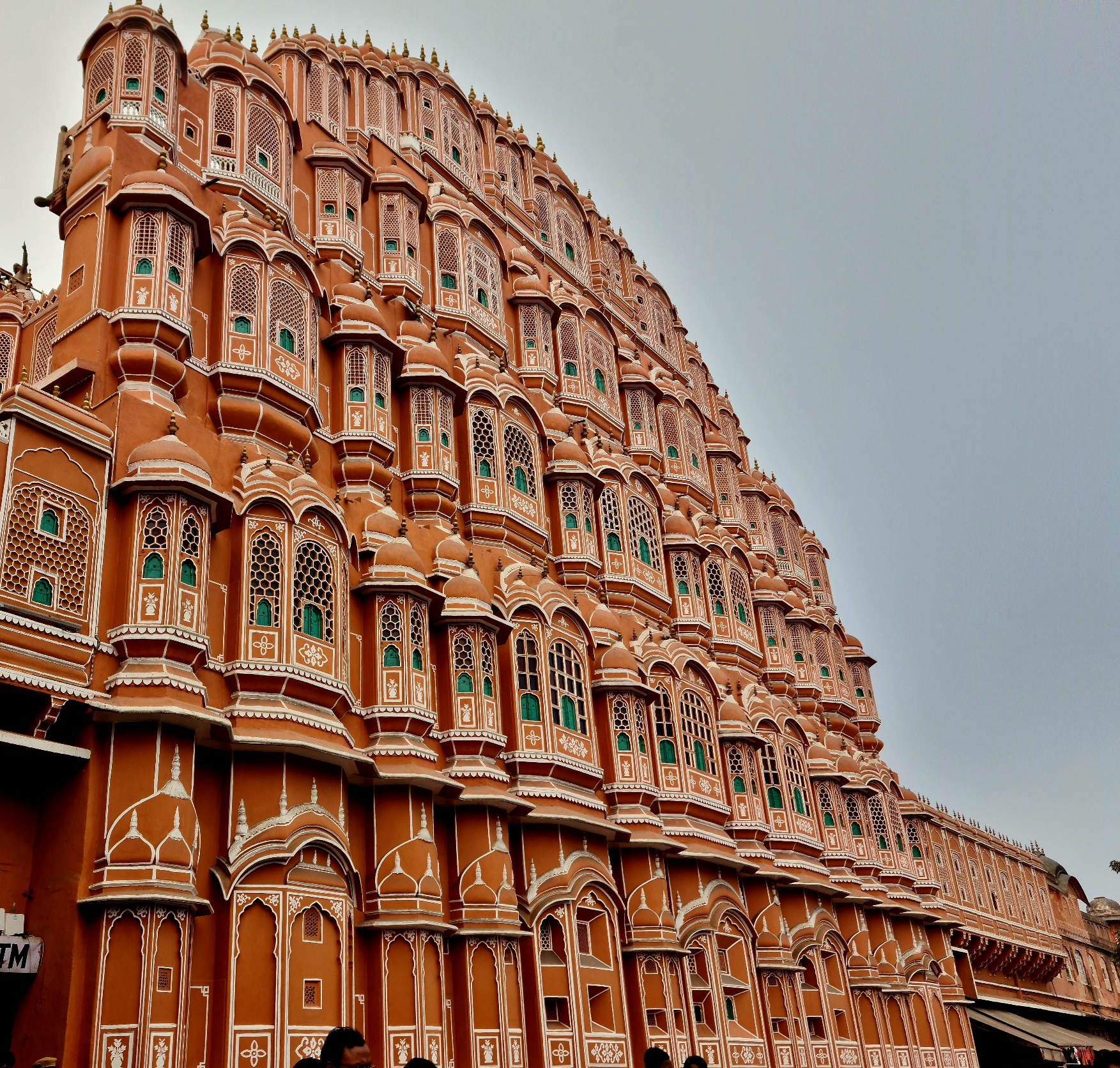
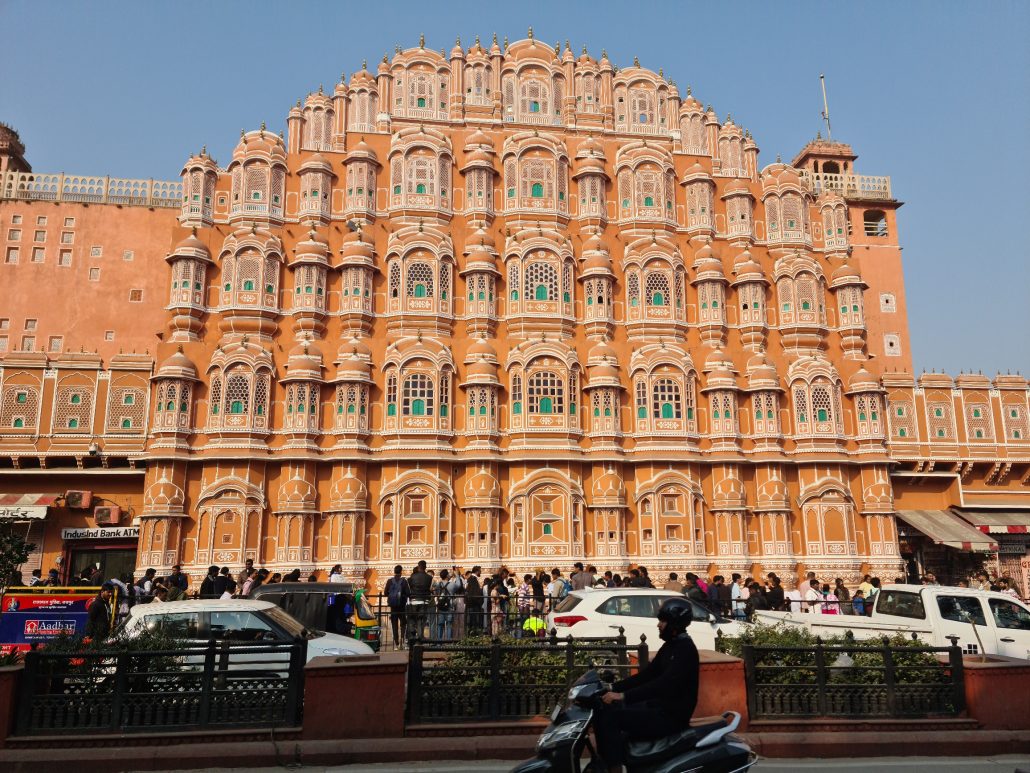
The Hawa Mahal, aka the Palace of the Winds, is an imposing piece of architecture.
Its five-floor exterior is akin to a honeycomb with its 953 small windows called Jharokhas decorated with intricate latticework. The original intent of the lattice design was to allow royal ladies to observe everyday life and festivals celebrated in the street below without being seen. This architectural feature also allowed cool air from the Venturi effect to pass through, thus making the whole area more pleasant during the high temperatures in summer.
The eastern facade, probably the most photographed spot in the city, is actually the back of the palace. We didn’t venture in; I was just about peopled out, and himself wasn’t feeling the best.
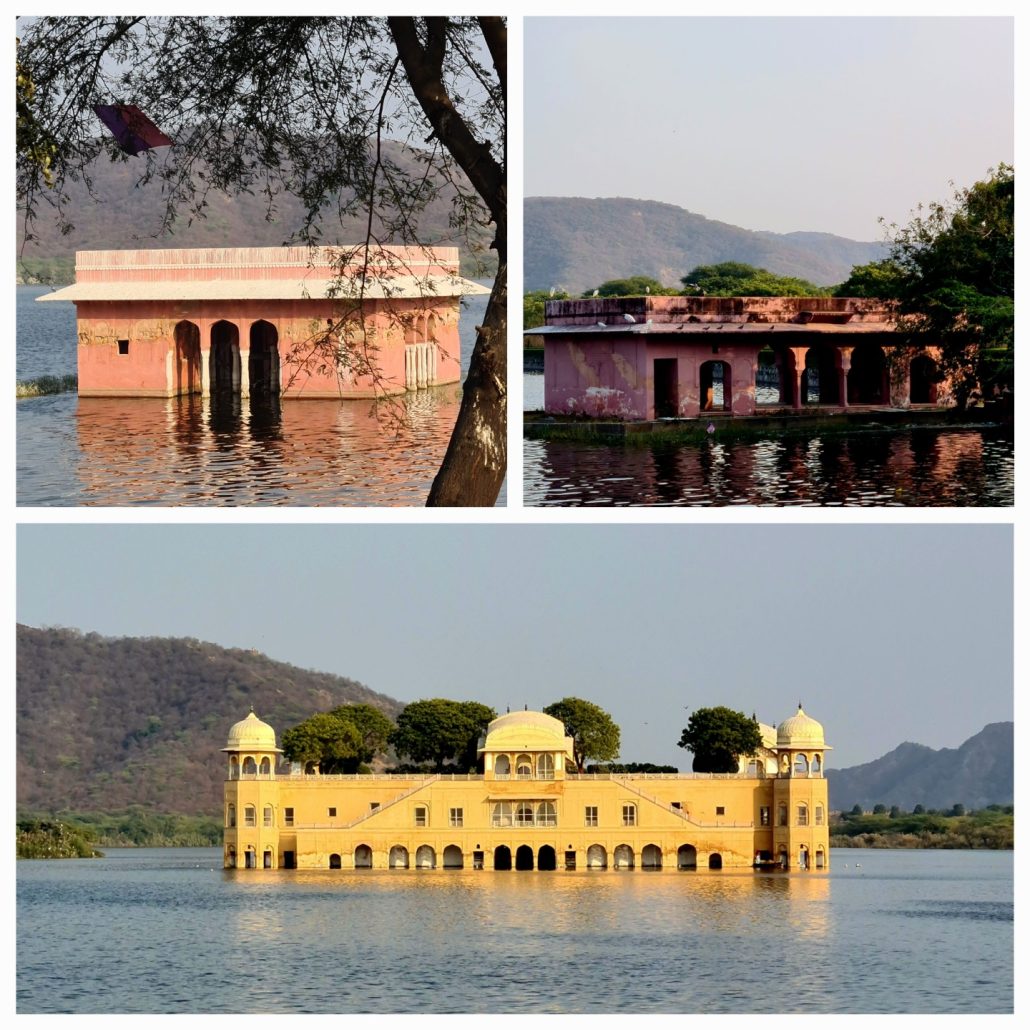
In the middle of Man Sagar Lake floats the Jal Mahal, aka the Water Palace. Only one of its four floors is visible, and although an impressive sight, it’s a little imposter.
Although the name translates to “Water Palace,” the building was never intended to be a palace, as such, but was instead conceived as a hunting lodge for the local Raja (King). In the 16th-century, a severe drought spurred the locals to create a dam, creating the lake that submerged the lower portions of the lodge.
This was selfie heaven. We could barely get to the railing for the rows and rows of people lined up to take photos. It’s one of the great unanswered questions I have: Where do all these selfies go?
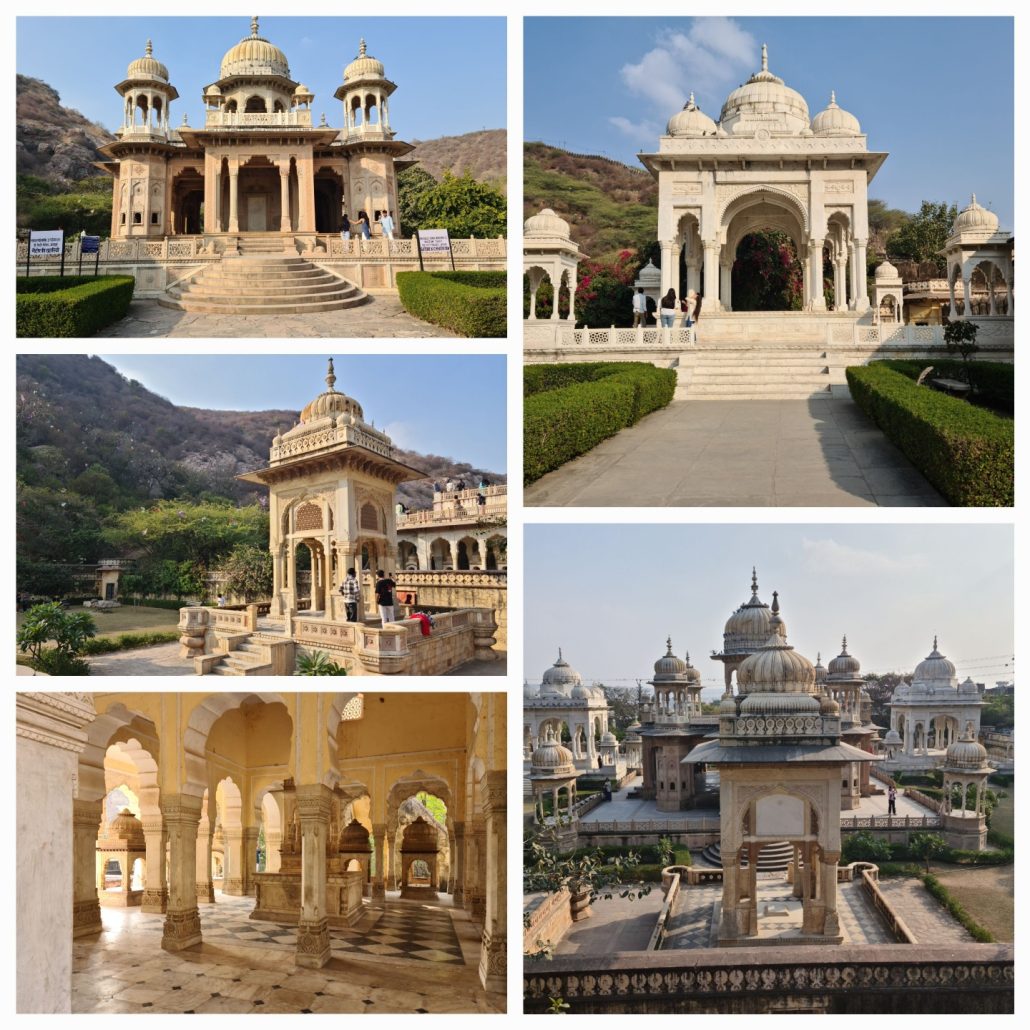
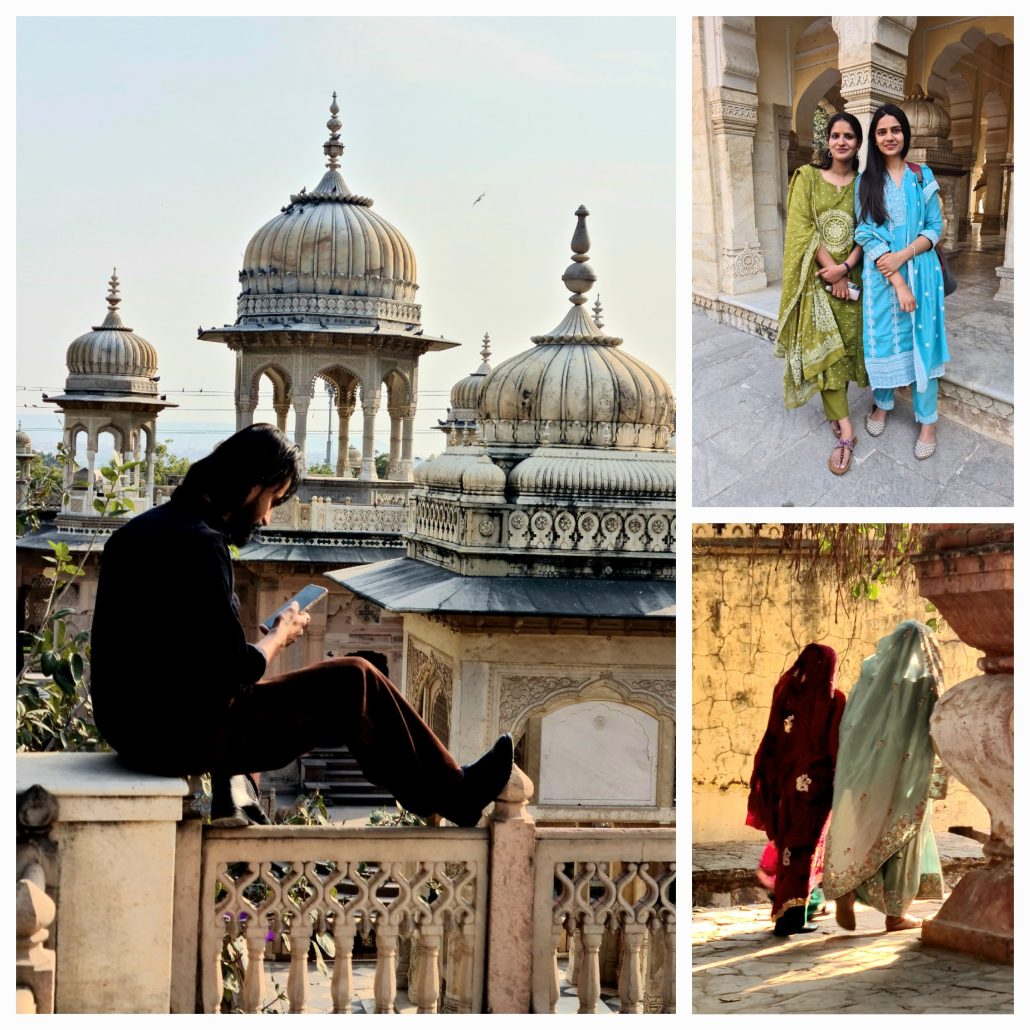
Slightly out of town, at Gatore Ki Chhatriyan, there’s the cenotaph of Sawai Jai Singh II, the man who founded Jaipur back in 1727. Every Raj since then has had his ashes interred here. This royal crematorium is a photographer’s dream.
I’ll admit to being a little confused; I had understood a cenotaph to be a monument for someone buried elsewhere. No matter. It is a beautiful spot, very quiet (relatively).
Anyway, to man himself.
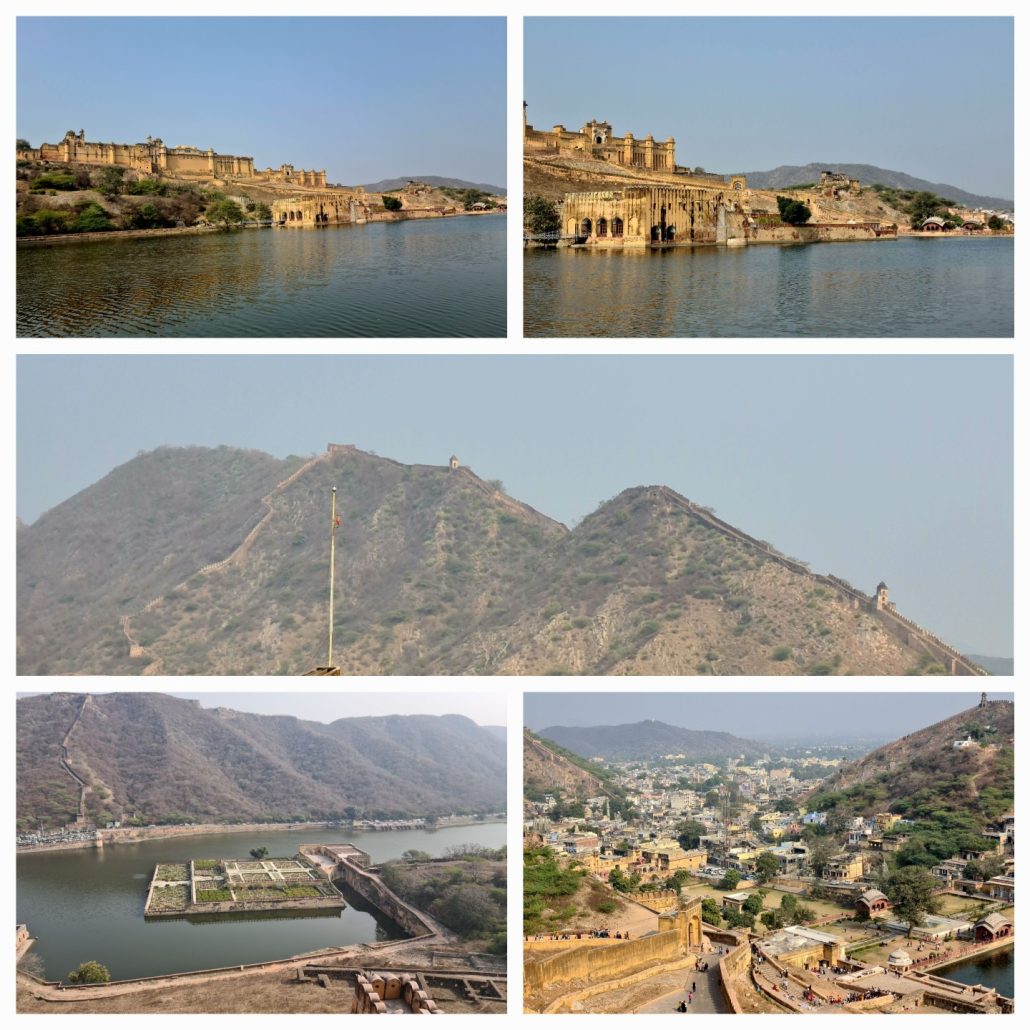
Back then, he was living out at Amer, in the fort. Built in the 16th century, the town, about 4 km2 in size, is 11 km from the city. It’s everything you’d imagine a fort to be, with its cobbled streets, ramparts, and gates. It’s an imposing place surrounded by a great wall that stretches for 7 miles (12 km). Compared to the Great Wall of China, it’s only in the tuppence ha’penny place. But it’s impressive in its own right. The view of Amer (often written as Amber) Fort from the bottom, across Lake Maota, is quite imposing, as is the view from the top.
As we made our way into the walled city, time took a little jump backwards.
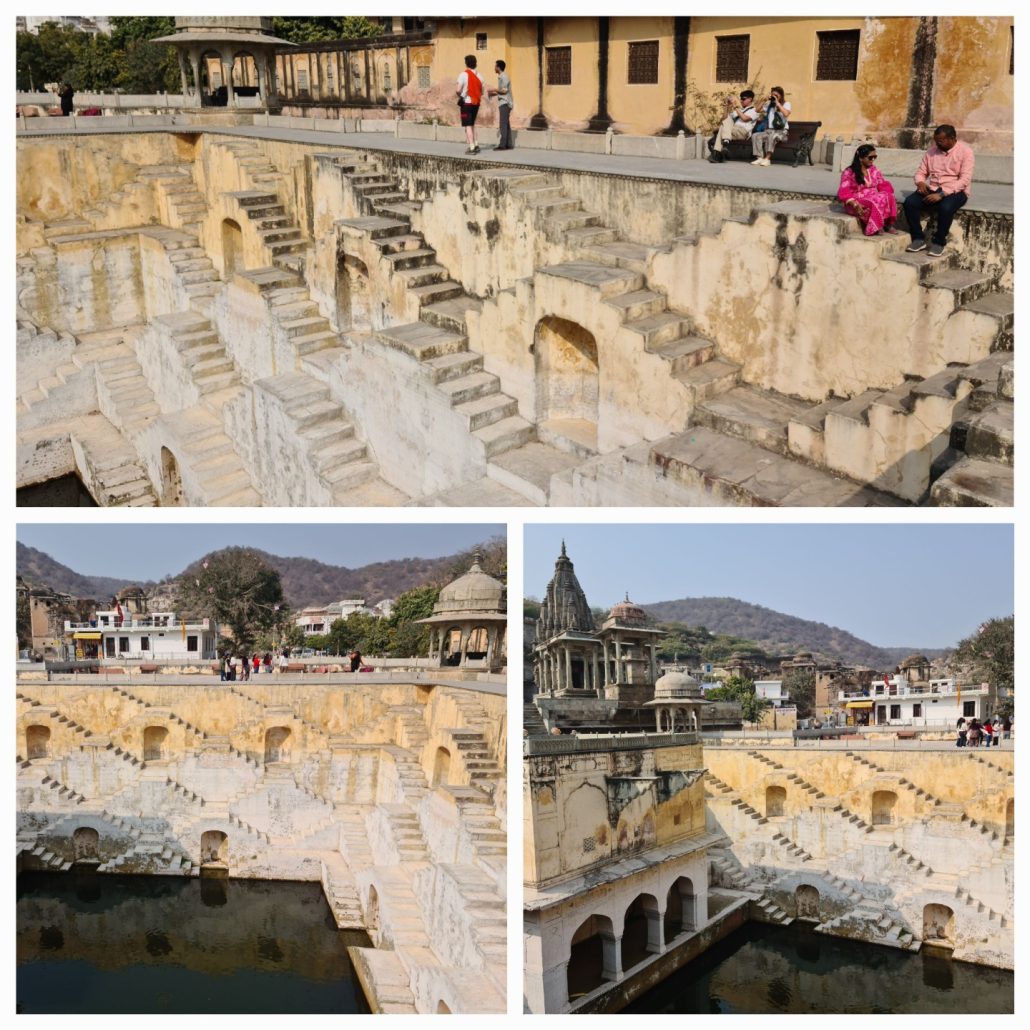
The 16th-century stepwell – Panna Miyah ka Kund – is spectacular. Built to collect water back in the day, it was also a popular stopping off spot for travellers, as the temperature inside is noticeably cooler.
Panna Miyah ka Kund is a square-shaped stepwell, with adjoining stairs on all four sides and a room on the northern wall. It’s believed this room was used for religious ceremonies before weddings or on popular festival dates.
As we climbed up towards the palace, we joined a long train of tourists, both national and international, coming to see what the story was.
After seeing the palace in Mysuru, I thought I’d have a hard time finding anything that came close. The detail is quite amazing.
It’s built on four levels, each level having its own courtyard.
If you’re curious about it, there’s a video on YouTube by an American chap that’ll sate your curiosity. And for the record, we didn’t see any elephants, and there were tons more people.
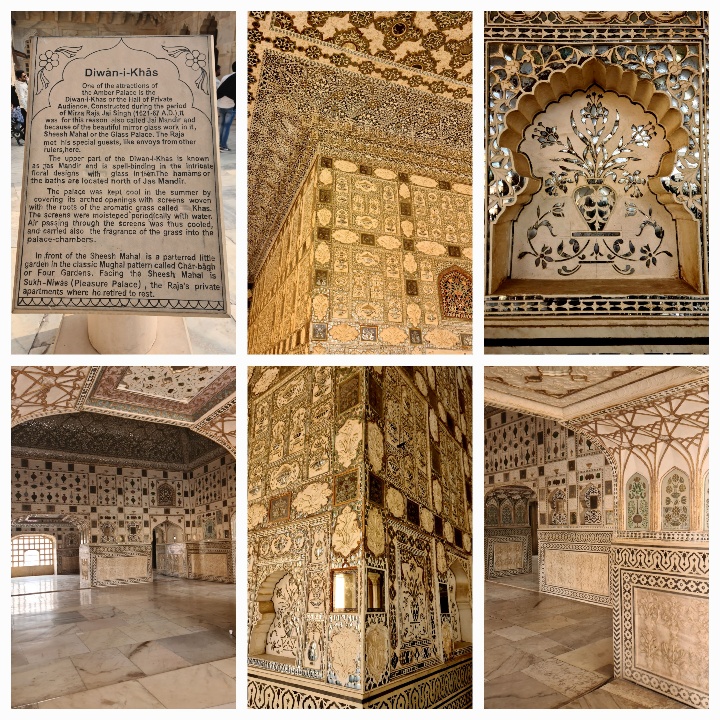
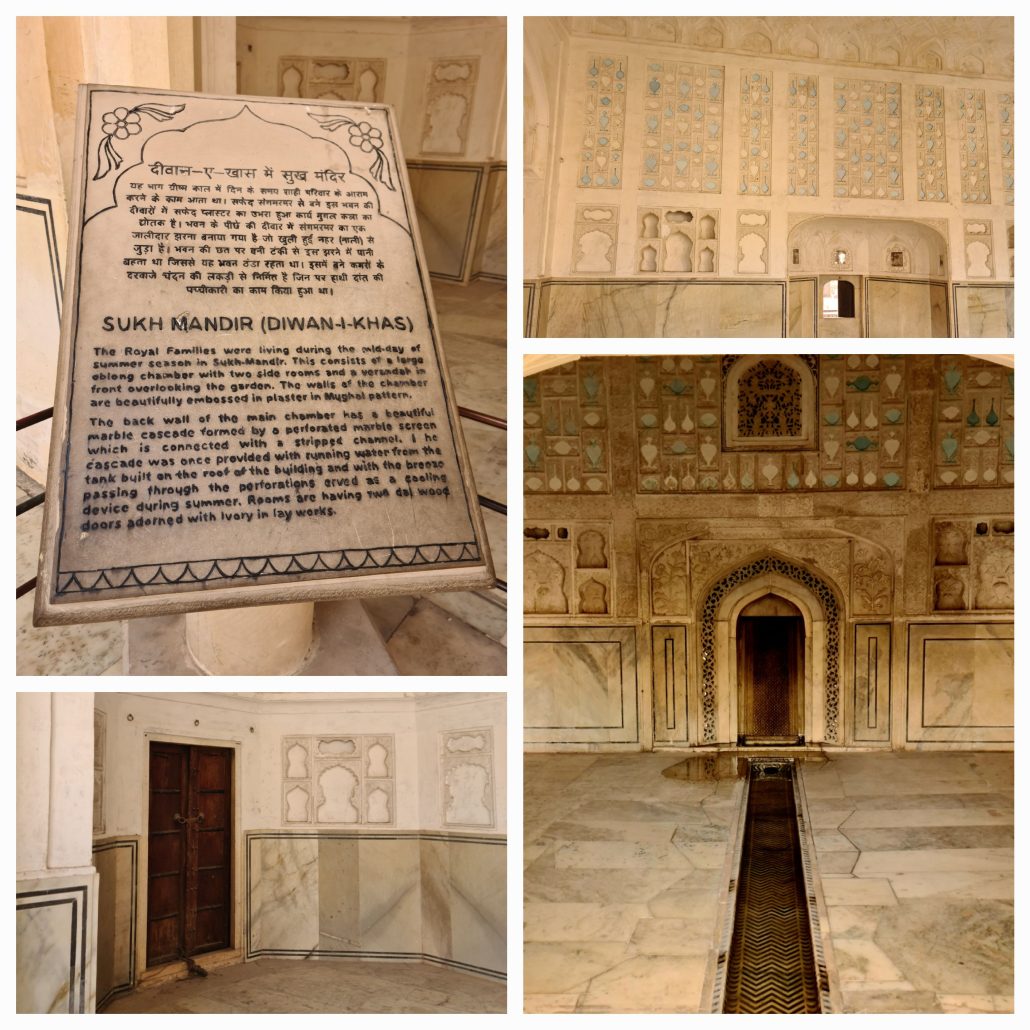
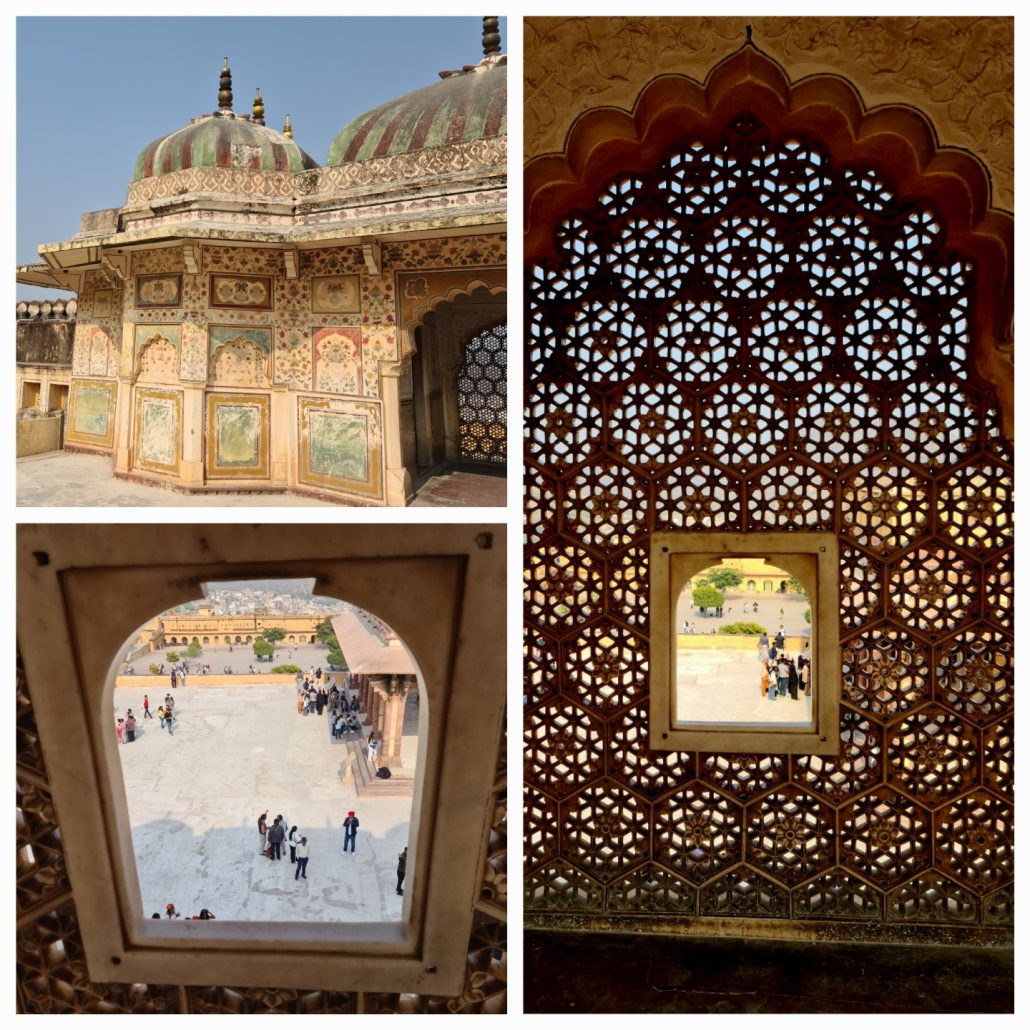
Each of the twelve wives had their own apartment. They shared a courtyard but had private entrances to their chambers which the King could access by secret passageways. None of the other wives would know who he’d favoured on a given night. They, too, had windows through which they could look down on what was happening without being seen.
Because things were getting a little too crowded in the hills, Sawai Jai Singh II planned a new city, the city of Jaipur, with its seven gates and nine rectangular blocks (chowkris) separated by wide, straight streets that intersect at right angles. It truly is a marvellous testimony to urban planning and control.
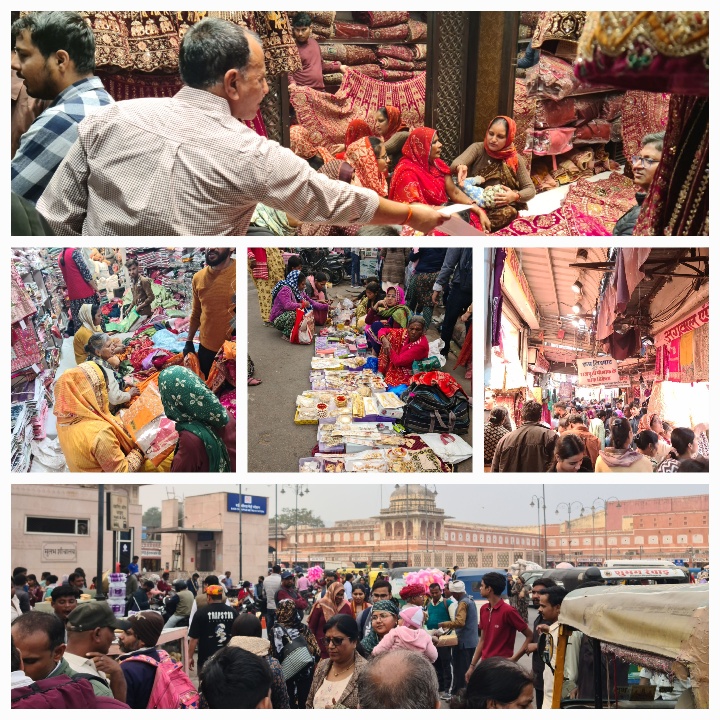
The markets are all the same height and colour, stretching along either side of these broad thoroughfares, their facades masking a warren of narrow lanes and courtyards that at 10 am on a Tuesday would give Grafton Street on Christmas Eve a run for its money. I kid you not. At one stage, my feet weren’t touching the ground.
We got trapped in the sari section; it took a while to find our way back to the street. Later, we’d discover that what we were seeing were rural traders coming into the city to bulk buy for resale.
We stayed in the family-owned Dera Rashwatar Heritage Hotel. For the first time on this trip, everyone in the hotel was foreign. It was an interesting change. As we weren’t feeling the Mae West, we spent more time than usual on base. And we were well looked after.
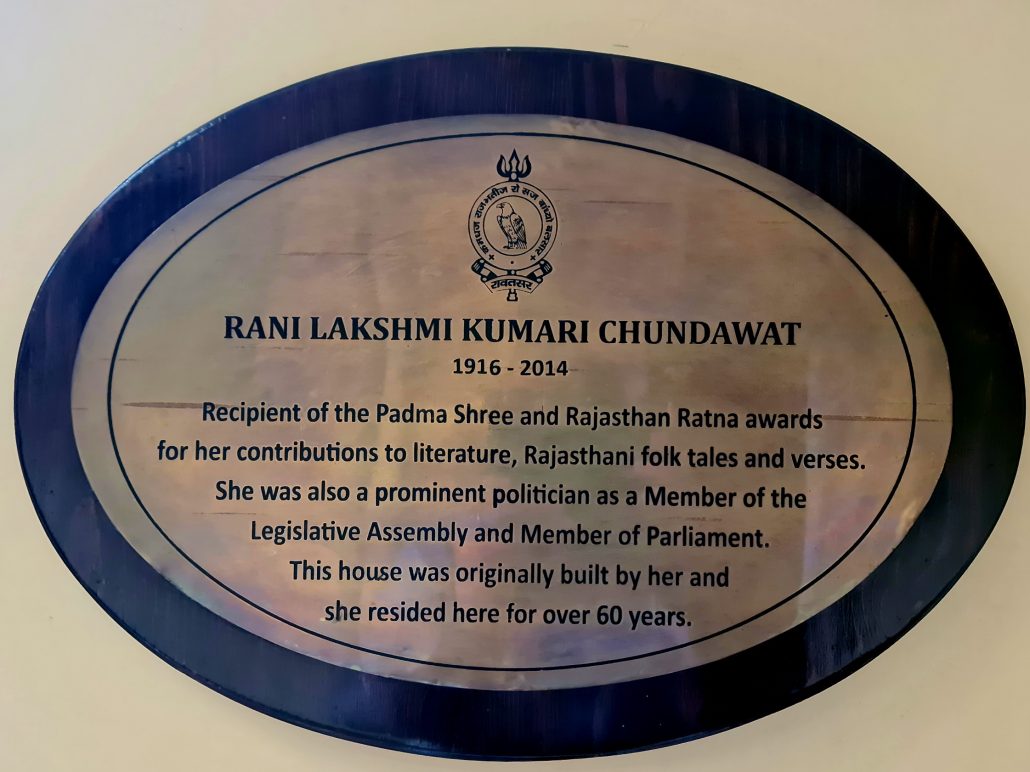
The current owner, Anidrudh Rathore, wrote the book on investing for beginners. He stopped by to wish us safe onward travels and told us a little of his mum, who sounds like another in a long line of remarkable Indian women I’ve met or heard about.
Apart from the amenities, it was great that it’s close to two metro stops. Tuk-tuks had by this stage lost their appeal, and with both of us sporting unhealthy coughs, travelling underground as much as possible seemed the better choice.
We didn’t do the city justice. I know that.
I’ve never been great at managing my expectations. It’s all or nothing with me.
The airport, with its red carpet and rose garlands, and then the huge ornate welcome gate, augured well.
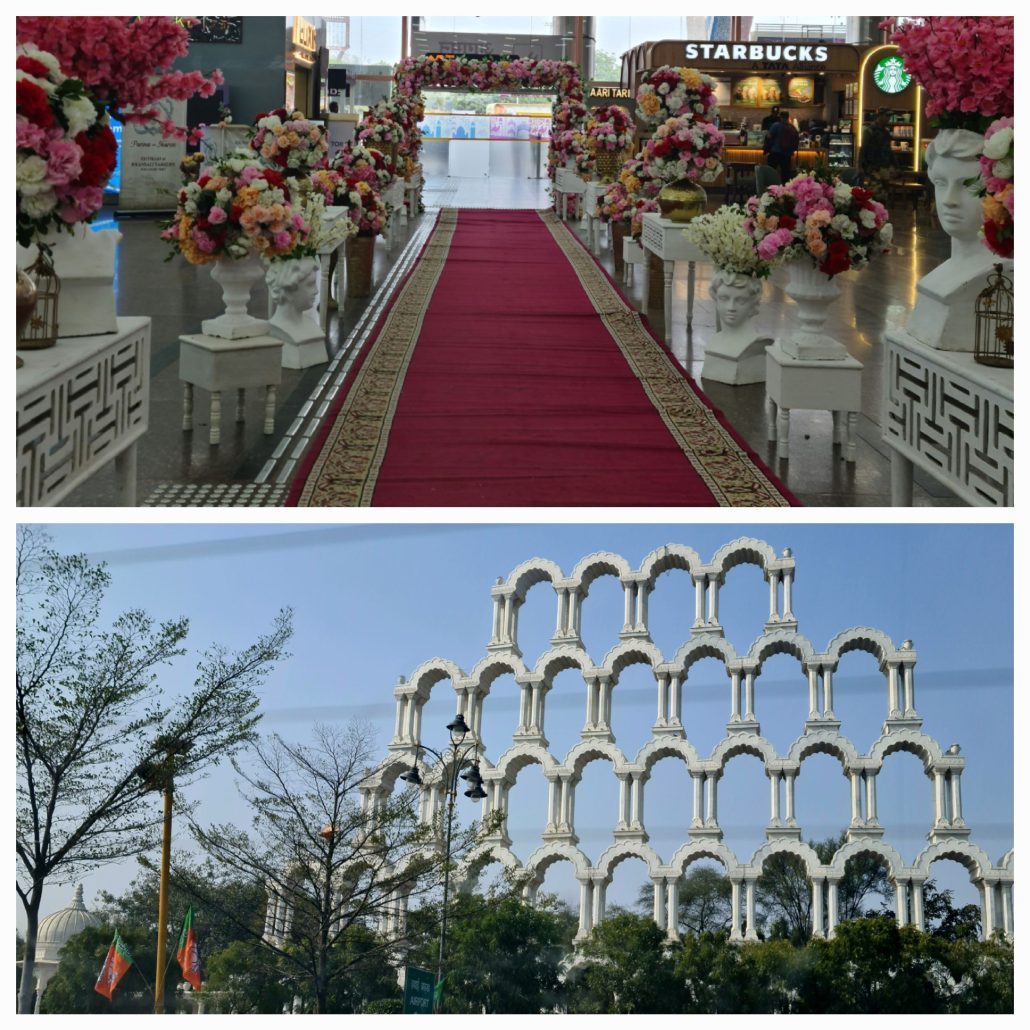
But then we passed what looked like slums, and saw the state of the streets and wondered.
Girl in Paradise posted a video last year of her foray into Jaipur’s kachchi bastis. It’s a far cry from the grand palaces and tourist front.
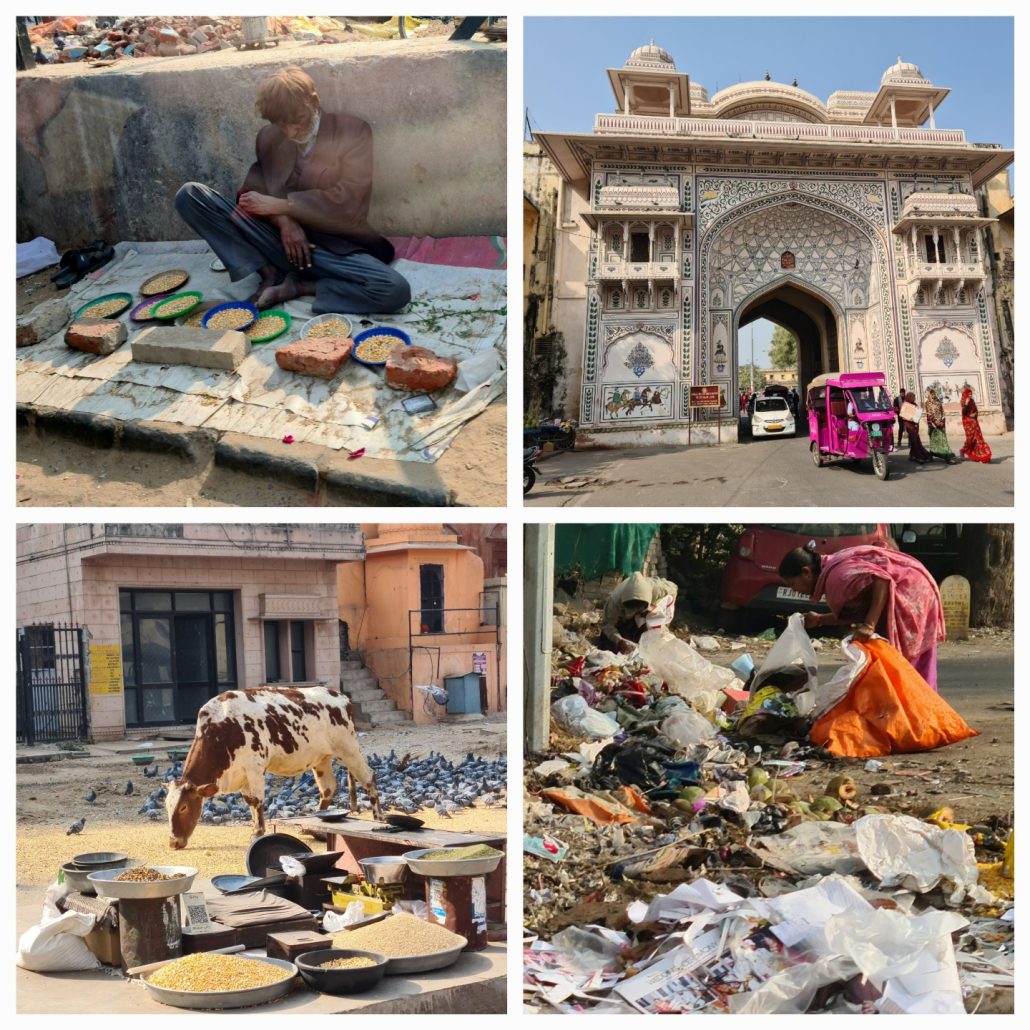 It’s a city of many faces. One perhaps that warrants a second exploration.
But I didn’t like who I was when I was there.
Memories of old conversations haunted me.
My second time in Bengaluru. Looking for a tuk-tuk to get from A to B. I was with a French girl who’d converted to Islam to be with her Indian husband and lived very much a local life – not an expat one. She was looking for one with a meter. But the drivers, seeing two Europeans, despite her hijab, wanted to charge a fixed fare. For me, it was a fraction of what a taxi in Budapest would have cost. When I offered to pay, she got cross with me, saying that when I left, she’d remain and she’d be expected to pay higher prices. That’s what tourism does, she says. Makes things more expensive for the locals. Not everyone benefits.
Another time, I was in Dubai on a work gig. At a market with a colleague, I got tired of her haggling. The price she was being offered was more than fair and half of what she’d have paid in London. But, she said, it’s what they expect. I wasn’t convinced.
In Jaipur, I nearly lost my reason in the face of incalcitrant sales guys who simply would not listen to me.
I’d like to buy two single cotton two-sided bed covers with no fill in a dark blue, please. Do you have any?
Yes. Yes. Come in. What about this lovely pink one?
No thanks. Blue.
What about this big double green one?
No. Thank you. Blue. Single.
What about a pashmina?
Nope. Bed cover. Only a bed cover.
What about a bag or some shoes?
Ye gads!
It was worse than being ignored. I felt like I was being dismissed.
As it went from bad to worse, the harridan in me reared her ugly head. I wanted to scream: LISTEN. TO. ME.
I was reminded of my breaking point in Bangkok and wondered, not for the first time, if there is a limit to the amount of peopling I can do before I lose my reason.
Maybe I’d have fared better had I been in the whole of my health. But I doubt it.
Next, it was back to Chennai to recalibrate, before heading off to Puducherry. My last hope.