

From what I recall (it was in my pre-blogging days), the last time I was in Chennai was 2005, 20 years ago. It was a work trip. My memories of the city are vague. I know we were at the beach for lunch one day and that we also went to Santhome Cathedral Basilica, where I had a moment.
My friend SF was dying in the UK.
I told him that I’d like a candle for him in India.
He laughed and said it would be wasted on him as he didn’t believe.
I said I’d light one anyway.
After much figuring out, I finally found where to buy the candle and went to place it in the candelabra.
I remember being really happy – India always does that to me.
Just as the flame caught, I was overcome by this huge emotion. Bawling hysterically to the point of hyperventilating, I wondered what in God’s name was happening. It was 3.05 pm.
Later, back at the hotel, S’s friend P called me to tell me S had died. At 4.30 am. I reckon he’d dropped by Chennai on his way out to have his I-told-you-so moment.
I wanted to go back and light another candle for him – 20 years later.
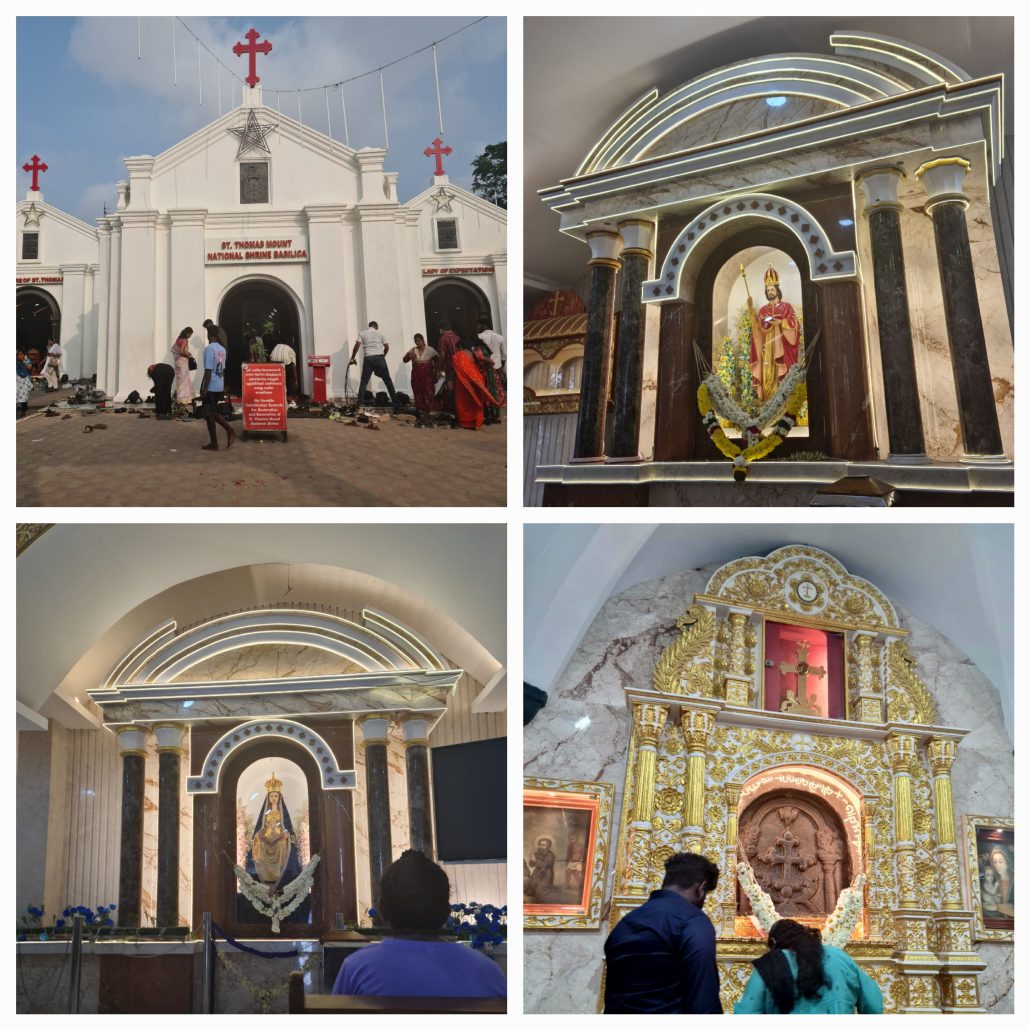
First though, we visited St Thomas Mount, known locally as Parangimalai. It’s on a hill overlooking the city and is where St Thomas, he with the major doubts, was martyred. With it being a holiday, the crowds were out in all their glory.
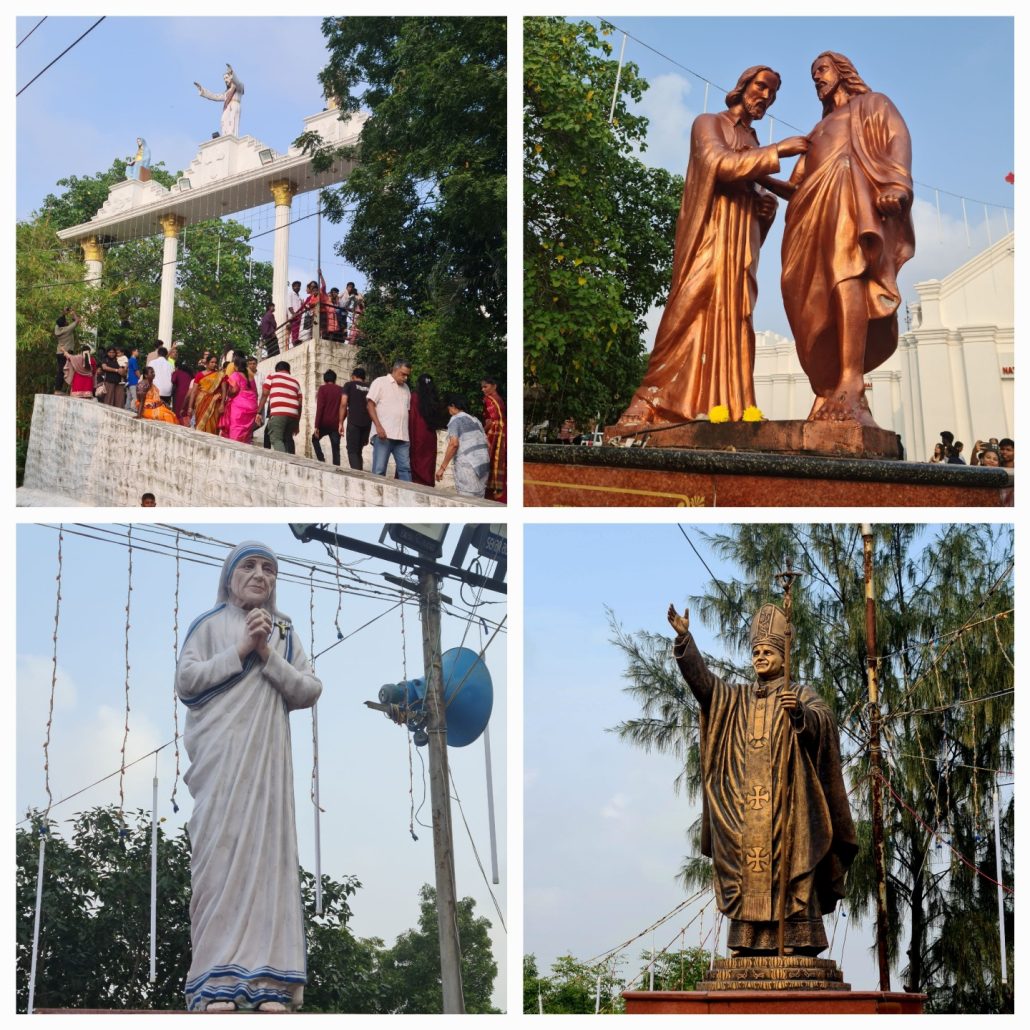
The centre piece of the shrine is the bleeding cross of St Thomas. Discovered in 1523 during a renovation, it would show bloodstains each December for over a century. Today, it’s a major pilgrimage site in South India.
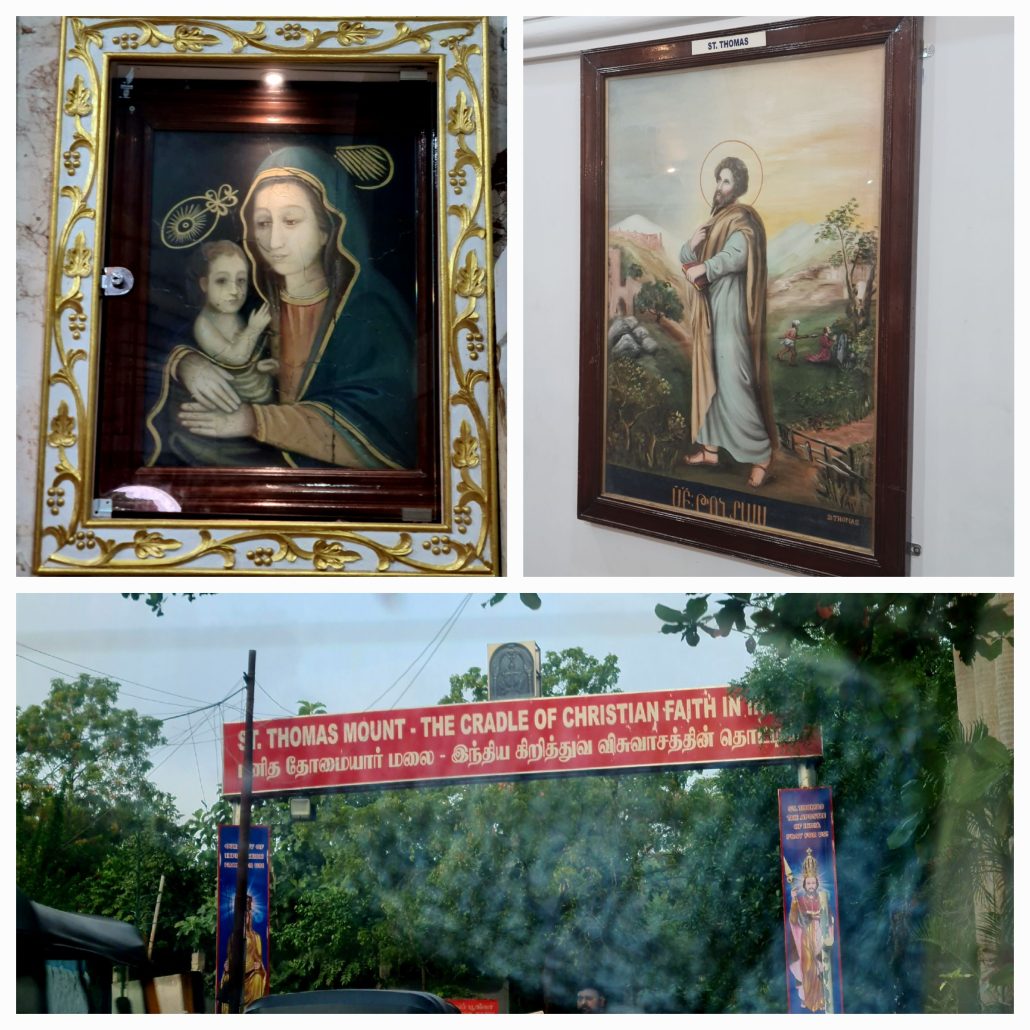
Inside is a painting of the Madonna and Child, said to date from 50 AD, the work of St Luke. Thomas brought it with him to India. The church also features 12th-century paintings of the apostles. A palpable sense of holiness rose above the crowds, whose devotion was obvious.
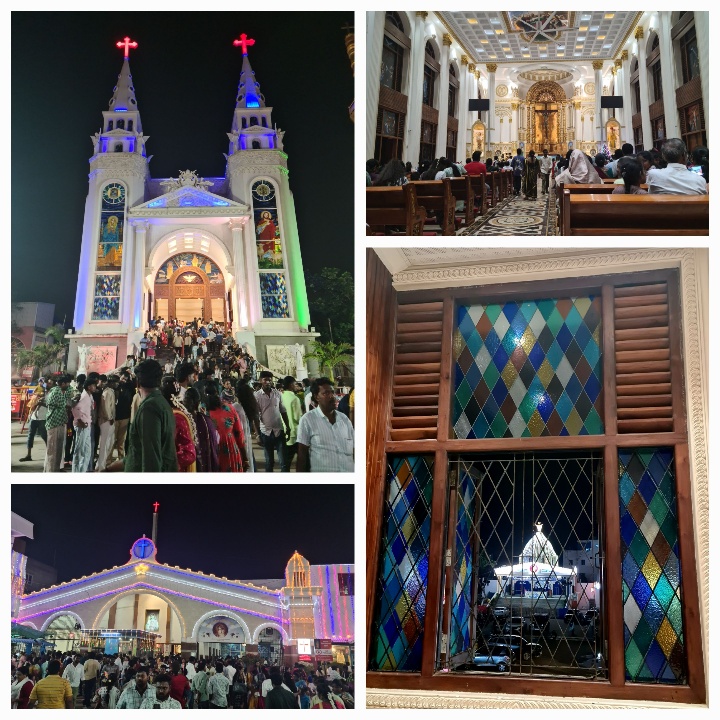
From there it was on to Santhome Cathedral Basilica, where even more people had gathered. It is here that St Thomas is buried. This, and St Peter’s in Rome, and St James’s in Compostella are the only three sites known to be the burial places of the apostles. It is also home to the oldest statue of Our Lady in this part of the world, most likely brought here in 1543 by Portuguese priest Fr Gaspar Coelho.
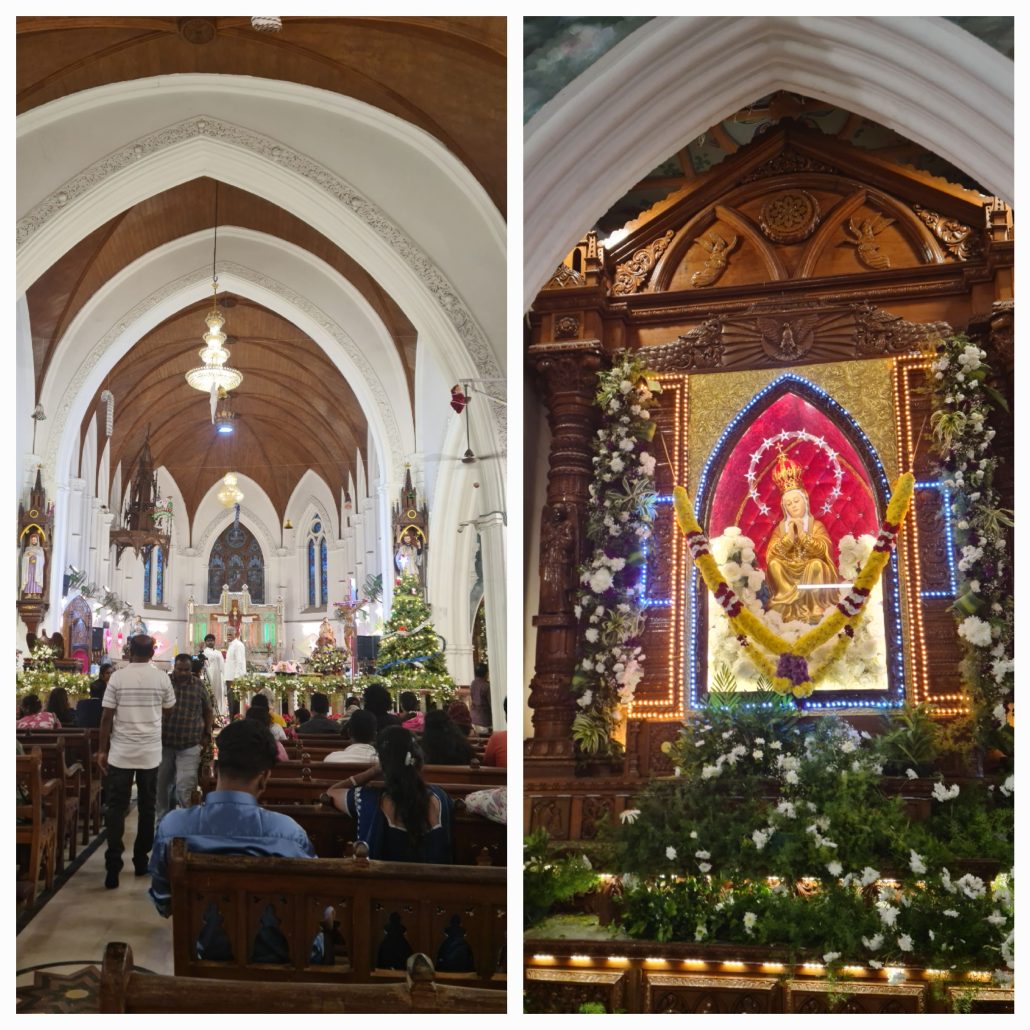
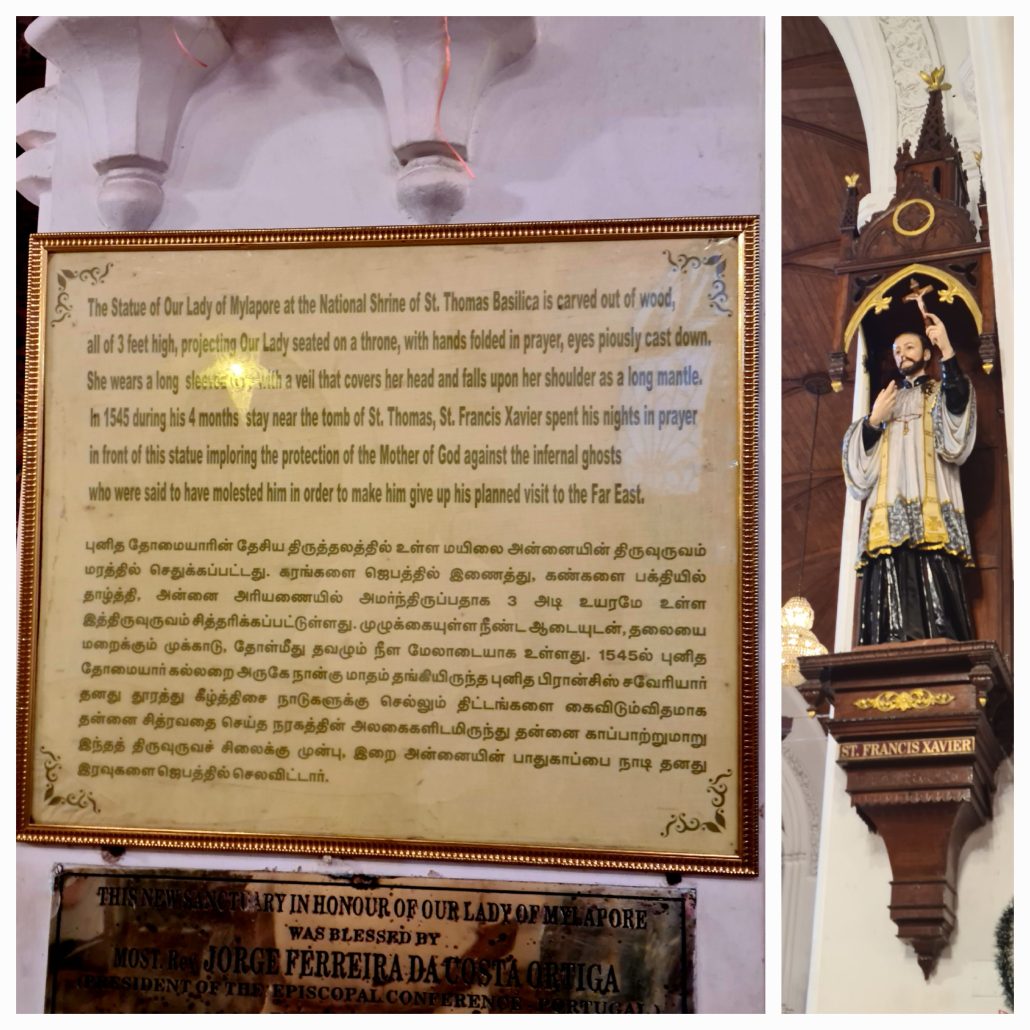
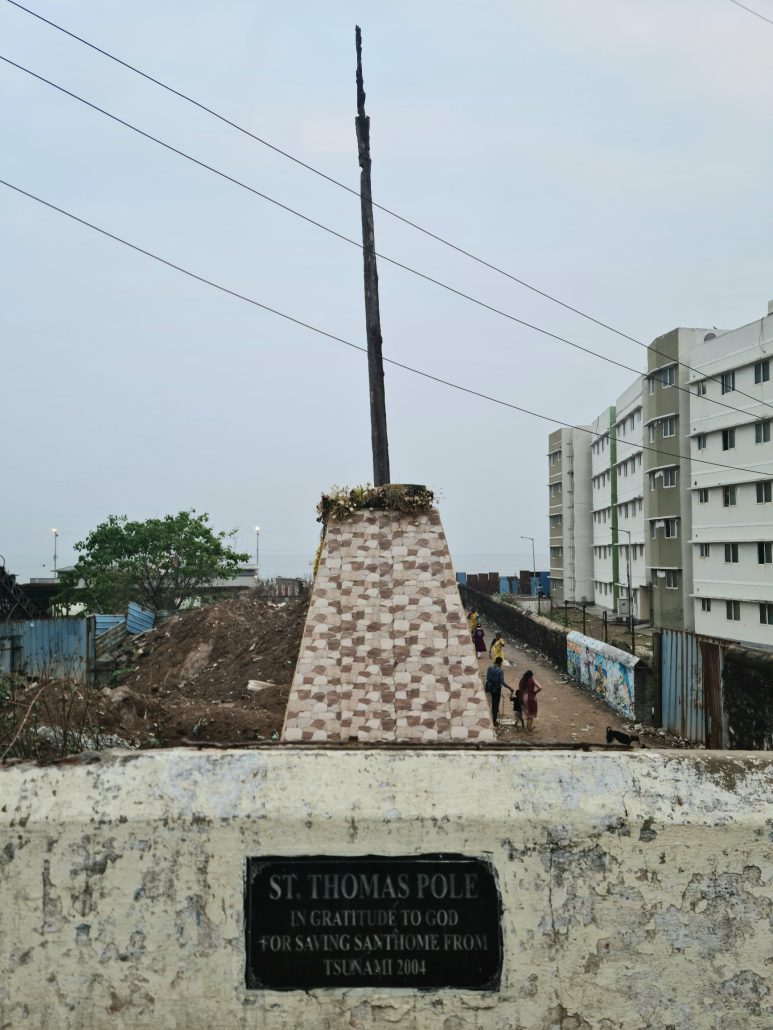
I lit my candles before SJ took us to see the post that St Thomas had erected outside the church by the harbour. He put it there to stop the sea from encroaching on the land and damaging the cathedral when the storms came. In the tsunami of 2001, the water never passed the post.
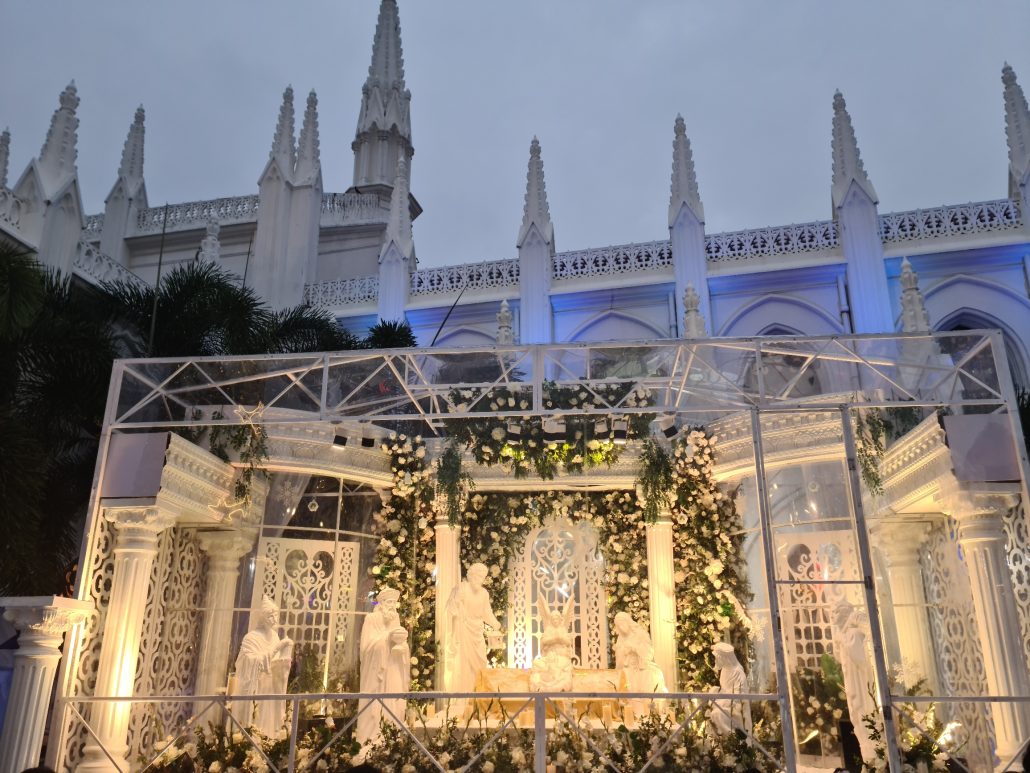
The cathedral was beautifully lit; the nativity was breathtaking. A selfie paradise, perhaps more photos were taken than prayers said.
Our final stop on this first day of January was to the Annai Vailankanni Shrine, to lights a candle for the health of LJ and others we know who are not in good health. Here, the crowds were even more manic. So much so that we didn’t get anywhere near the Shrine itself. We had to content ourselves with the church.
Every hour, the chime of ‘Ave Maria’ reminds us of Mother Mary’s presence and reassures Her loving guidance. And this is the legendary Annai Vailankanni Shrine, Besant Nagar in Chennai (formerly Madras). This is the largest and most popular Shrine dedicated to Our Lady of Good Health outside Vailankanni (place of Apparition of Our Lady of Good Health) in Nagapattinam.
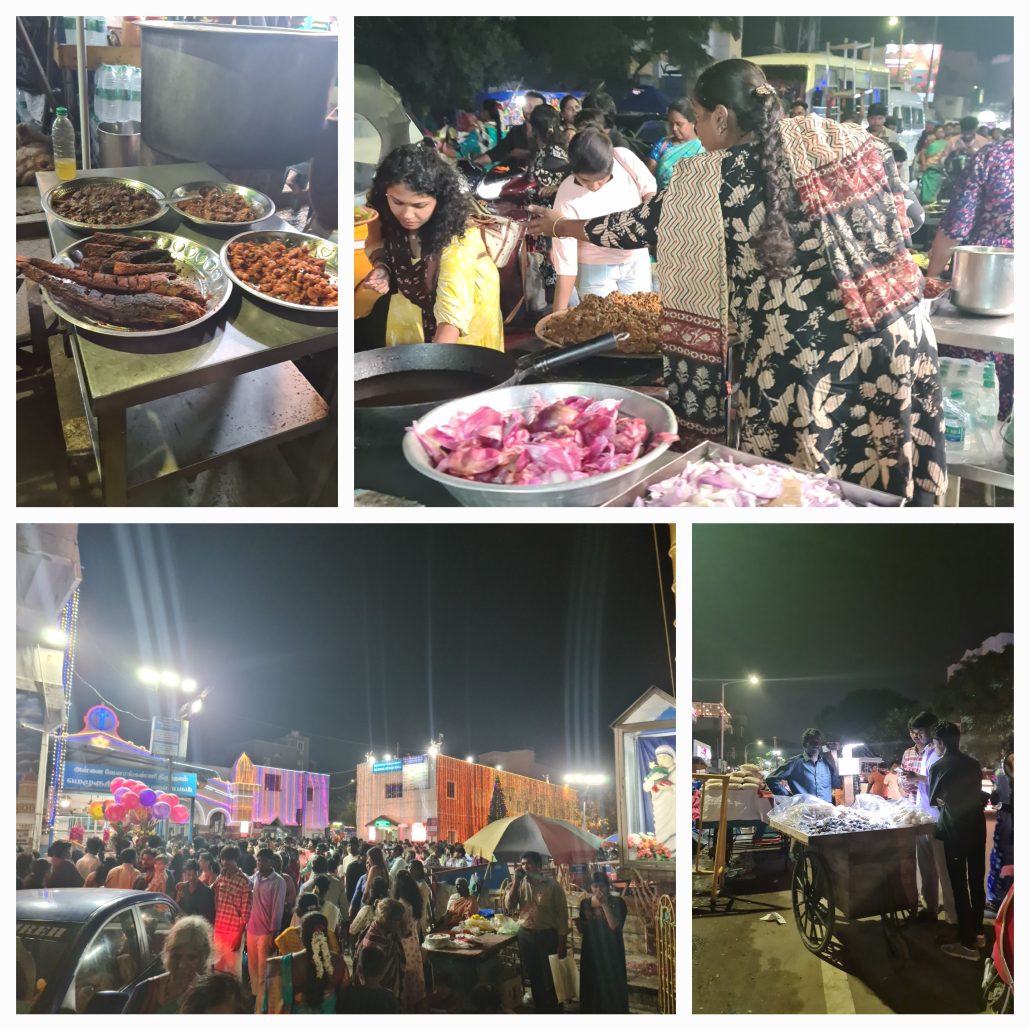
The street outside was a soup of people and traffic, all progressing with an order that defied reason. The energy in the air was electric.
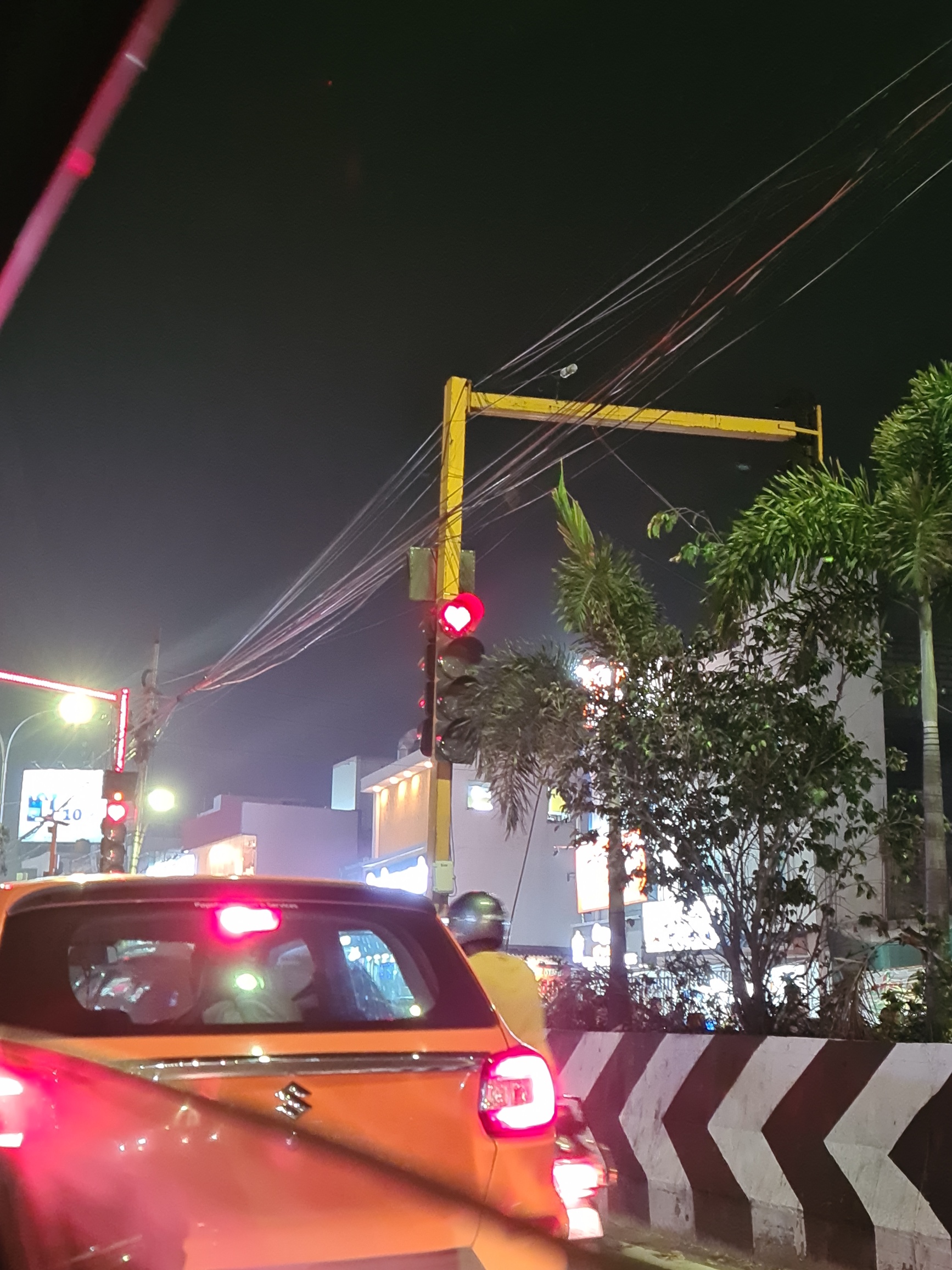
As we crawled home, I was more than amused to see one traffic stop light showing a red heart.
Only two days in and the memories of how much I love this country came flooding back.
Next stop, Mysore.

2 responses