
So many visitors to Istanbul, some enjoying the free overnight stay courtesy of Turkish Airlines, stick to the main attractions – the Blue Mosque, the Hagia Sophia, and the Grand Bazaar. They might take a boat tour on the Bosphorus and take a walk over or under the Galata Bridge. They might even venture over to the Asian side of the city.
Not many, though, venture farther.
It was himself’s first time in the city. Having done the necessary and dealt with the have-tos, we headed to the burbs: the under-explored, too often ignored neighbourhoods that give Istanbul its colour.
We headed first to Fener, traditionally home to Orthodox Greeks.
We walked up from Eminönü along the Golden Horn, enjoying the off-season before the holiday mayhem descended. The metro underpass is a bustling market. When you go down the steps to the water’s edge, you get a lovely view of the Galata Bridge.
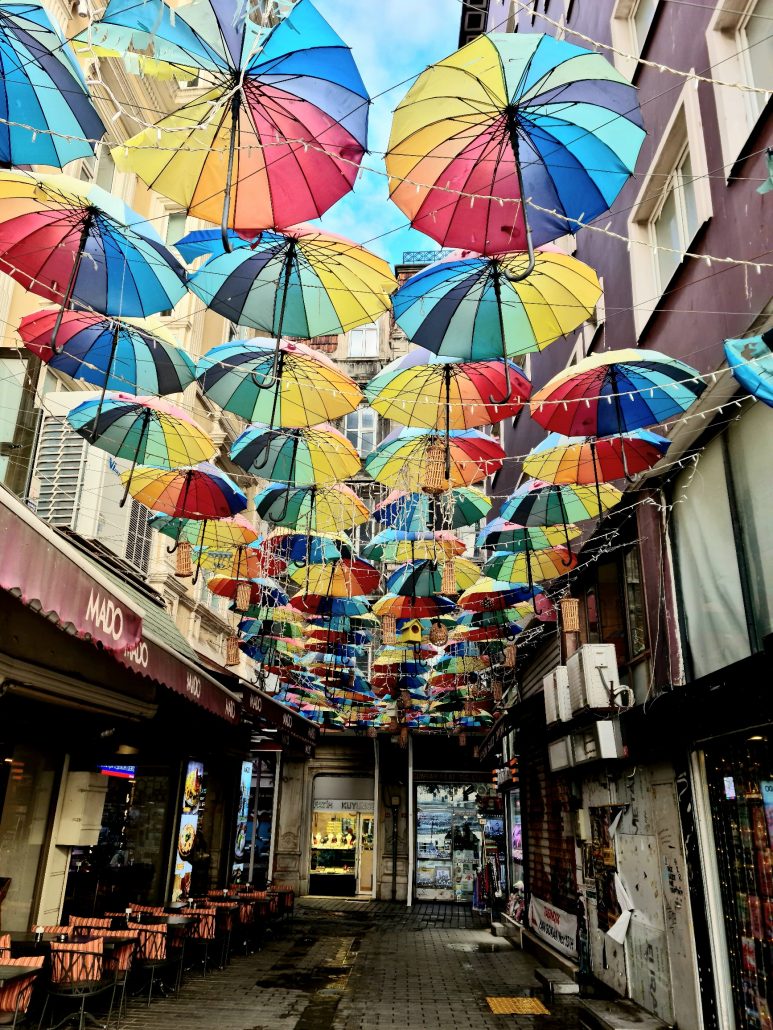
Istanbul is a great city for getting your steps in. Had I known that the ornate boats we passed were balik boats run by floating vendors selling balik ekmek – a fresh grilled fish sandwich – I’d not have waited so long for lunch.
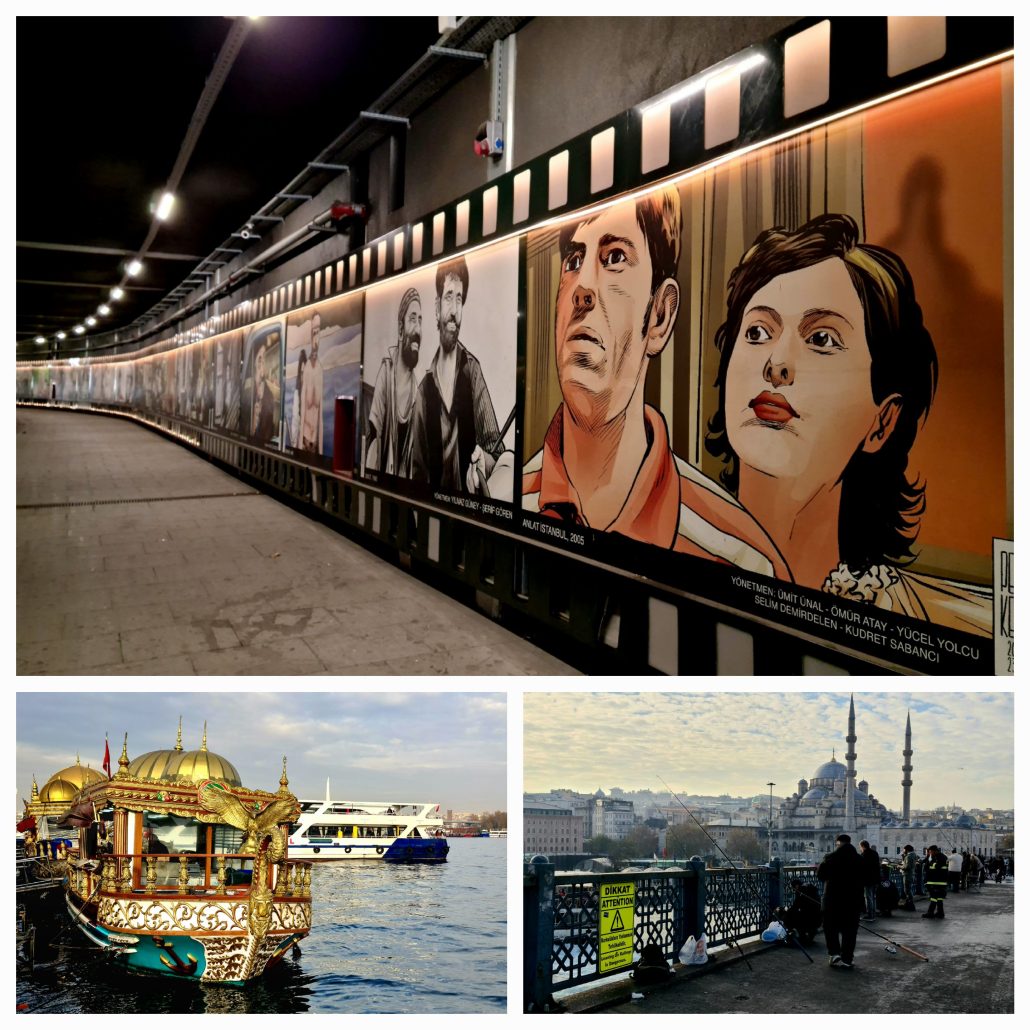
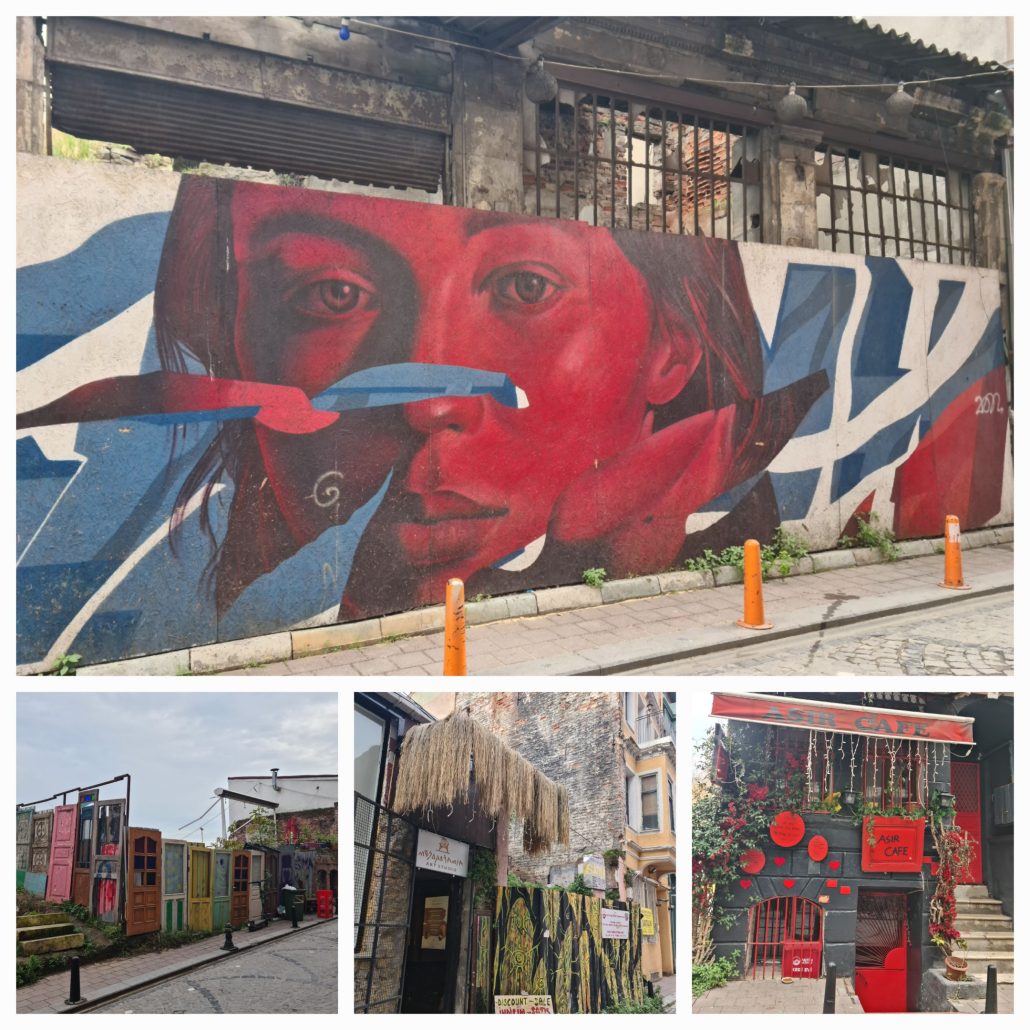
I also hadn’t known that Istanbul was a canvas for street art. Next time, I’ll be better prepared and follow the tips from A Girl in Istanbul.
We were headed first for the Church of St George, which, from what I gather, is to the Orthodox faith what the Vatican is to Roman Catholics. I wanted to see the piece of the True Cross that St Helena allegedly brought over in the fourth century.
Alan Boyle, reporting on the 2013 find of yet another piece of the cross, says:
Fragments associated with Jesus’ cross were sent far and wide as relics in ancient and medieval times. According to legend, St. Helena — the mother of Emperor Constantine — found the cross in Jerusalem and distributed pieces of the wood to church leaders in Jerusalem, Rome and Constantinople (present-day Istanbul in Turkey).
Cem Ozmeral, reporting from Dublin, Ohio, reckons some fragments of the true cross could be under the Constantine column, near the Hagia Sophia.
I was only concerned with the piece in St George’s.
It turns out that what I saw wasn’t a piece of the cross but a piece of the pillar Christ was tied to and whipped before being crowned with thorns. Again, brought over in the fourth century by St Helena. Looking at the photo, though, perhaps the relic of the true cross is the smaller piece on top. I’ve looked and looked and can’t find any information online as to its exact whereabouts, but perhaps that’s it.
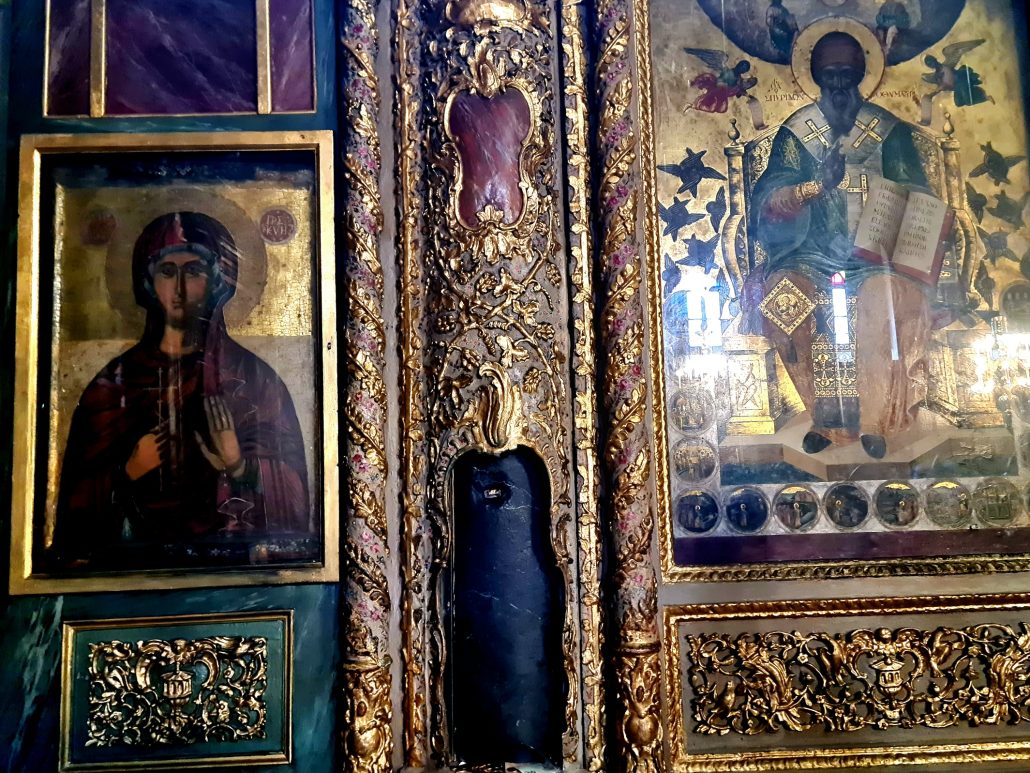
Regardless, the decade of the rosary – the scourging at the pillar – has forever changed for me. Is it real? Lonely Planet is non-committal. I’d like to believe it is.
Endless Journey has a video of the interior, if you’re interested.
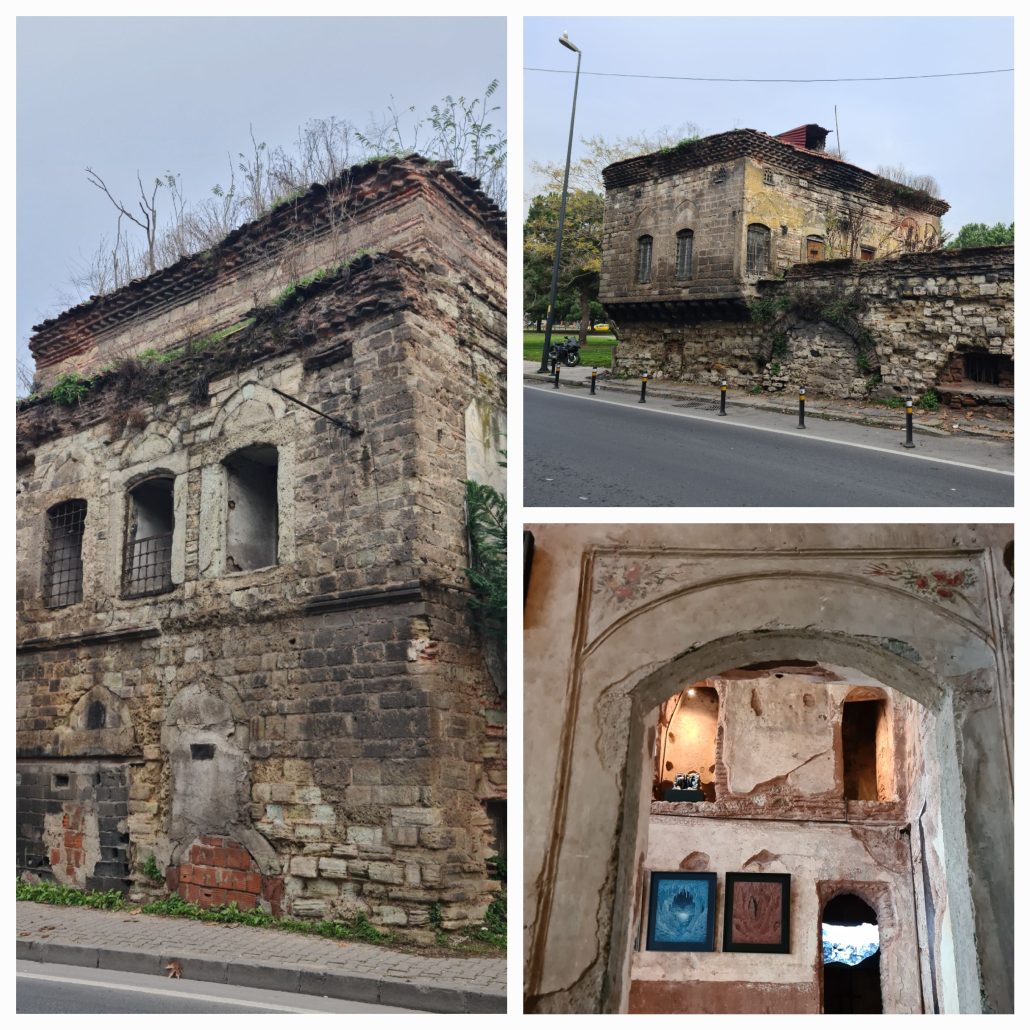
Along the way, we passed what looked like very old walls and an even older house with steps down into the basement. It was one of the three 18th-century Greek Fener homes (Fener evleri) that have been restored and opened for exhibitions as part of the Haliç Art programme. The exhibition we saw was on caves and the formation of stalagmites and stalactites. Given the cave-like feel of the place, it worked. Others we passed look to be in a bad state. Maybe they, too, will be reborn.
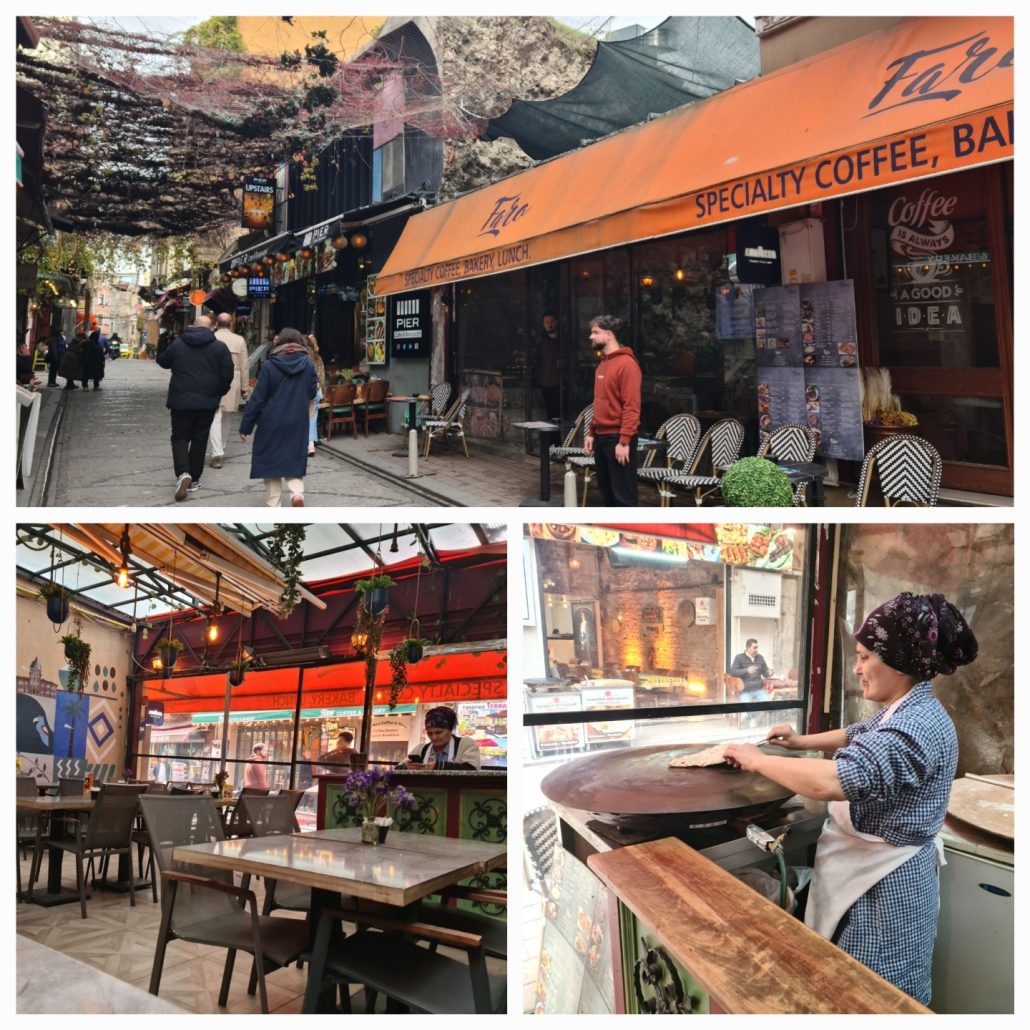
Moving on up into Balat, we stopped for coffee on Yildirim Street at Farro Café. They had oat milk, so I was happy. We sat on the covered terrace and chatted with the lads, watching one woman make the traditional Turkish flatbread for gözleme.
Further up, we stopped at Atölye Pervane and bought two cross-body bags made in Türkiye from recycled material that fit water bottles. It was great to see local crafts instead of the usual tourist tat. Kudos to them.
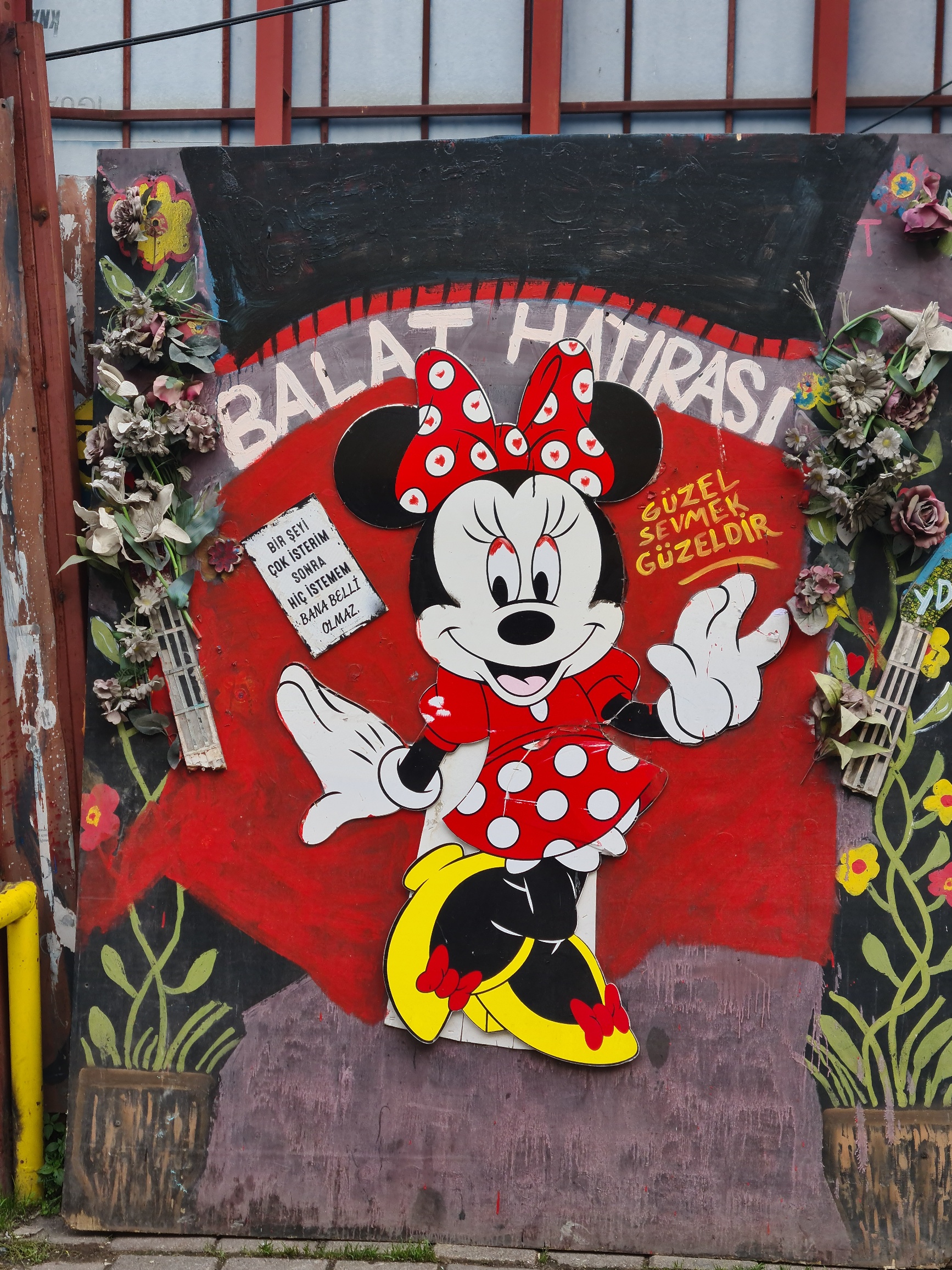
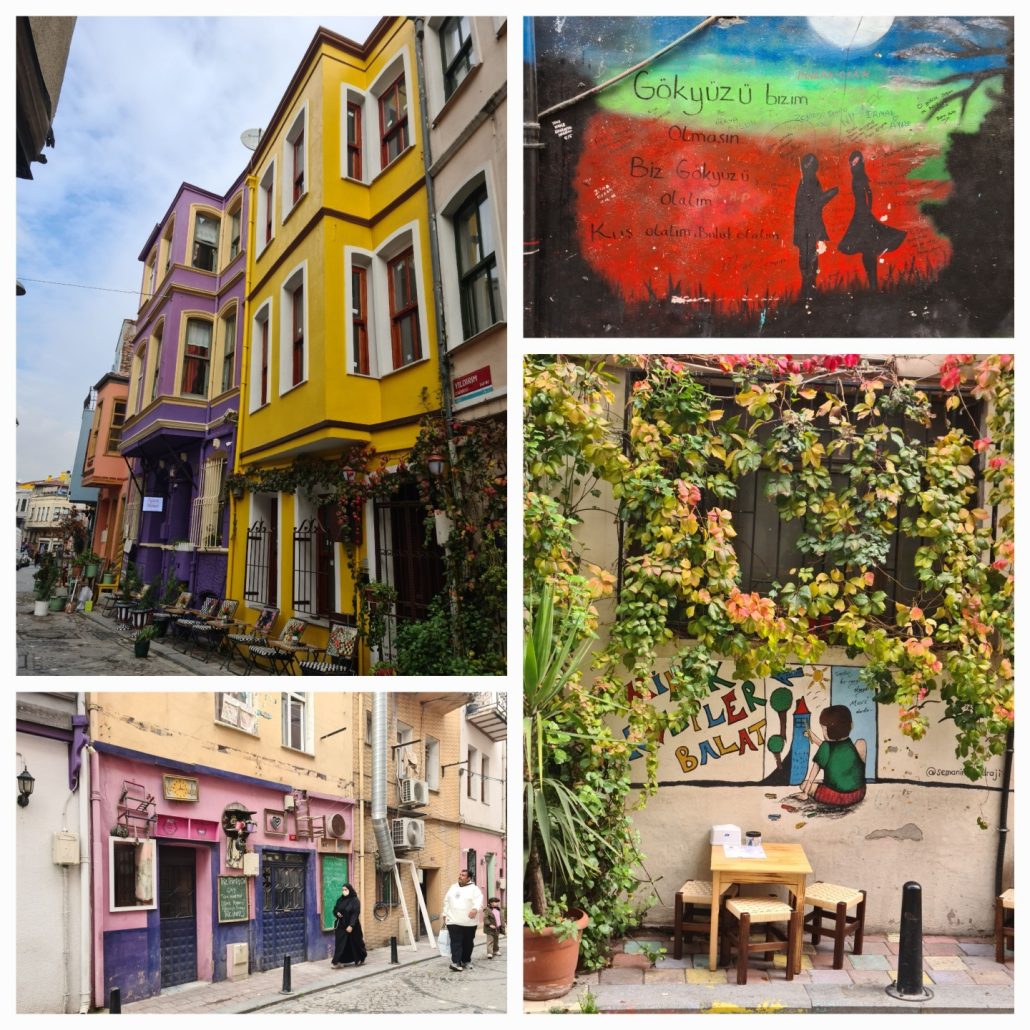
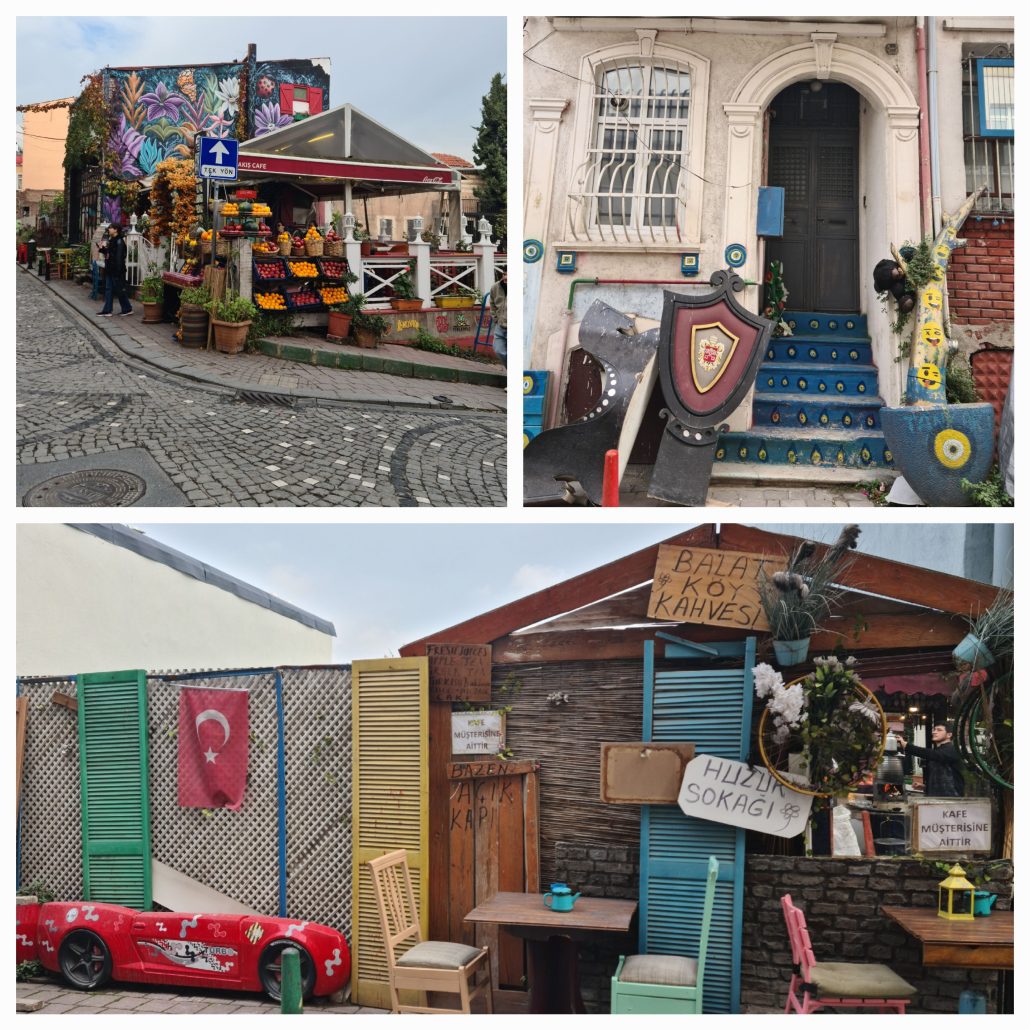
We continued to walk up Yildirim, marvelling at the riot of colours. This old Jewish neighbourhood is now home to a vibrant boho scene.
Balat first became home to a large Jewish population in the late 15th century, when Sultan Bayezid II offered citizenship to Jews and Muslims fleeing the Inquisition in Spain and Africa, and the 1492 Alhambra Decree.
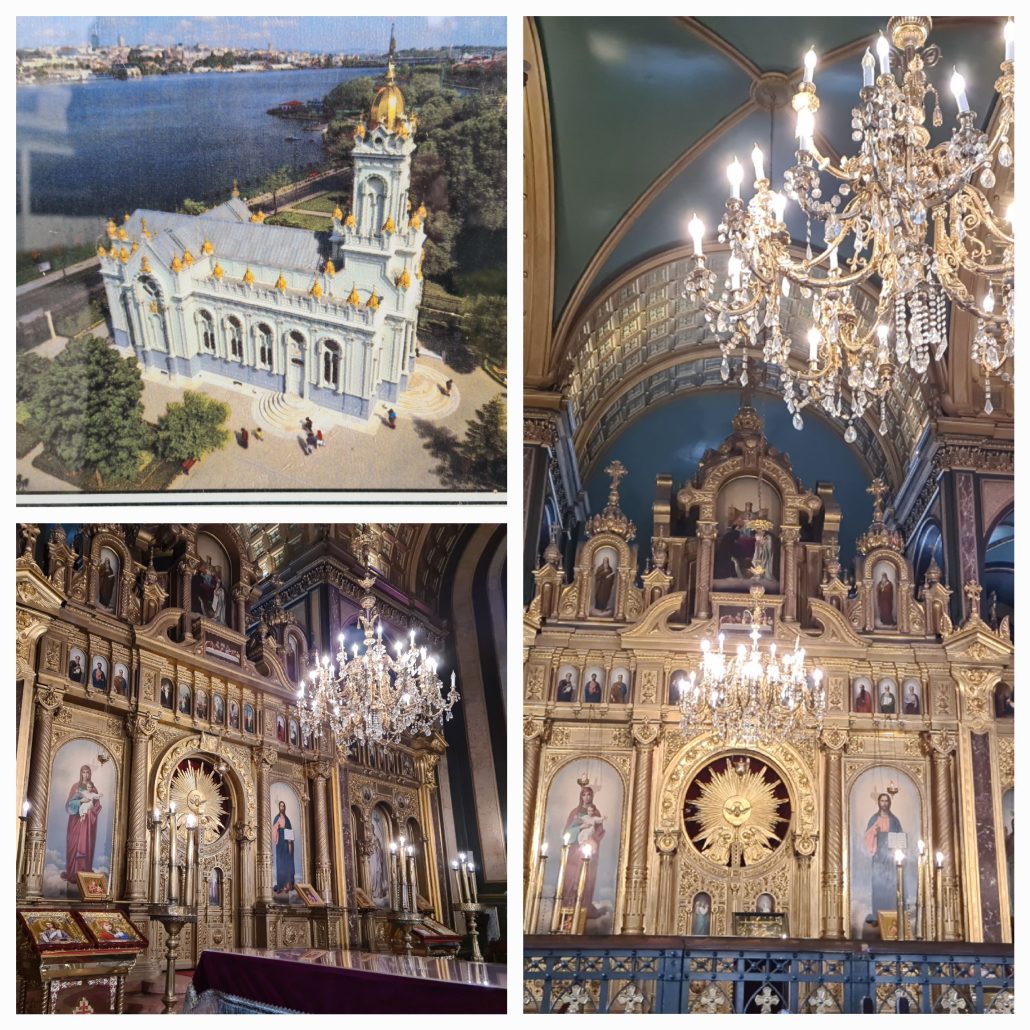
Next up was the Bulgarian Church of St. Stephen (Sveti Stefan Kilisesi). The original church burned down, and in its place is a cast-iron church, built by the Bulgarian Orthodox community. Made of prefabricated cast iron parts shipped from Vienna in 1893, it’s quite something. Mind you, you’d never know all that iron was there – some 500 tonnes of it. Apparently, the structure is made of steel, and this was then covered with metal panels.
If you happen to be in the city on 6 January, watch for the swimmers:
As elsewhere in the Orthodox world, every 6 January – the Feast of the Epiphany – a ceremony called the Blessing of the Waters takes place in which a priest tosses a cross into water and swimmers race to see who can bring it back to shore first. In Istanbul, this ceremony is performed by the Patriarch, who tosses a cross into the Golden Horn to be retrieved by swimmers.
We only saw a fraction of what Fener and Balat have to offer. Nomadic Niko has an excellent blog post on the neighbourhood – well worth a read if Istanbul is in your travel plans.