
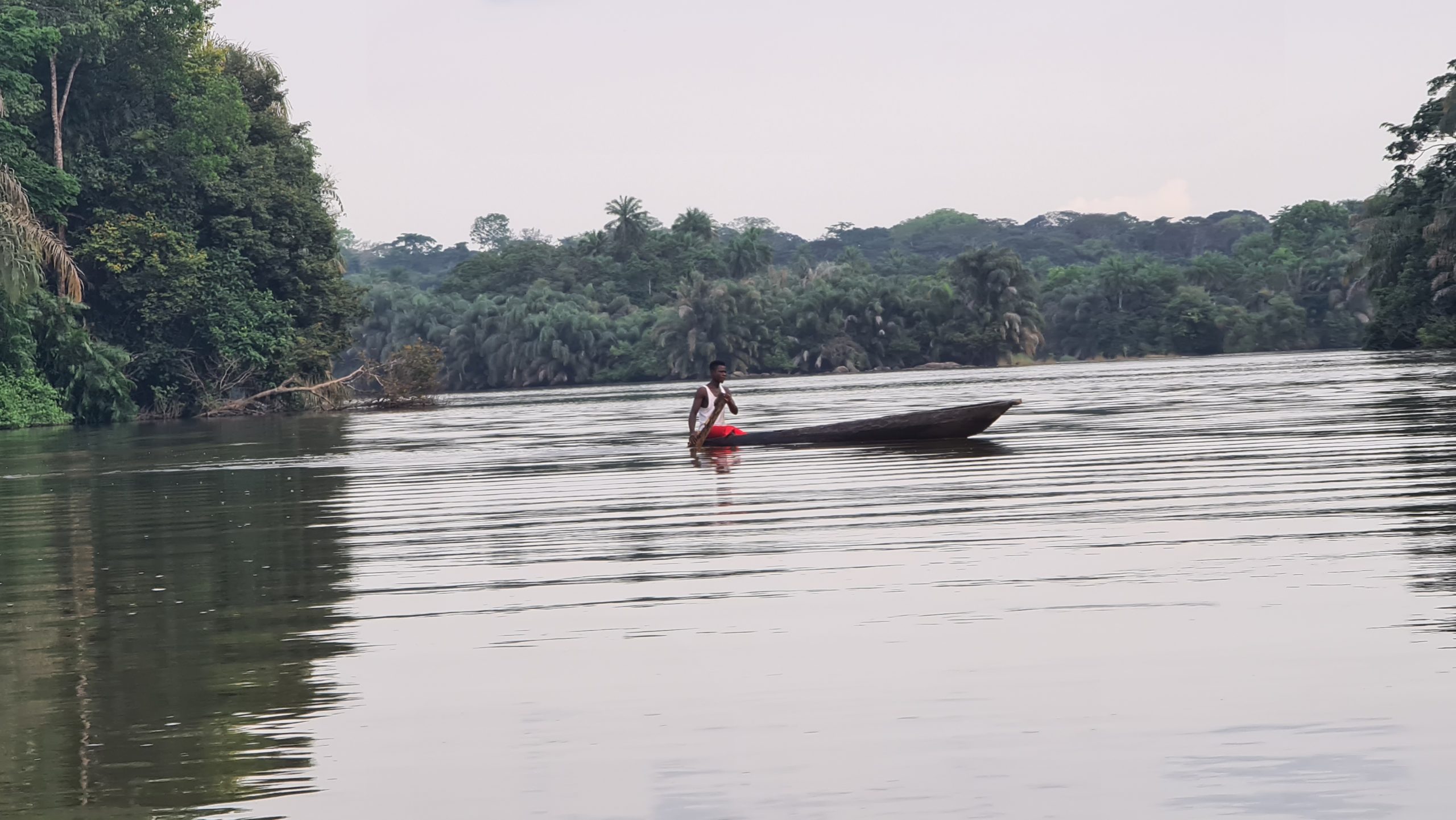
From Freetown, it is a four-and-a-half-hour drive to the village of Potoru. Then most of an hour more on a tortuous, rutted dirt road to the village of Ghiuba, and finally, you arrive at the jumping-off point for the Tiwai Island Wildlife Sanctuary.
While there are some good roads in Sierra Leone, it seems like the last part of a journey to anywhere ends with a rutted dirt road. Whether to a restaurant in the city, or one of the gorgeous beaches that line the Freetown Peninsula, or even the road from the airport to the Sea Coach dock, there is always a very bad stretch of road at the end.
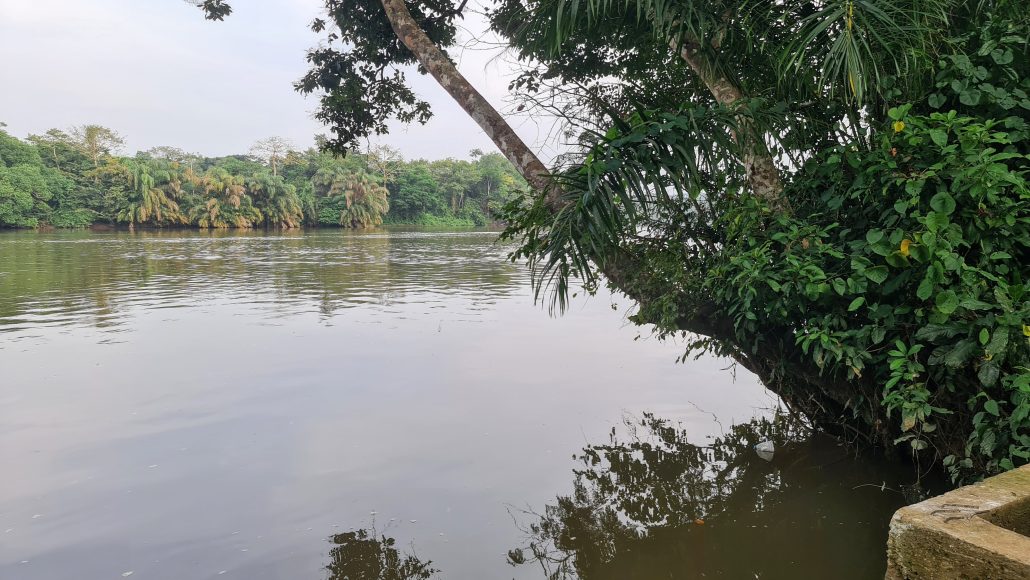
This is my second visit to Sierra Leone, to visit a family member who has been working here. Tiwai Island was high on the list of things I wanted to see on my first visit to Sierra Leone, and this time we made it. It’s in the southeast, along the Liberian border, where there are large tracts of primary forest, including the Gola Rainforest and Tiwai Island wildlife preserves. Tiwai was made a UNESCO World Heritage site just last year for its diverse wildlife, including 11 species of primates, rare pygmy hippos, and 135 species of birds, all on a 12 square kilometre island in the middle of the Moa River.
From Wikipedia:
Tiwai Island (Mende for ‘Big Island’) is a wildlife sanctuary and tourist site in Sierra Leone. Run by the non-governmental organization Environmental Foundation for Africa (EFA), Tiwai is 12 square kilometers in area and located on the Moa River in the Southern Province. It is also one of the largest inland islands in the country.
In the late 1970s the Island was recognised as a special biosphere for wildlife conservation. Numerous natural scientists visited the island during the 1970s and 1980s, researching various aspects of its flora and fauna.Subsequently, some researchers along with the Barri and Koya people then requested that it became a wildlife sanctuary and in 1987 it was officially designated a game reserve.Activities including community conservation program, ecological research, wildlife management, tourism and forestry management training took place on the Island. Then, in 1991 civil war broke out in Sierra Leone financial support for the Tiwai was stopped and researchers and tourists were unable to reach the Island. After the end of the civil war the Environmental Foundation for Africa, a local Sierra Leonean NGO, rebuilt both tourism and researcher facilities on the island.
In 2025, the island was designated as a World Heritage Site by UNESCO as part of the Gola-Tiwai complex.
Here is an article about Tommy Garnett, an Irish/Sierra Leonian, who was instrumental in founding the Environmental Foundation for Africa, and who worked to get Tiwai Island declared Sierra Leone’s first UNESCO World Heritage site. https://www.france24.com/en/live-news/20250713-the-activist-who-fought-for-sierra-leone-s-first-world-heritage-site
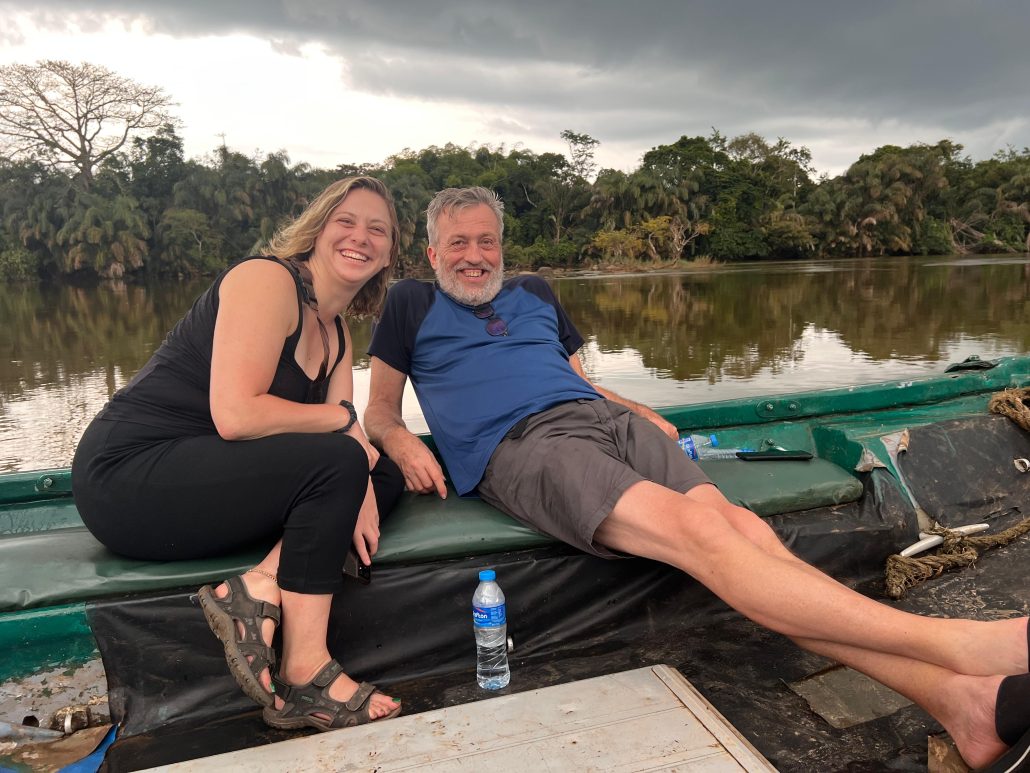
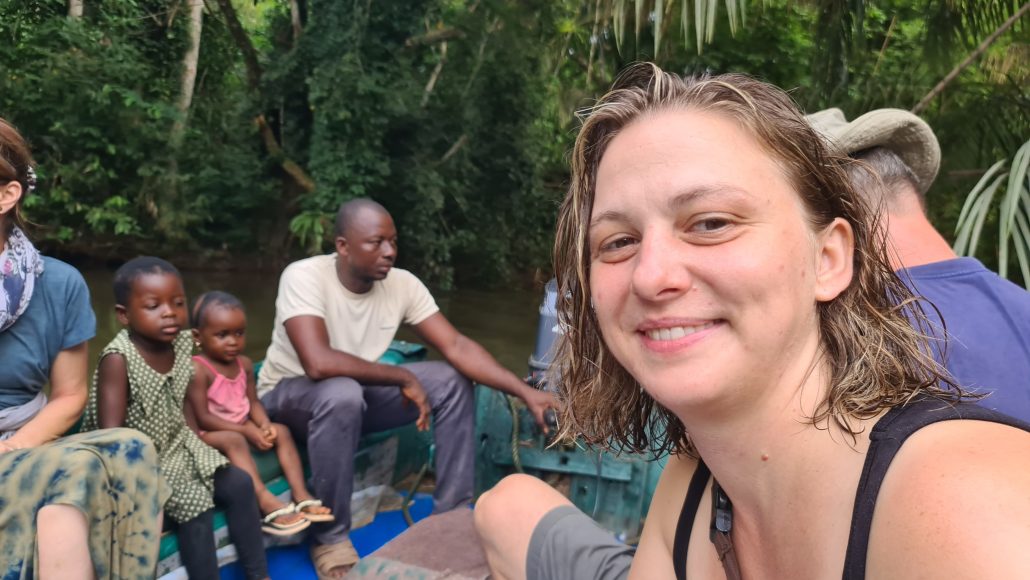
We were met at the landing in Ghiuba by Captain S and part of his family, and ferried across the river to the island in his boat. A short walk inland and we were at the Research Station, a few buildings originally built as a wildlife research centre in the 1970s. Abandoned during the Sierra Leone civil war, they fell into ruin. Much damage was also done to the island environment. The EFA gradually rebuilt the buildings to create some basic accommodation. Local villagers care for the place and provide basic meals for guests.
Early the next morning, we set off on our first forest walk. For four hours, we wandered on small paths through the jungle, stopping frequently to listen and watch for different wildlife. We saw many individual monkeys and groups of monkeys race through the treetops high above us. We identified at least 5 of the 11 species of primates known to inhabit Tiwai, including red colobus, Diana, black colobus, and black-and-white colobus. We didn’t spot any chimpanzees, but our guide showed us a spot where the chimps had brought some stones and used them to break open the pit of a fruit, to get at the softer nut inside.
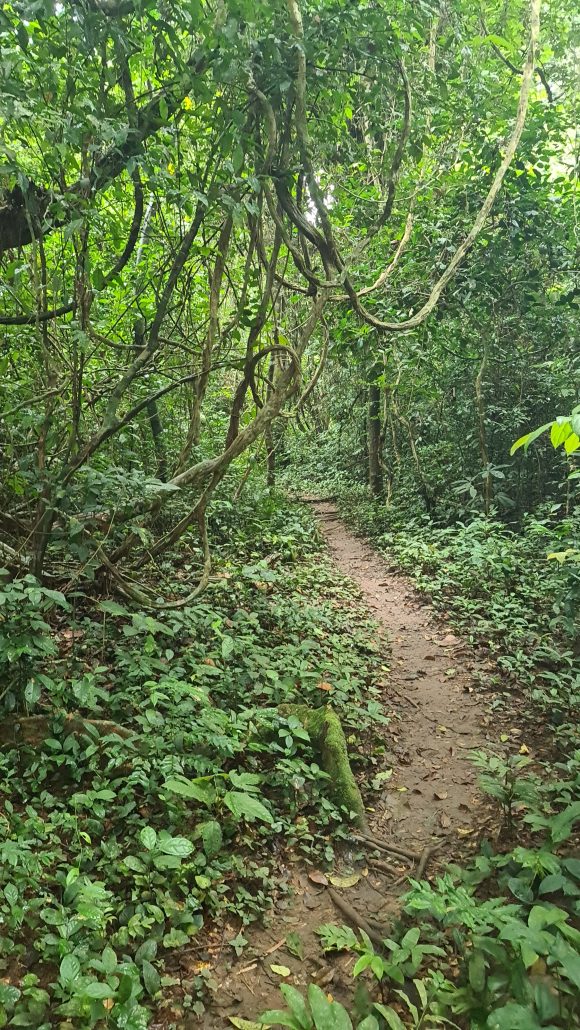
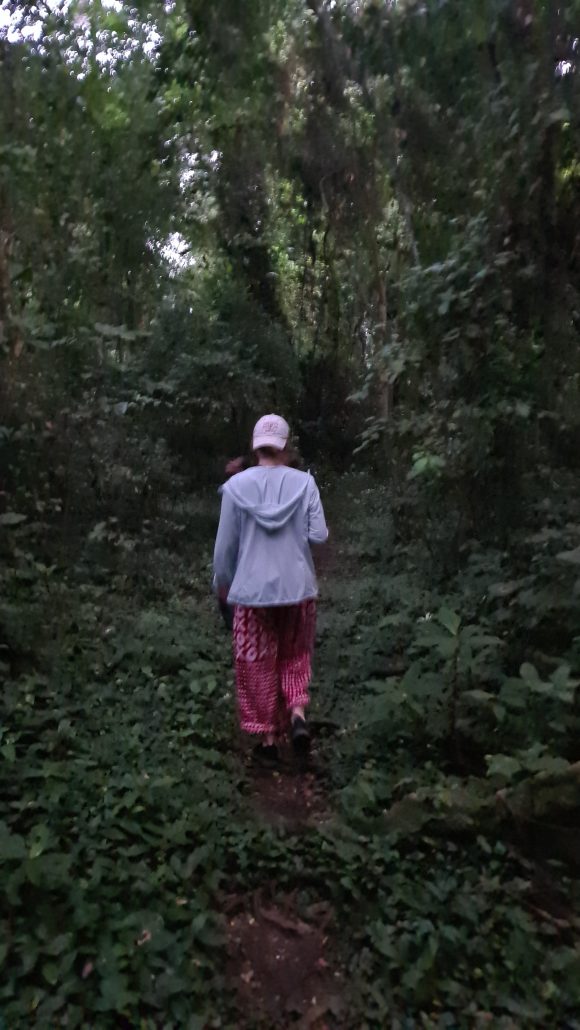
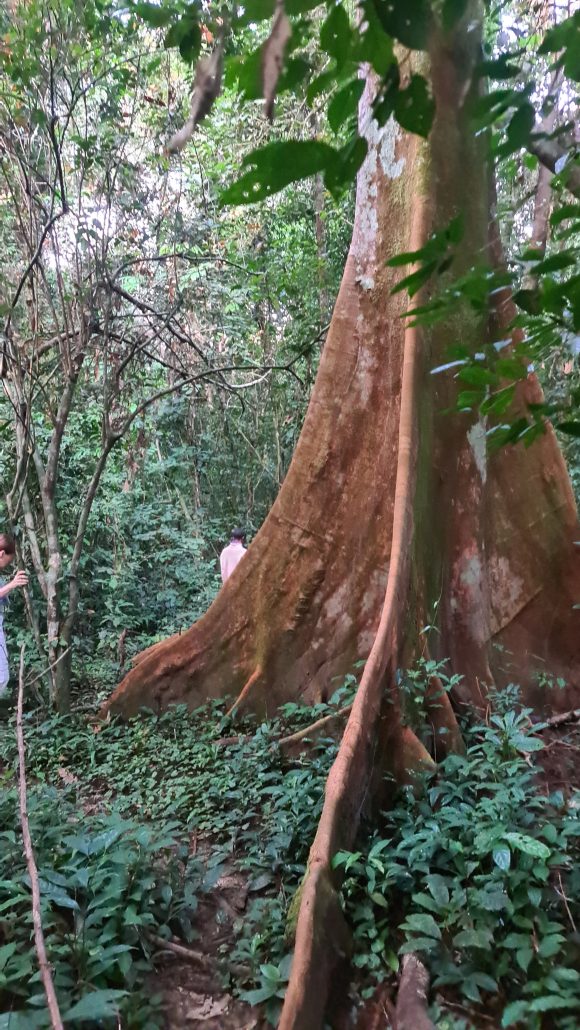
Our guide was also knowledgeable about the various uses of plants for medicinal purposes. Chew on the inner bark of one tree to cure a cough, and use the bark and sap of another as a makeshift bandage if you cut yourself.
The Moa River surrounds Tiwai Island, and in places, there are rapids.
After the long walk, we were tired and hungry. Back at the Research Station, we were served a good breakfast of an African omelette and some delicious fried plantains.
In the afternoon, we got back on the boat and cruised along the river banks, and observed the riot of plant life and occasional sightings of some of the exotic birds, including the blue curacao and the great hornbill.
We returned to our accommodation and were served a simple but delicious meal of cassava stew and rice, the national dish of Sierra Leone. We sat around the table afterwards with cold beers and played cards with the other guests, sharing our experiences both of the island and Sierra Leone in general. Then an early night, sleeping to the sounds of the jungle around us.
The next morning I went on another shorter walk with a smaller group, and already I felt like I had learned a lot, much more quickly identifying the sounds and signs when particular wildlife and birds were around us, knowing when to stop and watch for sightings. Though we saw and heard birds and monkeys, my attempts to photograph them were mostly failures. Most of the action was high up in the treetops, and difficult to capture with my phone camera. In this video, you can hear the sounds.
Then it was back on the boat to start our journey back to Freetown. Though difficult to get to, and having the most basic accommodation, the visit to Tiwai Island was a very rewarding and enjoyable experience. It was the most authentic jungle exposure I’ve ever had.