

This was my fourth visit to Bengaluru (formerly known as Bangalore), and again, the city has changed. My last visit was 10 years ago, when I was amazed at how the tech centre had grown. I have a vague recollection of someone in the office telling me that 10,000 people had shown up for work that day.
The numbers in India are mind-boggling. Only 2.7% are Christian, which seems a tiny number, until you do the math and see that it’s about 40 million.
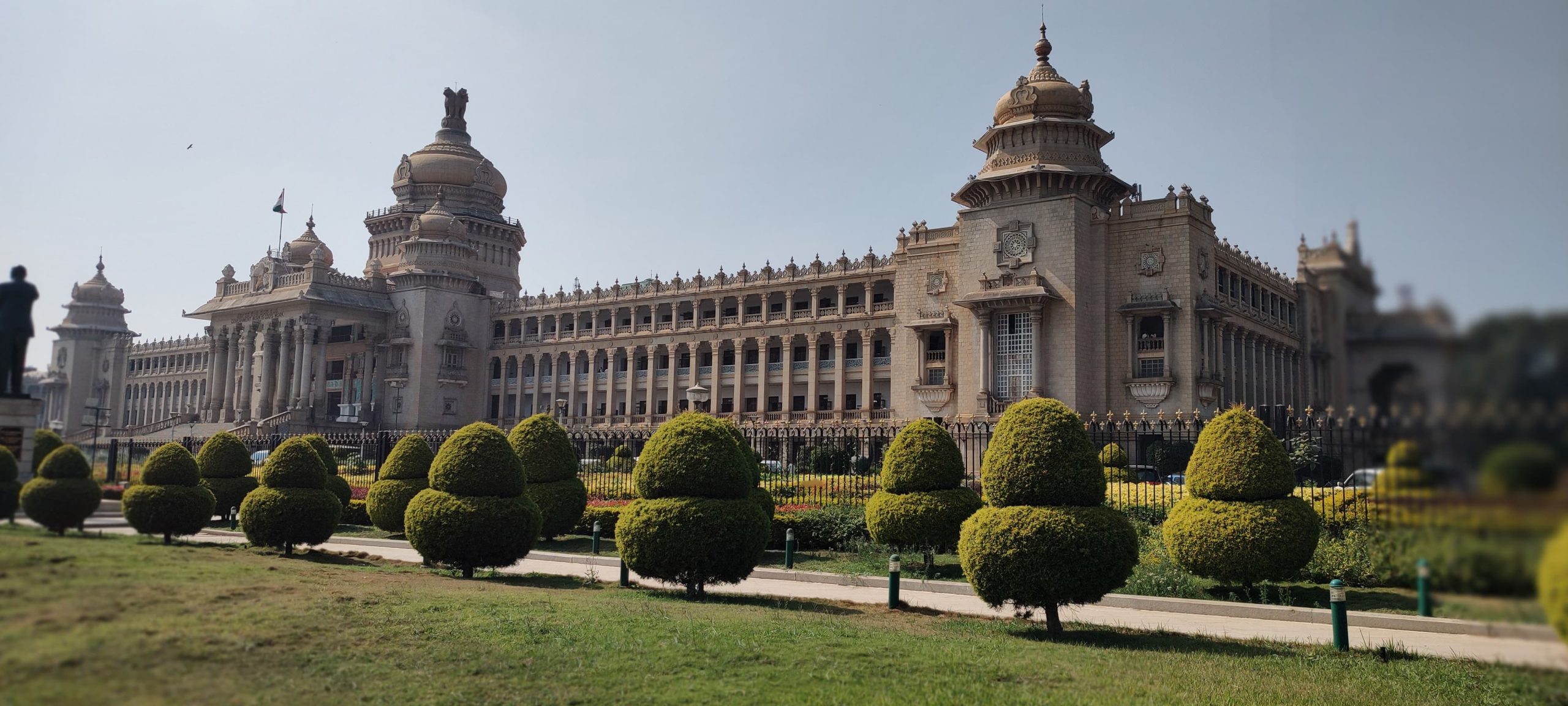
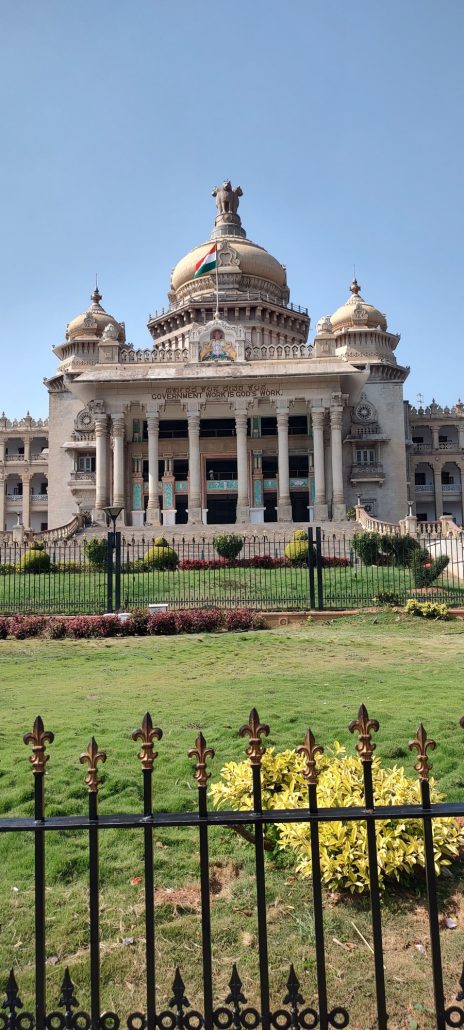
Other things are pretty much the same. Vidhana Soudha, the seat of the state legislature, still has the words ‘Government work is God’s work’ carved over the door.
The neoclassical High Court of Karnataka, Attara Kacheri, still looks like it’s been embroidered with icing sugar. It has an interesting history, twice escaping demolition, once in the 1950s and again in the 1980s. It was nice to see it’s still there, in Cubbon Park.
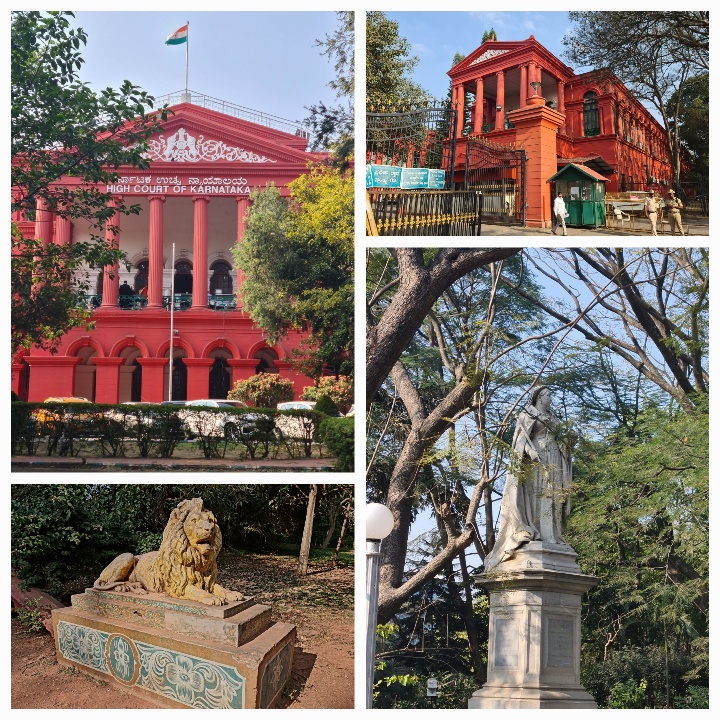
Back in the 1970s, the city had a wealth of green spaces. About 70% of it was under green cover. Today, it has less than 3%. This is the price of progress, if urbanisation is how you define progress.
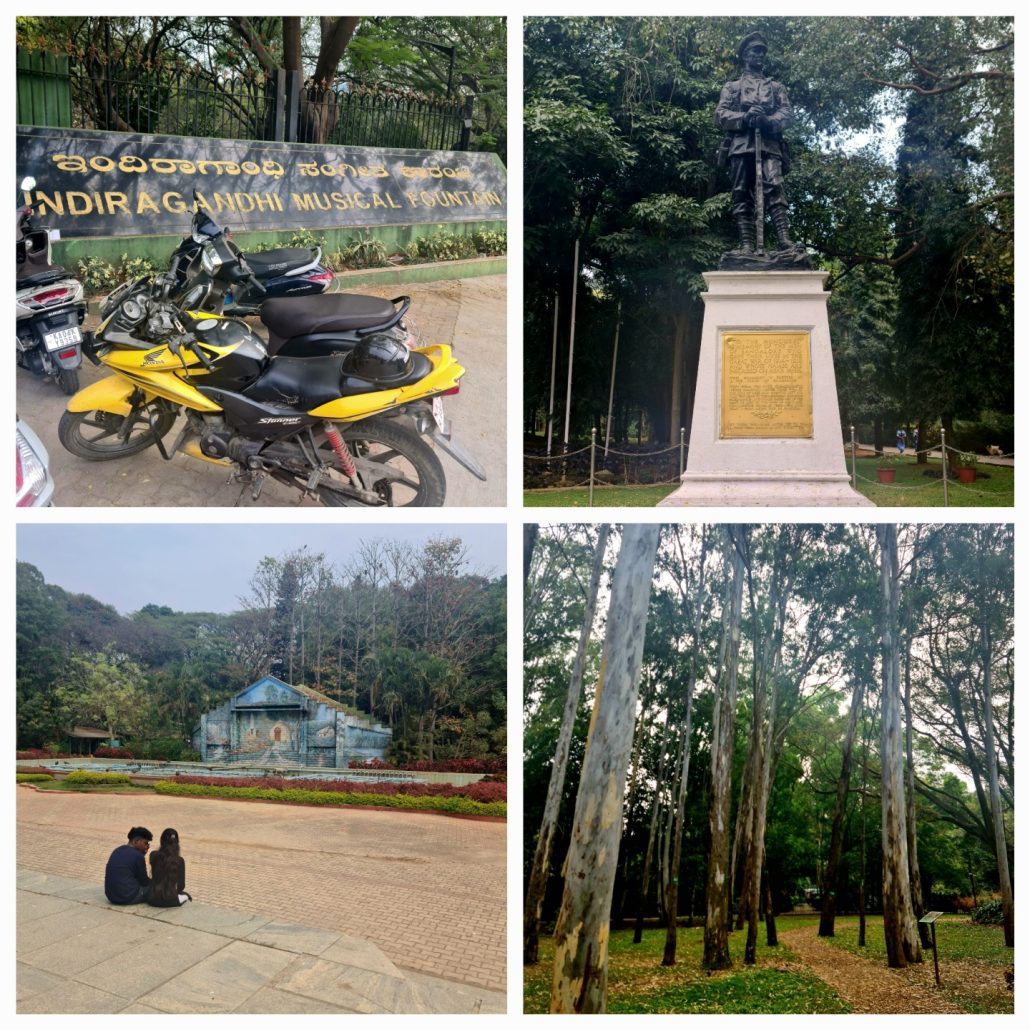
We walked through two – Cubbon Park and Indira Gandhi Musical Fountain Park. The former seems to allow TikTok shoots and the like, the latter says no to photos and videos. Like a lot of the rules I see here, I wonder how and when they are enforced.
Next time I’m here, I’ve made a note to visit Freedom Park, once the city of Bengaluru Central Jail, constructed by the British in 1867.
Commercial Street is lined with designer names and labels. The city’s increased wealth as a digital centre has made room for a more global marketplace. Average monthly salaries have increased by around 80% in the last five years, but are still just over $1200. There is significant income inequality within the city, largely driven by the high-paying tech industry and the lower-paying service and support sectors.
While there, SM took me to Shiv Sagar to try a palak (spinach) dosa. Have I mentioned that I see dosas in my future? My treat to myself this trip is a dosa pan.
We crashed a wedding at St Mark’s Cathedral (CSI) so that I could have my three wishes. The groom’s parents were late, though, so we didn’t interrupt proceedings. I caught the wedding photographer taking our photos, which made me smile. I’m sure that in a few days, the bride and groom will be asking each other who we are.
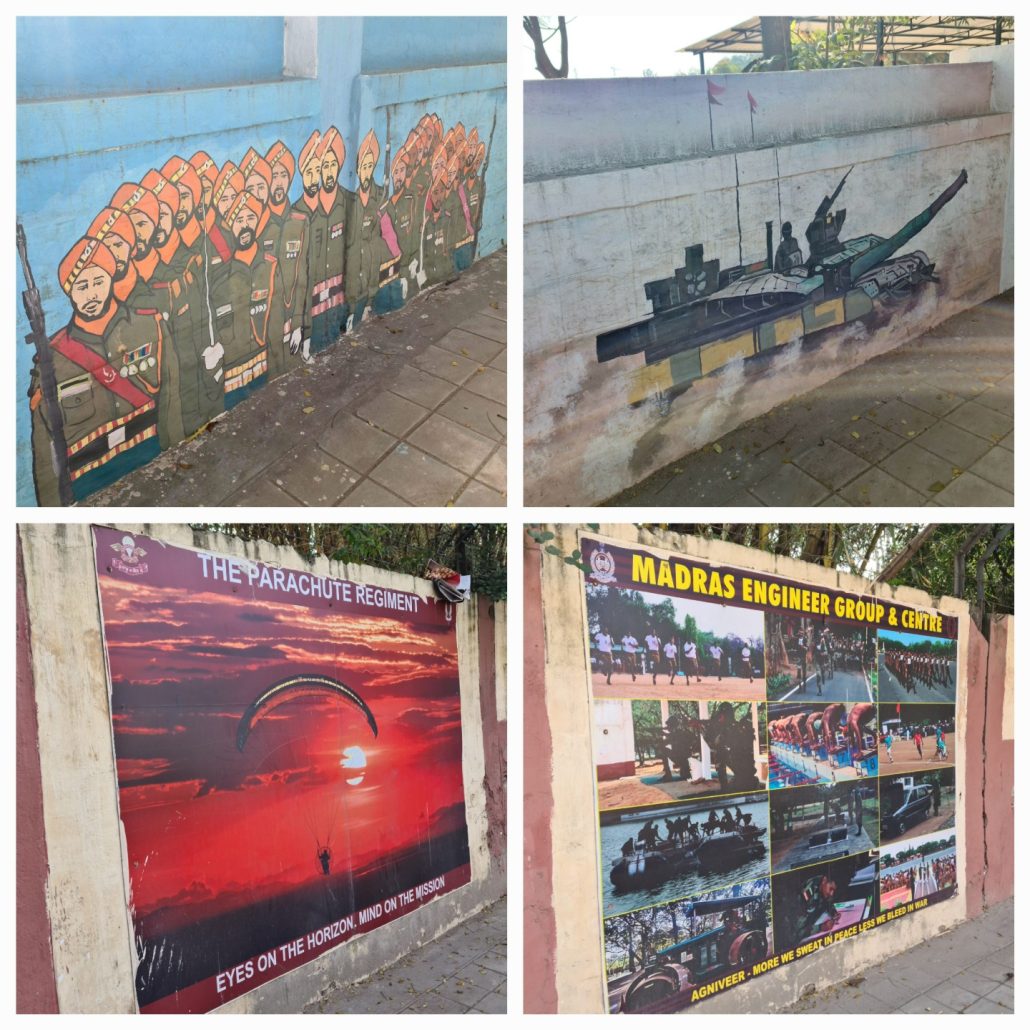
The army presence is what I remembered. Not as in physical presence, as in soldiers in uniform, but in essence. As an outsider looking in, India seems inordinately proud of its armed forces. It has the largest all-volunteer standing army in the world, i.e., permanent, professional, full-time paid soldiers who sign up voluntarily and are employed in peacetime and in war. And its military ranks fourth in the world after the USA, Russia, and China.
This trip was less about the sights and more about the experience. We took advice from new friends and old.
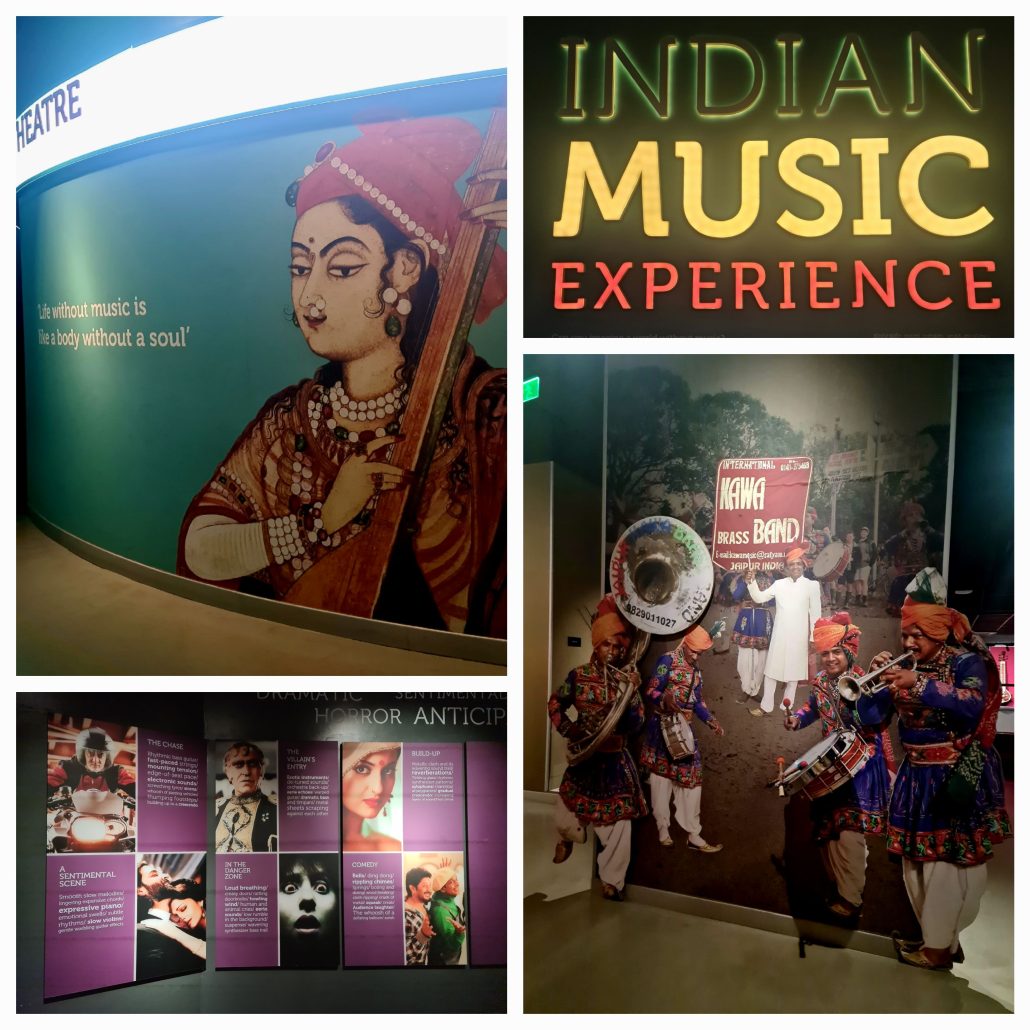
My old friend SM offered the Indian Music Experience as a suggestion, India’s first and so far only interactive music museum. We’d been to one in Phoenix and loved it. Truth be told, music’s not really my thing, yet I can and do appreciate some good curation. And this was excellent. It would have been 100 times better if I’d known the cultural references to movies and movie stars, singers and composers. Even still, it was well worth the ~€2 admission (and that was the foreigner price; for locals it’s 20 cents).
I was particularly taken by the storytelling section where two storytellers give their versions of the same story, each with a different lesson. The same players, the same plot, yet one version had the protagonist acting out of love, the other out of guilt.
And the part where the same scene from a movie is played with three different soundtracks, and how this completely changes what you see, even though what you see is the same. Pure genius.
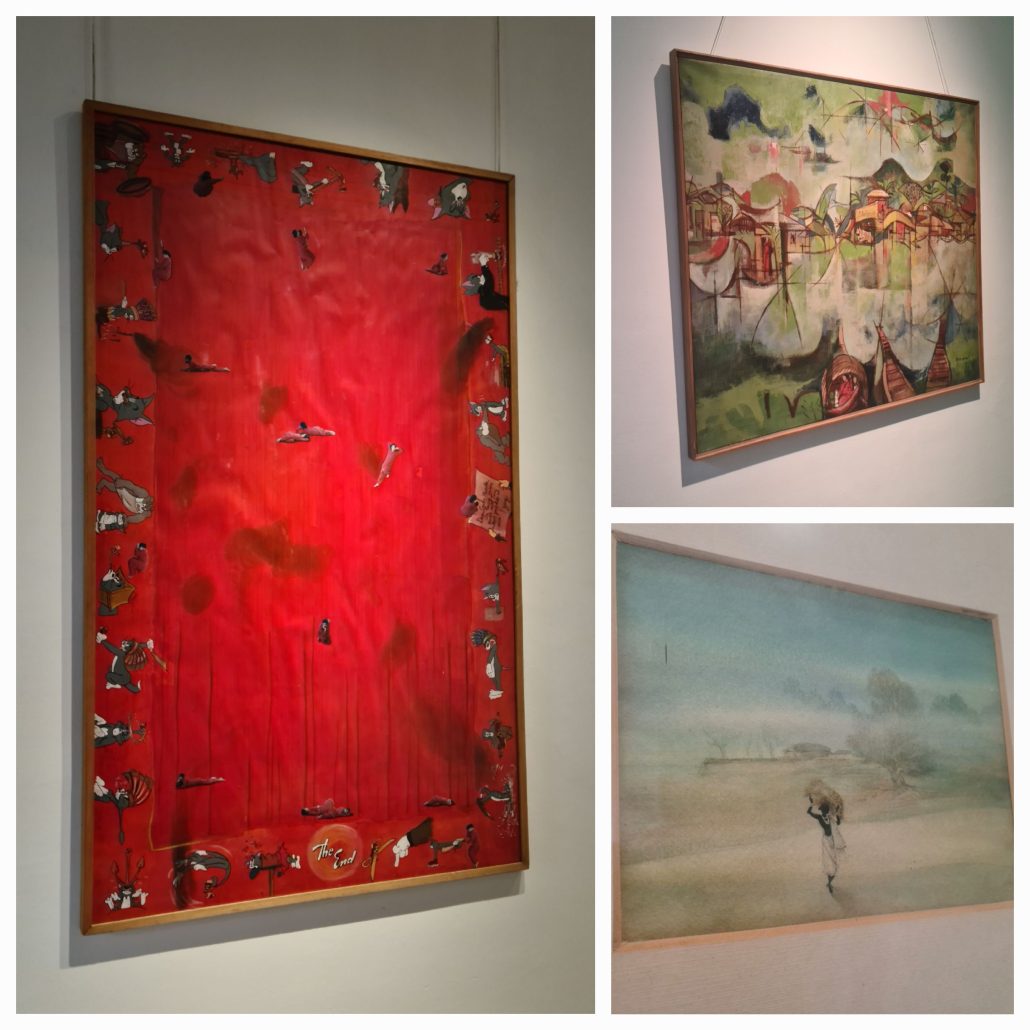
The lovely MZ from Chennai suggested a visit to the National Gallery of Modern Art in the old Manikyavelu Mansion on Palace Road. Along with the galleries in Delhi and Mumbai, this makes up the triumvirate of national galleries in India.
The collection of NGMA mainly comprises paintings, sculptures, graphic prints and examples of early photography in India, which showcased the historical development of modern art in India. The display includes Indian miniatures, colonial artists, Bengal School and post-independence artists, which led to the birth of modern and post-modern art of today. In addition to permanent display of paintings and sculptures, this NGMA also showcases national and international exhibitions regularly.
Given that my lovely field of poppies may have been killed by smoke, I’m in the market for a new piece of art. I picked three. The first was by Hama Upadhayay, who was murdered in Mumbai in 2015. In it, she uses the cartoon figures of Tom and Jerry to explore violence.
The second was by Quamrul Hassan. I was quite taken with the village scene by water, especially the colours and the form.
The third was a miniature by Abanindranath Tagore, founder of the Indian Society of Oriental Art in 1907 and the man behind the Bengal school of art, which is said to have led to the development of modern Indian painting. I was taken by the woman walking home from the fields.
We’d split up in the gallery and gone our merry ways. Some of the permanent exhibition was quite disturbing, more of it was enlightening. Similar to the IME from an education perspective, it traced the history of art in India to the present day.
When we met at the end, himself had also chosen a Tagore miniature as his pick of the day. I preferred mine.
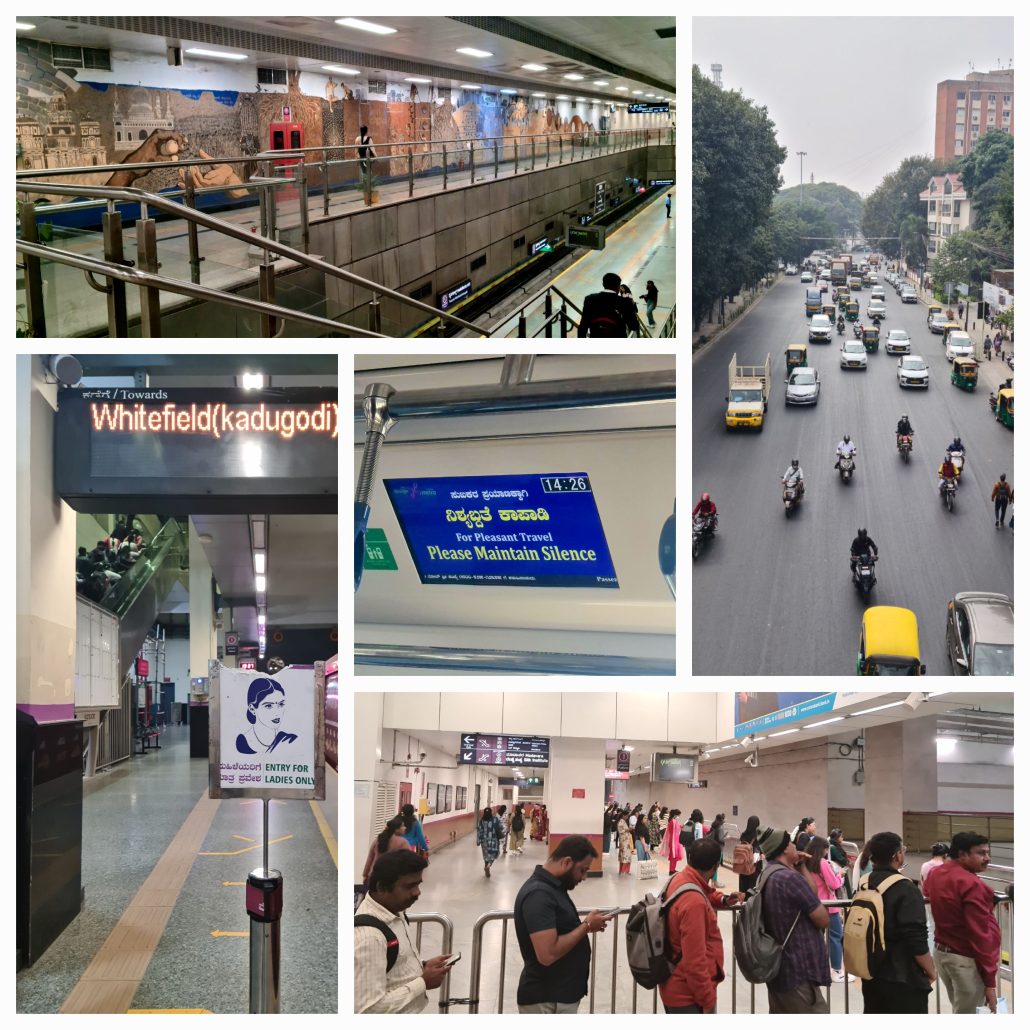
We used the new metro to get around. New, as in new to me. It’s 10 years old and makes navigating the city so much easier. There is at least one carriage on every train for ladies only. We found this out when we accidentally queued in that section and it took a minute or so to figure out what was different. The orderly lines function well until the doors open, then the ebb and flow starts.
On our first journey, at least four people, three inspectors and a random stranger, wanted to get someone else to stand so we could sit. Was it age, I wondered? Later, during rush hour, it was everyone for themself.
The note to maintain silence was amusing. Largely ignored, phones were in high use. And the noise above ground is deafening.
Up on the streets, the traffic is the same as ever. No white lines, no lanes, and no apparent rules other than it’s no place for the timid.
Crossing a street is exhilarating. At one point, we were three standing at a major intersection with no lights or crosswalks. A policeman took pity on us and parted the sea of traffic so we could pass.
Elsewhere, other pedestrians walked, stretching out their arms, palms facing up, in a signal generally accepted to stop traffic. Moses would be proud.
We were up early the next morning for our train to Coimbatore, moving from Karnataka state to Tamil Nadu. This train isn’t like the Chennai-Mysuru one, in that it doesn’t have an executive class, so let’s see how we get on.
I liked that my time in Bengaluru this time was more that of a visitor than a tourist and that there was no pressure to see all that had to be seen.
While I enjoyed it immensely, it’s not a city I could see myself calling home.



3 responses
I once travelled 30 miles by taxi to get to Bangalore (as it was then) to get to a restaurant that served Christmas dinner on Christmas day. Not quite like the one I ate a few days ago but better than anything else on offer.
It took us nearly eight hours to go 248 km. Travel and time have taken on a whole new meaning.