

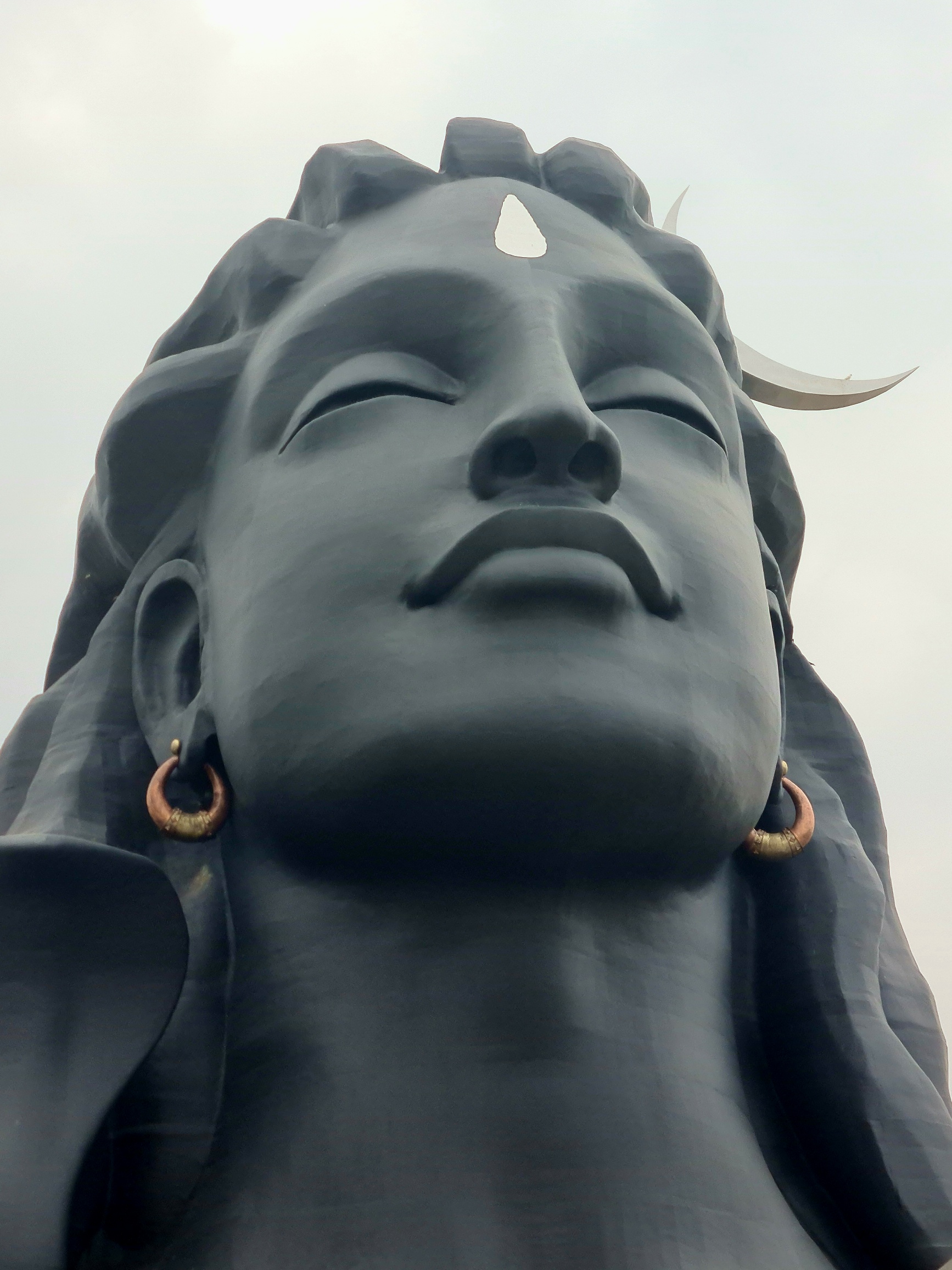
Our train was 30 minutes later getting in to Coimbatore. At various stages in what was to be a 5-hour journey, we had been an hour behind schedule.
We were in the C coaches – not the E. And they’re still spacious and well served. The only difference being that you had to buy food. Which we would have, had the lovely TS not sent us off with a packed lunch. We felt ever so Hungarian.
The catering team ran the aisles, carrying their offer on trays balanced on their shoulders. They shot out the words like automatic machine guns, bullets that never quite hit their target with me. I caught a few like biryani and vada, but the rest were beyond me. We could have had chai tea, filter coffee, lemon tea, or water. But given the state of the public loos, I’m limiting my water intake these days.
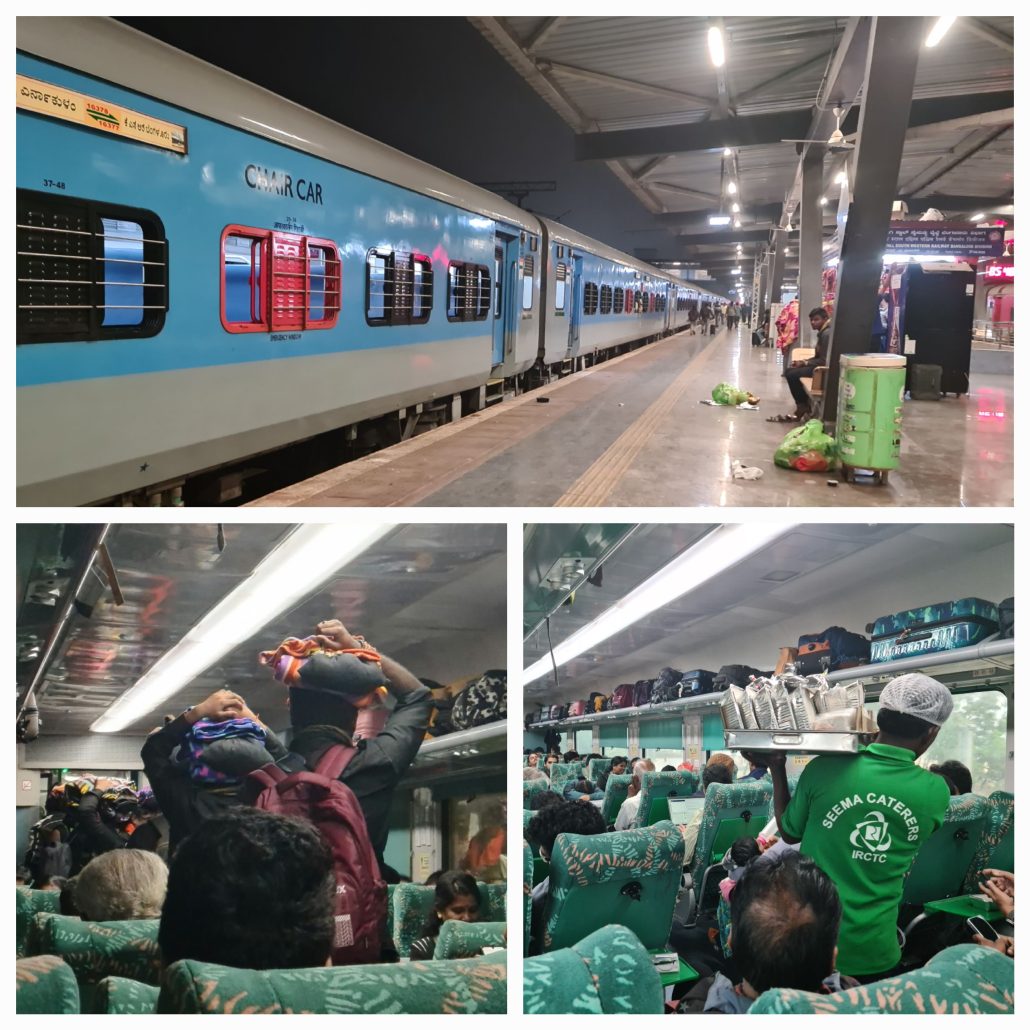
Even in posh-looking hotels, the public loos are in a bad state. I have become JP Donleavy’s Jocelyn Guenevere Marchantiere Jones, the woman who likes clean restrooms.
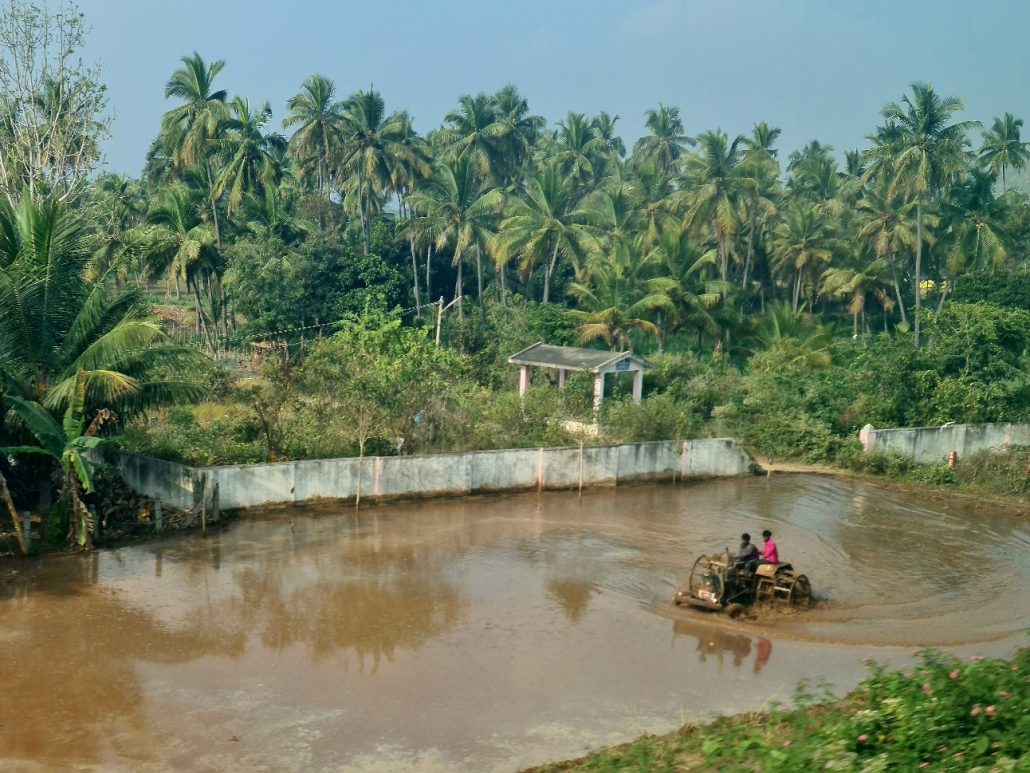
The view from the train was much the same as we moved from the state of Karanataka to Tamil Nadu. Lots of rice fields and greenery punctuated by colourful villages and some odd machinery.
At Coimbatore, we headed for the back exit to hook up with Shivanandran, our driver for the next 10 days. The station wasn’t nearly the nightmare that the Bengaluru one was – that had a policeman trying in vain to direct foot traffic across the pedestrian bridge. It was a case of sticking my carryon in front of me like a baton and taking no prisoners.
We were headed to Ooty, a hill station some 7,700 ft up the Western Ghats where the British went to escape the heat, back in the day.
But first, though, we had to take a side trip – a two-hour round trip to see the Isha Yoga Centre at the foothills of the Velliangiri.
Isha is a sacred space for self-transformation, where you can come dedicate time towards your inner growth. The center offers all four major paths of yoga [and is] dedicated to fostering inner transformation and creating an established state of wellbeing in individuals. [,,,] Isha Yoga Center provides a supportive environment for you to shift to healthier lifestyles, seek a higher level of self-fulfillment and realize your full potential.
Truth be told, I wasn’t all that interested. But sometimes it’s easier to go along to get along. And I wasn’t doing the driving. We’d seen some pretty massive statues in Thailand; I wasn’t sure what would be different here. The 30 km would take an hour, our first indication that road travel in India is in a different time sphere.
He seemed keen that we see it, though, so off we went.
The Adiyogi statue is in the middle of nowhere – or as close to it as matters. The largest bust sculpture in the world (and in the Guinness Book of Records), it’s 112 feet tall.
“Adiyogi is here to liberate you from disease, discomfort, and poverty – above all, from the very process of life and death.” – Sadhguru
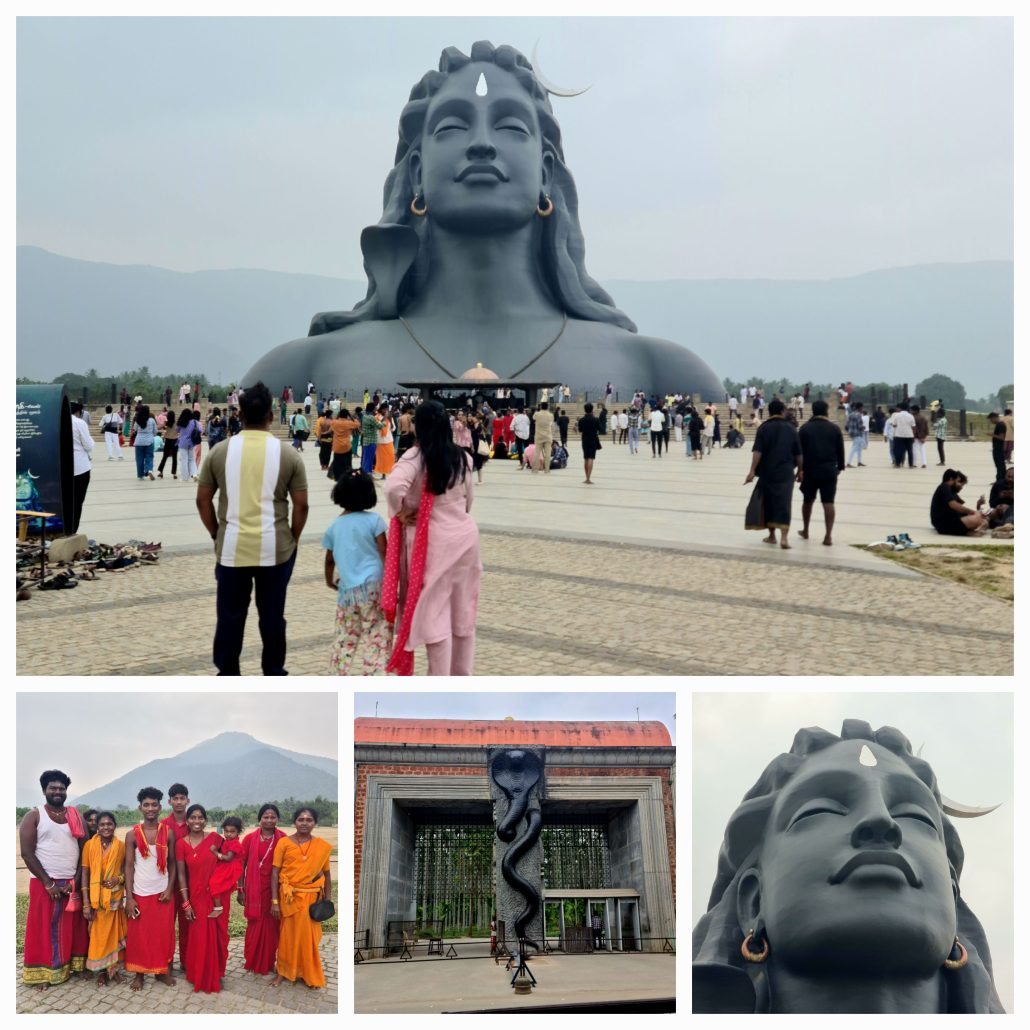
All the way up the path, people had stopped to take photos. The colourful group pictured posed for me after I had posed with them. It happens a lot. Random strangers asking me to stand in their photos.
The posters told us what to expect. We decided to trek the extra kilometre to walk off our stiffness and satisfy our curiosity. When we got to the serpent gate and saw that we had to surrender our bags, we thought better of it.
I wasn’t ready to hand over my phone and wallet to anyone.
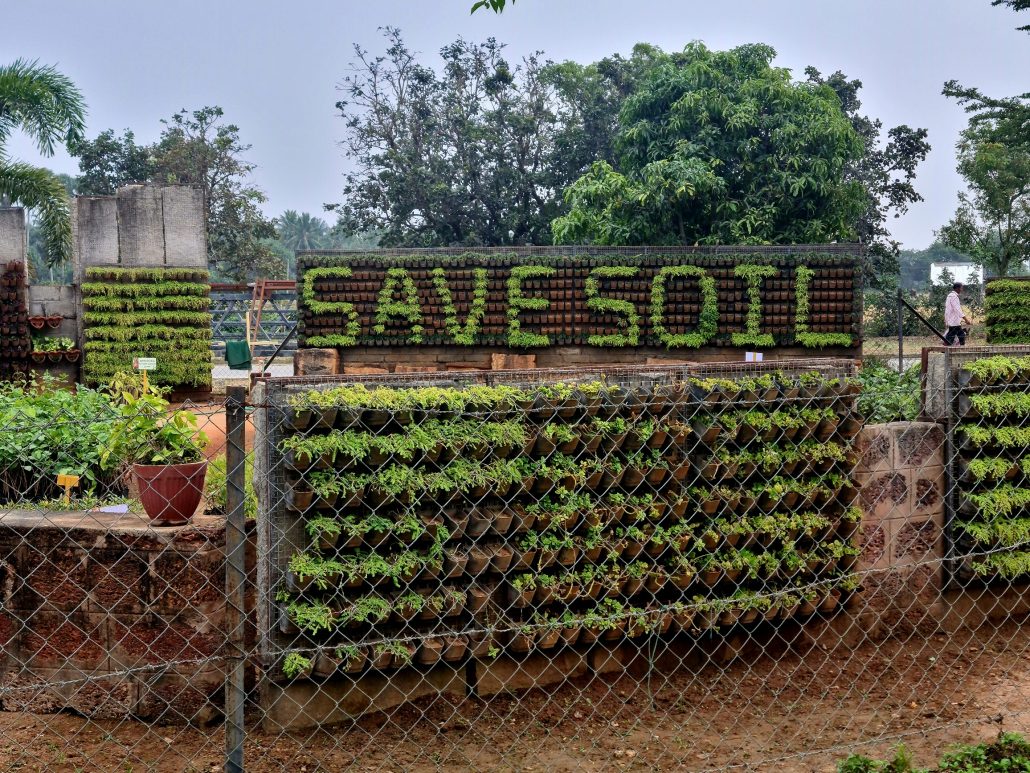
Along the way, though, we learned about the Save Soil movement, where potted plants are suspended on walls.
The “Save Soil” movement in India, initiated by Sadhguru and the Isha Foundation, is a global campaign to combat soil degradation by raising awareness and encouraging policies for increasing organic matter (3-6%) in agricultural soil. Launched in 2022, it gained significant traction with Sadhguru’s 100-day motorcycle journey across countries, securing support from governments (including 10 Indian states) and organizations like the UN. The core solution proposed is to revitalize soil health through ecological practices like planting more vegetation, returning plant litter to the soil, and supporting microbial life to prevent desertification and ensure food security.
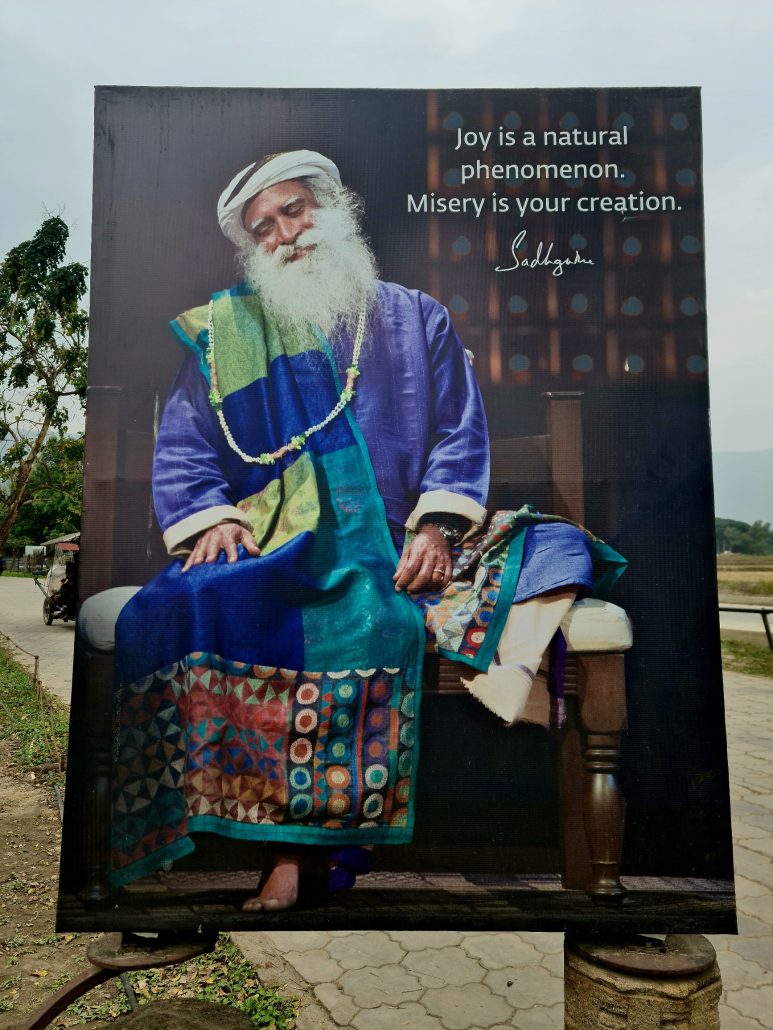
Sadhguru is quite the chap. He has a huge online presence and millions of followers. I’m not quite sure I agree with everything he says, though. And his 10-second rule before eating is a lot like our grace before meals.
Sadhguru’s 10-second rule before eating involves a brief moment of gratitude for the food and the natural elements that provided it, fostering mindfulness and respect, not just a ritual but a way to acknowledge effort and prevent waste. This simple pause promotes mindful eating, making you more appreciative of what sustains you, and encourages taking only what you need, reducing waste.
I did give him 8 minutes of my time to watch this YouTube video explaining what he does with his money: spiritual and material, it seems.
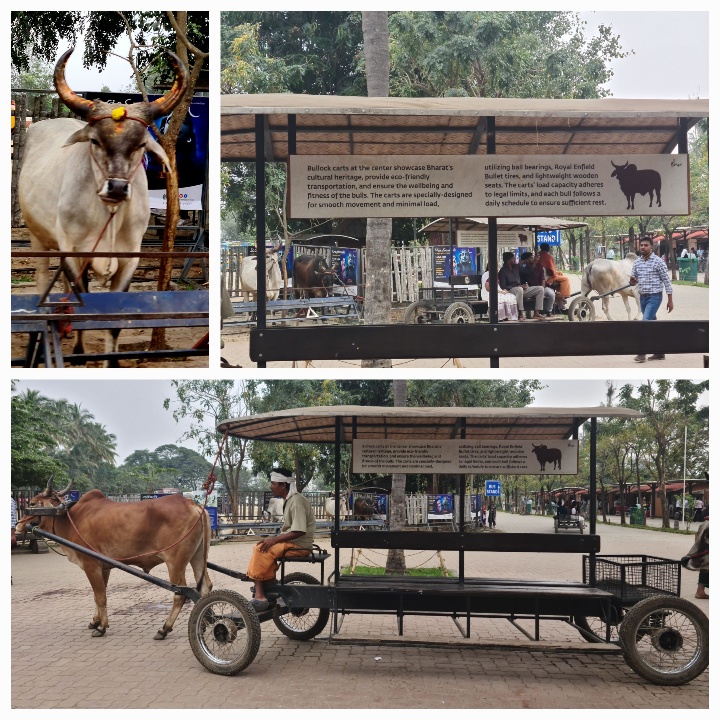
I was taken, as always, with the bullocks. I’m very partial to bovines.The women’s initiative that runs little golf carts up and back to the serpent gate creates much-needed employment and independence in the area.
Still, I couldn’t get rid of the scepticism – Sadhguru’s net worth is in the region of $25 million and he’s not just big in India. The US branch of the Isha Foundation in Tennessee had some $40 million in revenue in 2022.
I was glad we had made the effort, not least because it is fascinating to see so many people focused on one person – who is still living.
What made my day though, was that we found a coffee shop in the city that made a decent cappuccino with oat milk – the Bulls and Bears Bistro – and had clean loos. I can’t tell you how much I’ve come to appreciate plant milk and a clean restroom. JP would be proud of me.
It was a long day, between train and road and detours and miles of mountainous hairpin bends. We’d left Bengaluru on the 6.10 am train and checked into our hotel at 9 pm that night.
I could have cried when I saw that our room didn’t have a conventional key but a slide bolt and padlock.
Surely this wasn’t how the British lived back then?


One Response