

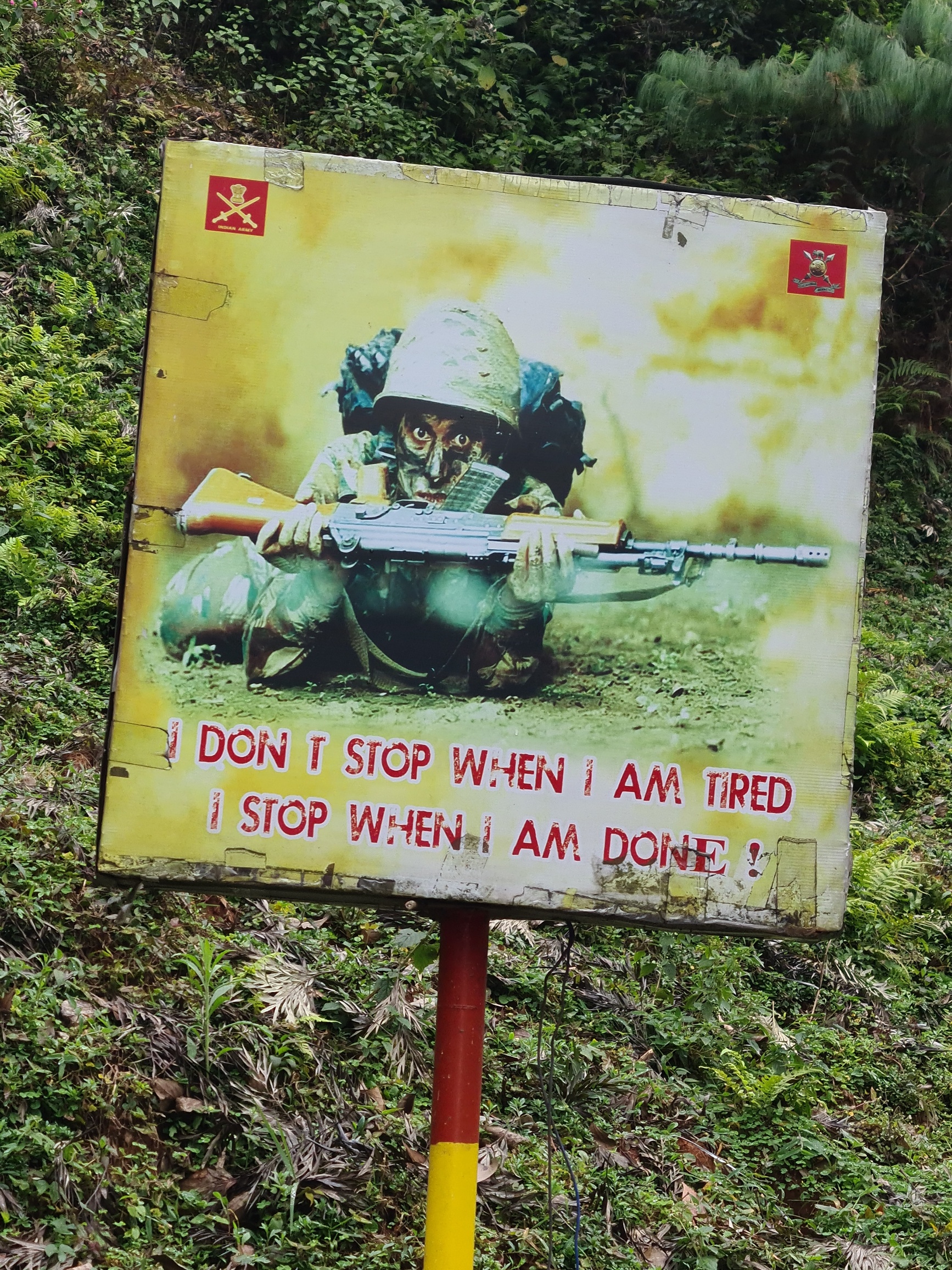
I’ve long had a fascination for military bases. There’s something about a community of people working together for a shared cause, in a shared community, with shared ideals. Some might say it’s cult-like. Perhaps it is. I don’t have enough experience to comment.
I don’t think I will ever fully appreciate what motivates someone to voluntarily risk their life for their compatriots, many of whom neither appreciate nor approve of their fight. The way US soldiers returning from Vietnam were treated and are treated today, beggars belief.
At the Marine Ball in California last year, I was taken with the missing (wo)man table and the significance of the tradition. I was reared on a diet of American TV, where having been a marine gives you lifelong membership of something akin to a masonic group of brothers and sisters who still live by the code. It still fascinates me.
As we drove through Wellington Cantonment, that fascination returned, in spades.
I had to look up what a cantonment is. So much about India is a learning experience.
In case you, too, don’t know, it’s a self-governing township that has both a civilian and a military population. Set up during the British Raj, cantonments are military bases governed by a joint civilian and military board and come under the Ministry of Defence. The first cantonment was established in Barrackpore in West Bengal in 1765 or 1772, depending on what you read.
The one in Wellington is where both the Madras Regimental Centre and the Defence Services Staff College are based. Originally known as Jakkatalla (or Jacketallah), Sir Richard Armstrong, Commander-in-Chief of the Madras presidency in 1852, proposed a name change to honour the Duke of Wellington who had expressed an interest in establishing a sanatorium in the Nilgiris. It took about 8 years for this proposal – the name-change, not the sanitorium – to be acted on.
And the name stuck.
The Duke’s sanatorium for the British soldiers, a recommendation by John Sullivan, whom we met in Ooty, never materialised, but just advocating for it was apparently notable enough to warrant such a legacy.
I had come across that sense of pride in the military in Bengaluru, but this was pride on steroids.
I’ll admit to an interest in uniformed forces and what makes them work. I’ve visited enough Commonwealth graves to have a deep respect for those who volunteer to fight for their country, however misguided that fight might be. I’m not a fan of conscription, perhaps a necessary evil in times of war, yet I can’t see how forcing people to fight for a cause they may not believe in makes any sense.
India has the largest standing army of volunteers in the world, the operative word here being volunteers. The road through Wellington is peppered with signs that testify to this spirit of volunteerism.

One read: They said I could be anything, so I became a soldier. Another said: Born to fight, trained to kill, prepared to die, but never will.
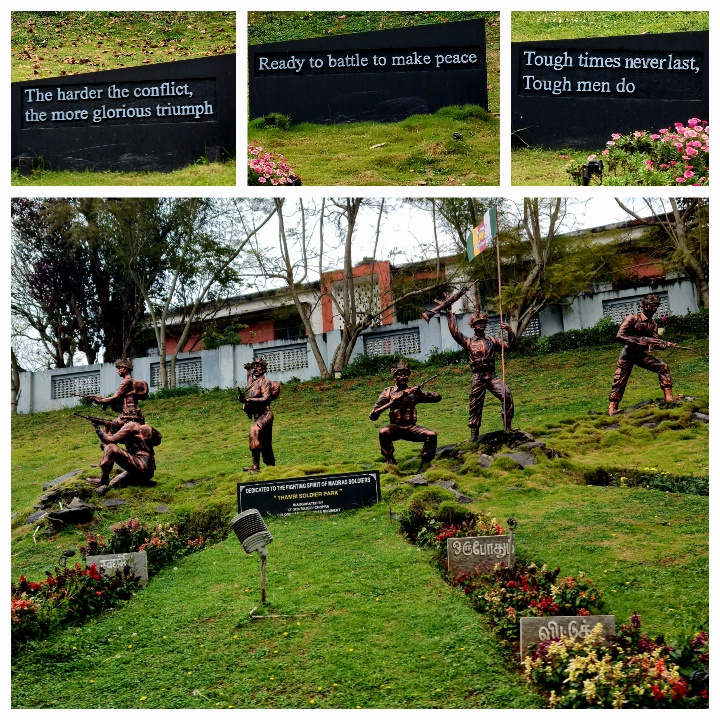
Thambi Soldier Park, a monument dedicated to the fighting spirit of the Madras soldiers, has similar callouts.
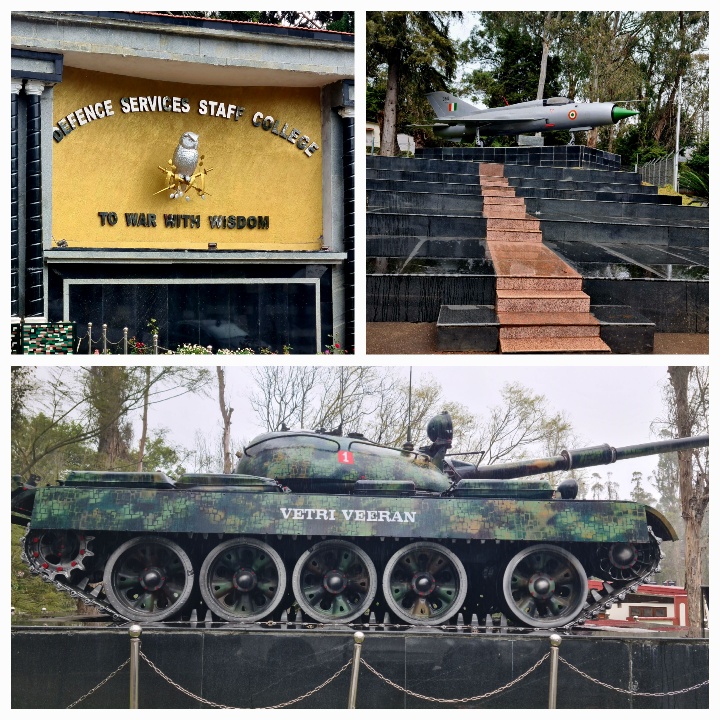
The motto of the Defence Services Staff College certainly gives pause for thought. Don’t war and wisdom make a strange pairing?
 I’m having difficulty explaining the feeling. There was almost a palpable pride in the air. We didn’t stop and talk to anyone. We hardly saw anyone in uniform; there were several restricted areas, which presumably housed the military personnel. So while palpable, it wasn’t visible. It was strange, very strange.
I only found out afterwards that JV, a new friend in Coimbatore who is ex-military, had been stationed at Siachen Glacier. The highest battleground on earth (6,000 m or 20,000 ft), India and Pakistan have been fighting to control it since 1984. Here, more soldiers die from weather-related conditions than from war. One wonders how important this piece of ice can be. I hope I meet JV again; I’d love to talk to him about his experiences there.
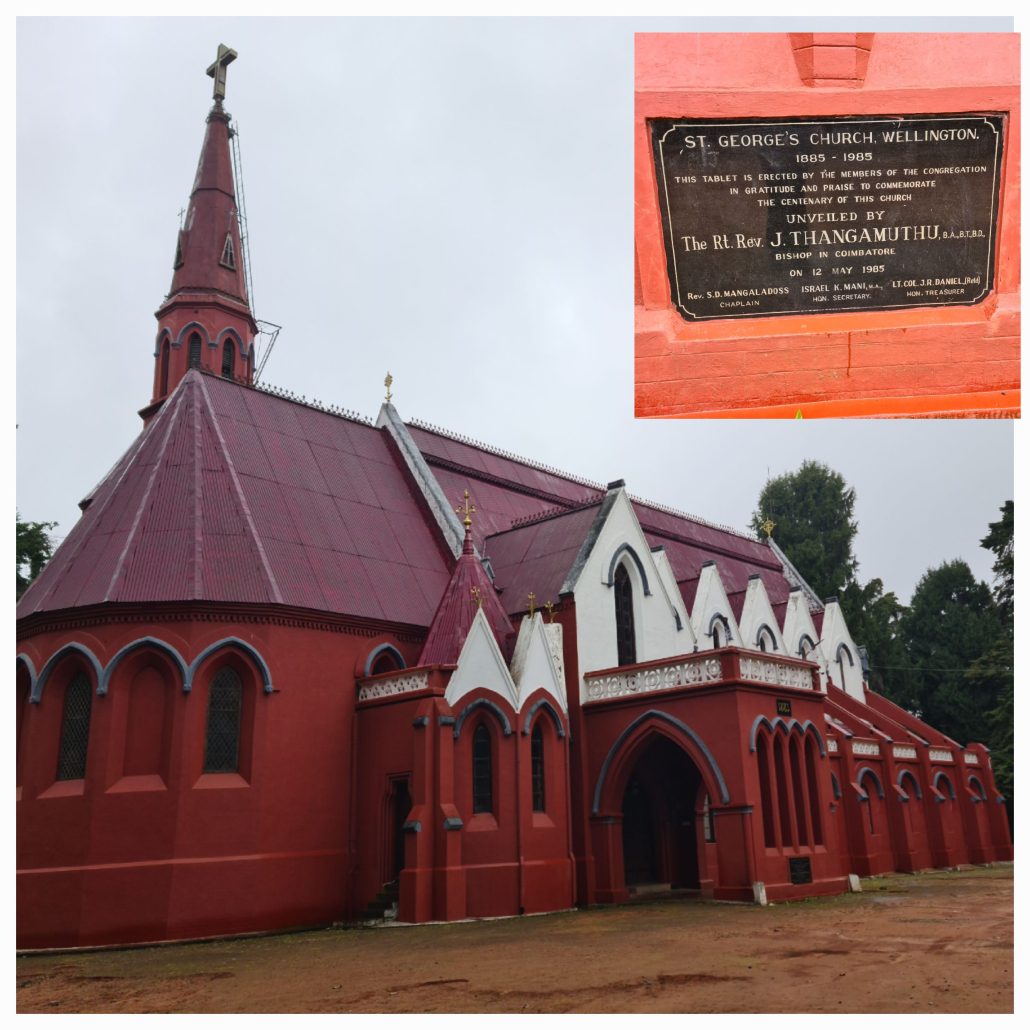
While in Wellington, we stopped to see St George’s Garrison Church, built in 1885 so that British soldiers had somewhere to attend their services.
Architectural features like the pulpit, choir-stalls, and brass altar railings were imported directly from Britain, highlighting its connection to colonial craftsmanship.
We didn’t get to see inside, as it was locked, but this Facebook video will show you what we missed, if you’re curious.
A former Anglican church, in 1947, it was taken over by the CSI.
The Church of South India (commonly known as CSI) is the successor of the Church of England in India. It came into being in 1947 as a union of Anglican and Protestant churches in South India. With a membership of over 3.8 million, it is India’s second largest Christian church after the Roman Catholic Church in India. CSI is one of four united churches in the Anglican Communion.
The CSI was inaugurated on 27 September 1947 at St. George’s Cathedral Chennai, only a month after India achieved its independence from the United Kingdom. It was formed from the union of the South India United Church (itself a union of churches from the Congregational, Presbyterian and Reformed traditions) and the southern provinces of the Anglican Church of India, Pakistan, Burma and Ceylon and the Methodist Church of South India.
From Wellington, it was on to Coonoor, to reflect more on this military pride over a cup of tea.


One Response