


One of the best things about travelling by car and avoiding toll roads is that you can follow the signs that catch your eye. So it was on our drive back from the Tatras. A sign for a UNESCO church some 8 km outside Banská Bystrica in the direction we were headed, with a minor detour, got the curiosity going and we had to stop.
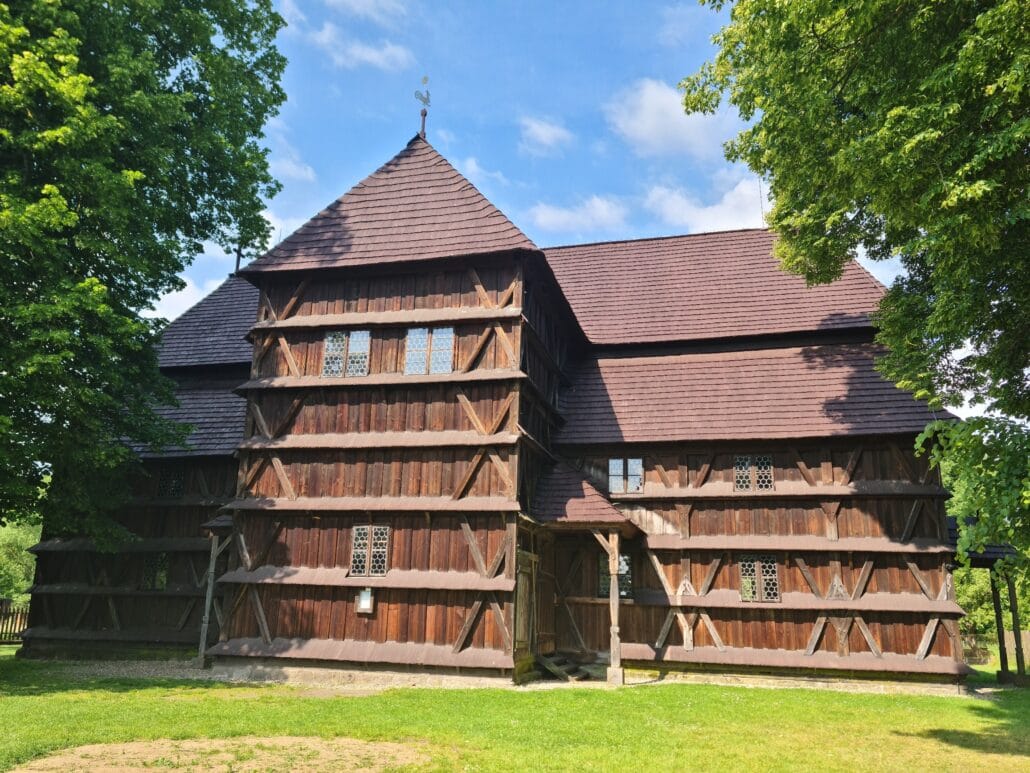
Hronsek (Hungarian: Garamszeg) is a village of fewer than 1000 people. Its main claim to fame is its wooden Lutheran church, built in a year without a single nail.
Wikipedia tells me:
Built in 1725–6, this articular church can hold as many as 1,100 worshippers in an amphitheatre-style arrangement. It is the only wooden church in Slovakia which exhibits Scandinavian architectural influences, for instance in the beam connections and the arrangement of the columns.
The sign outside the church says:
The church in Hronsek was built according to the articles accepted by the Sopron Council in 1681, in one year, from wood, without a tower. It then stood on an island which was created by the Hron River behind the village. The ceilings resemble inverted hulls. Why? Well, during the times of strong persecution of Protestants, many emigrated, mainly to Germany and Sweden. They found work on the ship-building docks. After all, they had grown up working with timber. When they returned home and were allowed to build their Church they used the knowledge they acquired abroad. Therefore, the construction of this church is unique. It contains elements of Scandanavian architecture.
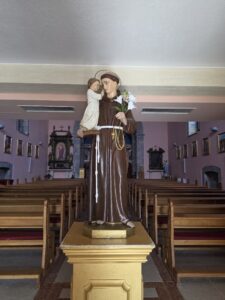
In either case, it’s impressive. Sadly, it seemed to be only open in July and August, unless you call ahead. But I did manage to sneak a photo through the keyhole and the window.
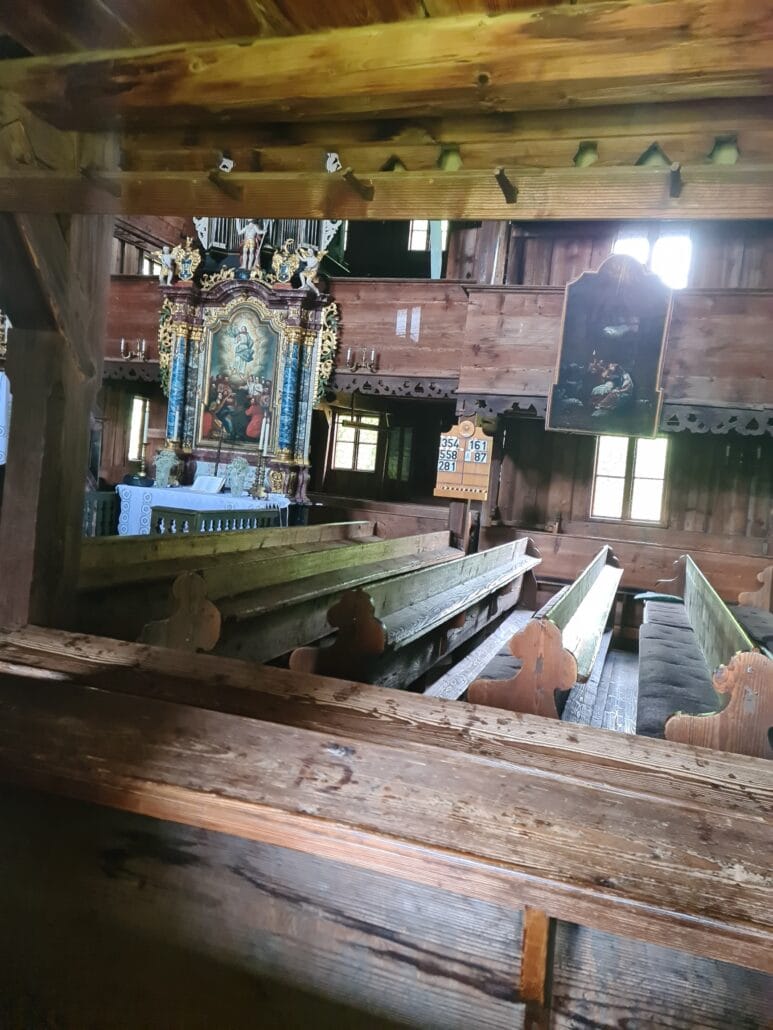
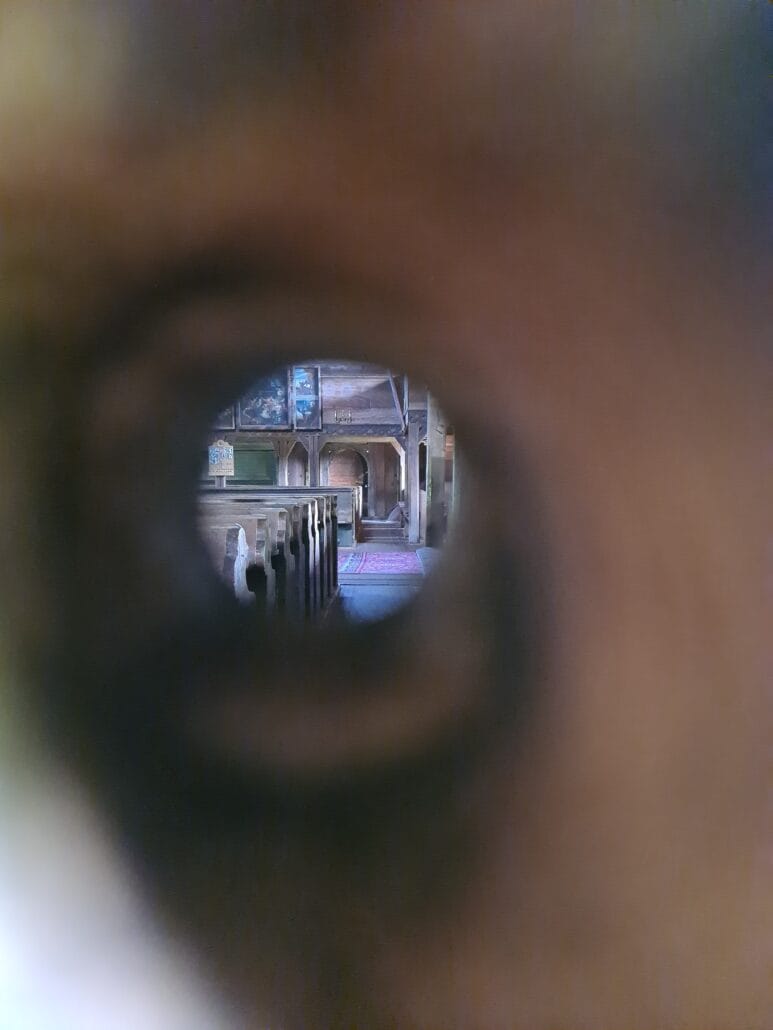
For better photos of the inside, check out @Photoparadise
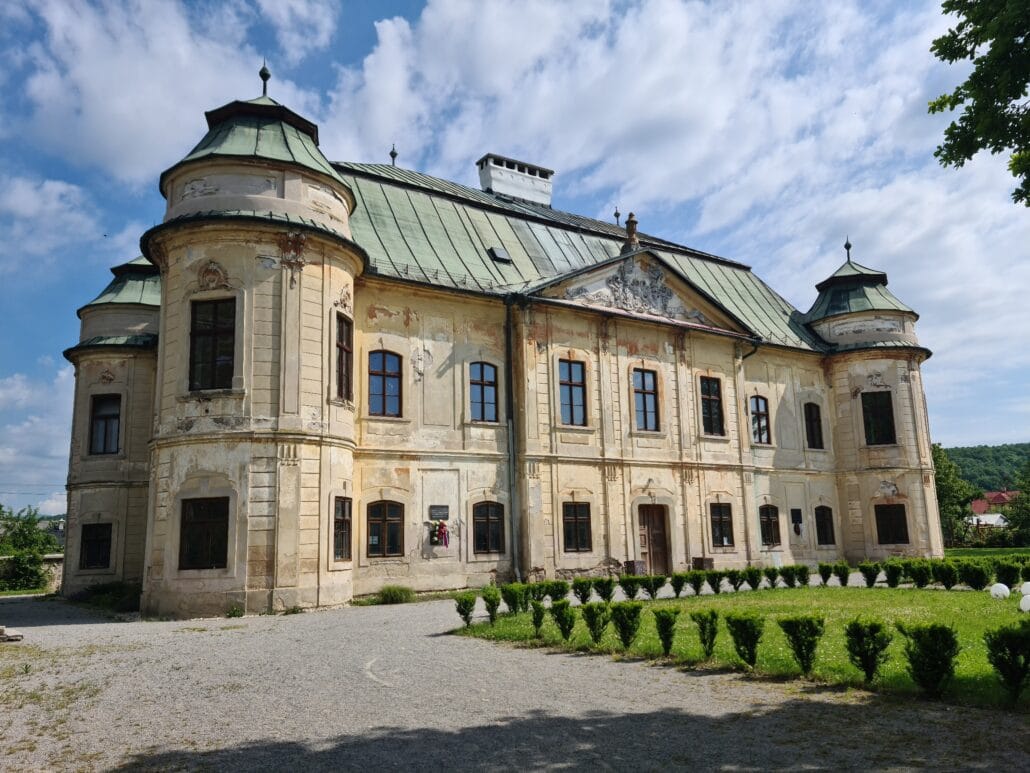
Not far from the church is a Baroque mansion dating to 1775. It opens to the public once a year on the second Saturday in May when the village has its village day. The garden features a rare 200-year-old Linden tree that’s some 25 m high and half a meter wide. There is a plaque on the wall mentioning that during the Slovak National Uprising it was a Slovak language training centre for the 1st Czech Army to supplement the 2nd Czech Paratrooper Brigade in the USSR. The letters SNP appear everywhere we’ve been in the country – Slovenské Národné Povstanie – Slovak National Uprising. It was a big deal, for the country, and for Europe.
Further up the village, there’s an original 14th-century structure that was later turned into a three-storey, four-towered Gothic-Renaissance mansion complete with a moat. It’s been privately owned since 2002 and is undergoing renovations. Watch this space.
From what I read, it was once the village church and also a prison.
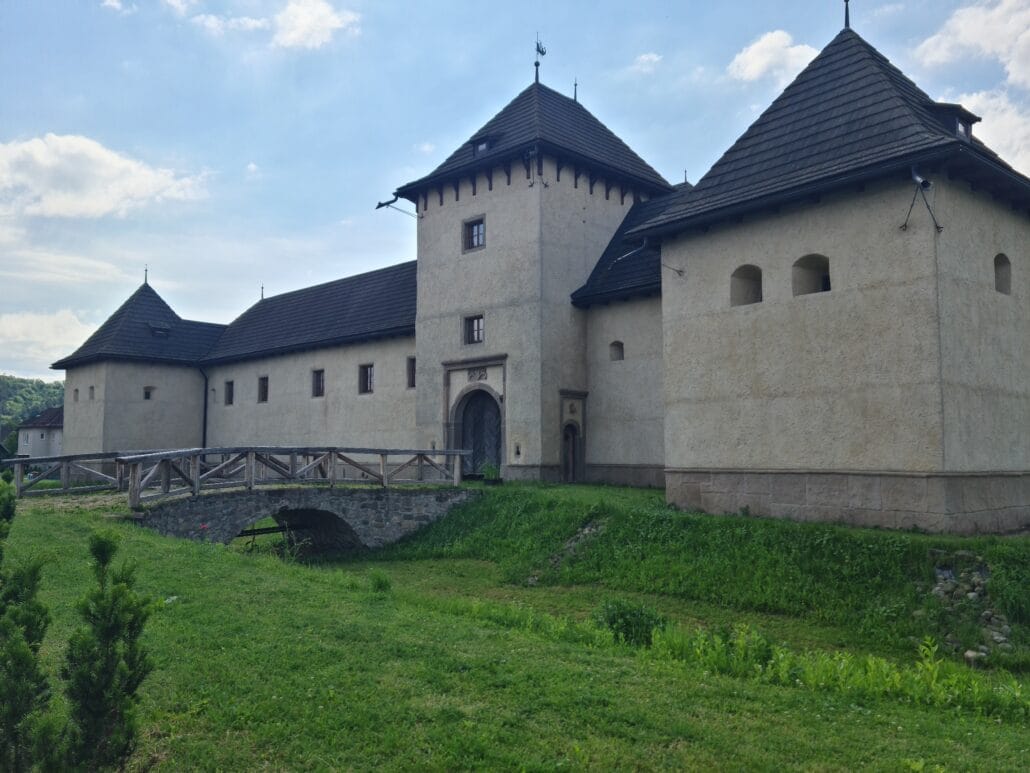
Not for the first time, I wished that more information was available on these old buildings. The stories they could tell….

One Response
Those unplanned side trips call too. This one really paid off. Thanks for sharing it.