


Slovakia, I’m impressed. Banská Bystrica is yet another gorgeous town surrounded by the Low Tatras where the Italian custom of passeggiata is alive and well.
We arrived early evening, deciphered the half-dozen convoluted emails and codes to gain entry to our apartment, dropped our bags, and hit the main square, Námestie SNP.
It was a glorious evening.
Known as Besztercebánya in Hungarian, this sixth most populous town in Slovakia was once part of Hungary.
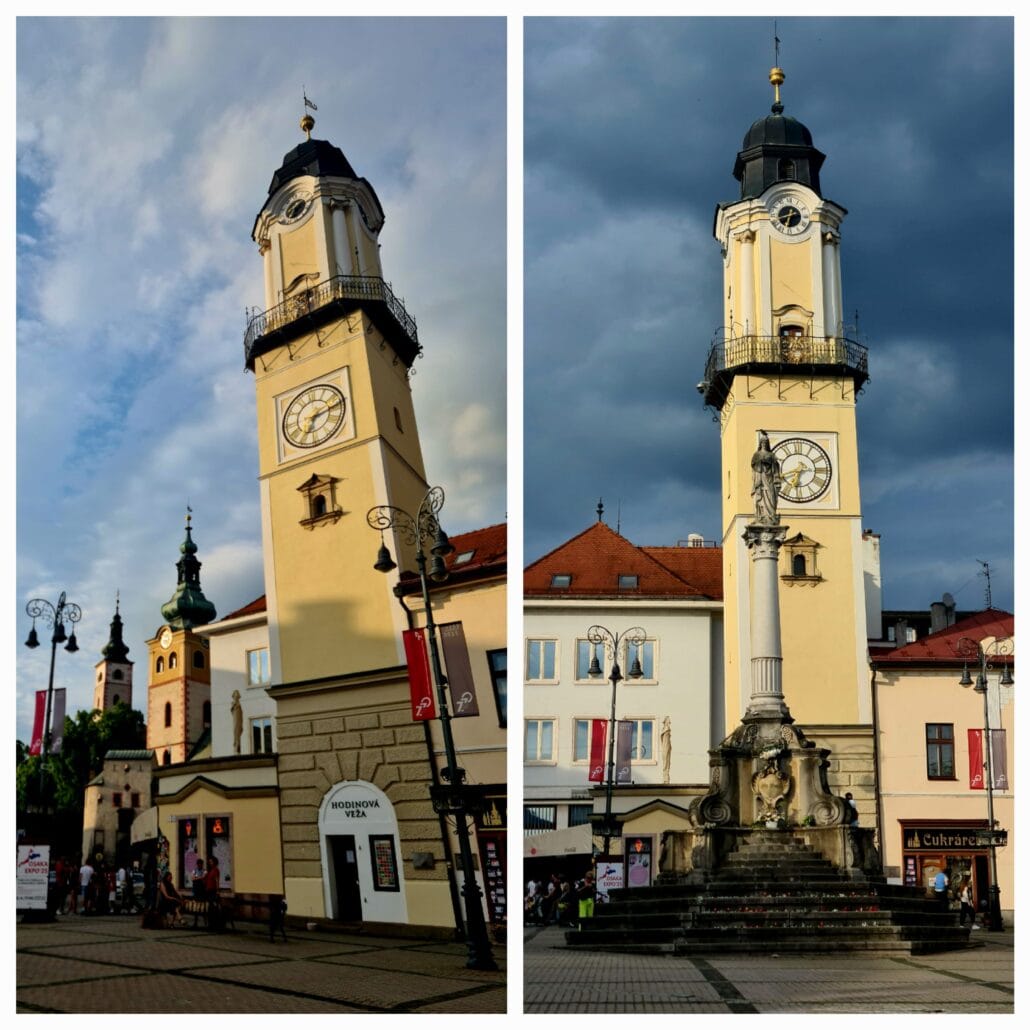
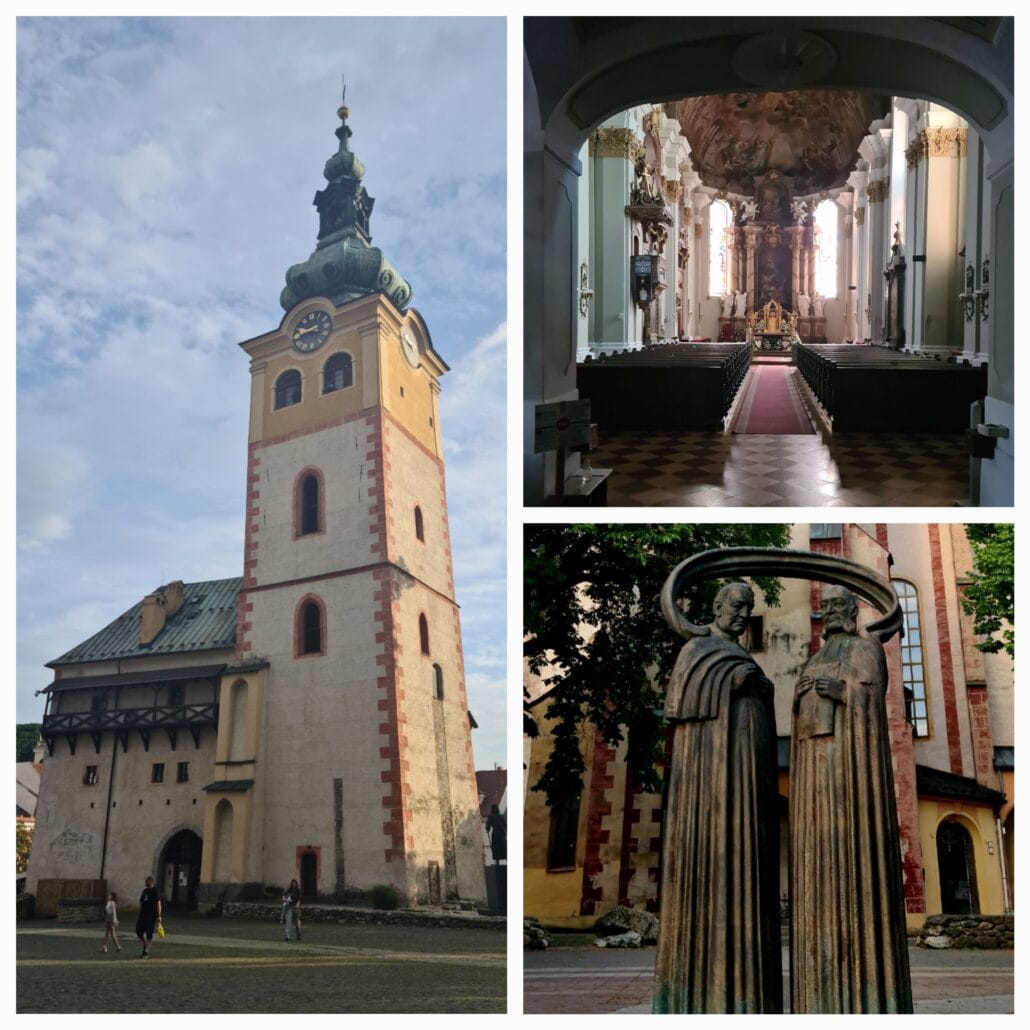
What decided us was the sixteenth-century Hodinová veža (The Clock Tower). Originally built as part of the town’s prison, this former watchtower is now a main viewing point. Over one hundred steps lead up to the gallery from where you can get a panoramic view of the surrounds.
Like the leaning tower of Pisa, this one tilts, too. To the left. As you look at it. Some 68 cm, I believe. It was stabilised in 1959 so it’s tilted as much as it’s likely to tilt. Back in the day, there was a path from the prison to the cage of shame and the pillory on the main square.
The permanent watchguard kept one eye out for the enemy and another for fires. And the city’s trumpeter signalled each new hour with this bugle. Interesting jobs back in those days.
There’s an intangible Russianness about the place that was explained in hindsight by history. In August 1944, the town was the centre of the Slovak National Uprising (SNP). Here, the second-largest insurrection against the Nazis in the part of the world took place. There is no shortage of monuments expressing gratitude to the Russian liberators.
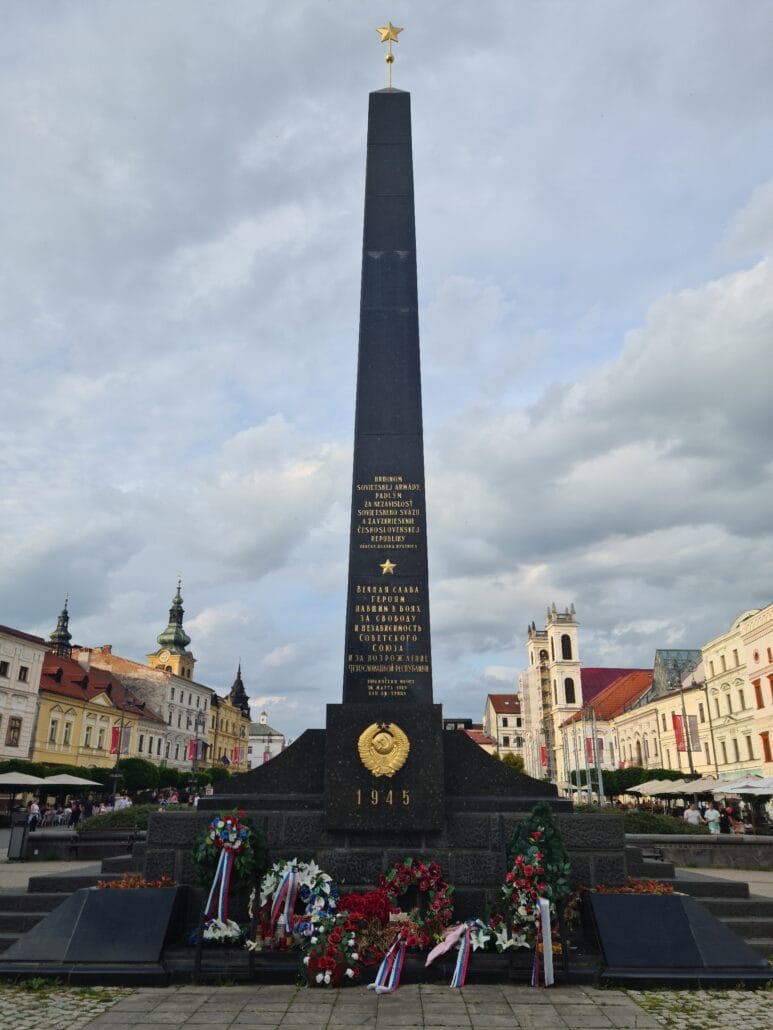
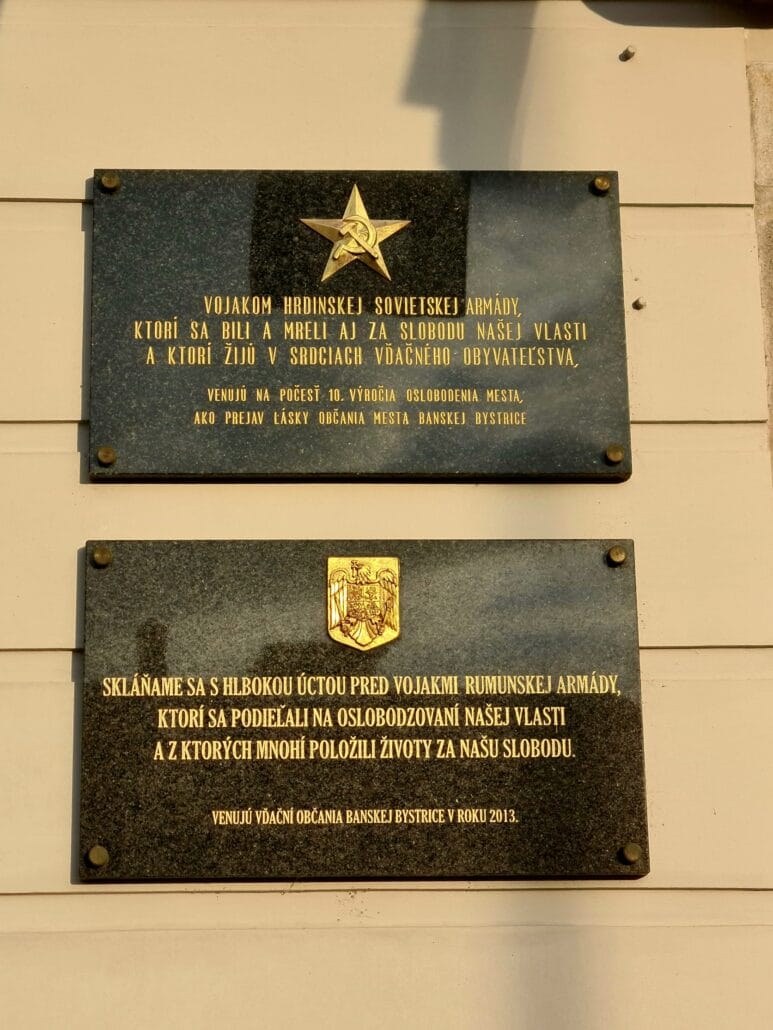
Interestingly, the plague column erected to Our Lady in thanks for ending the 18th-century plague was deemed an embarrassment in 1964. It was temporarily removed when Nikita Khrushchev paid a visit and gave a speech on the main square. The Virgin Mary wasn’t considered a suitable background for the occasion. I wonder what she thought of this?
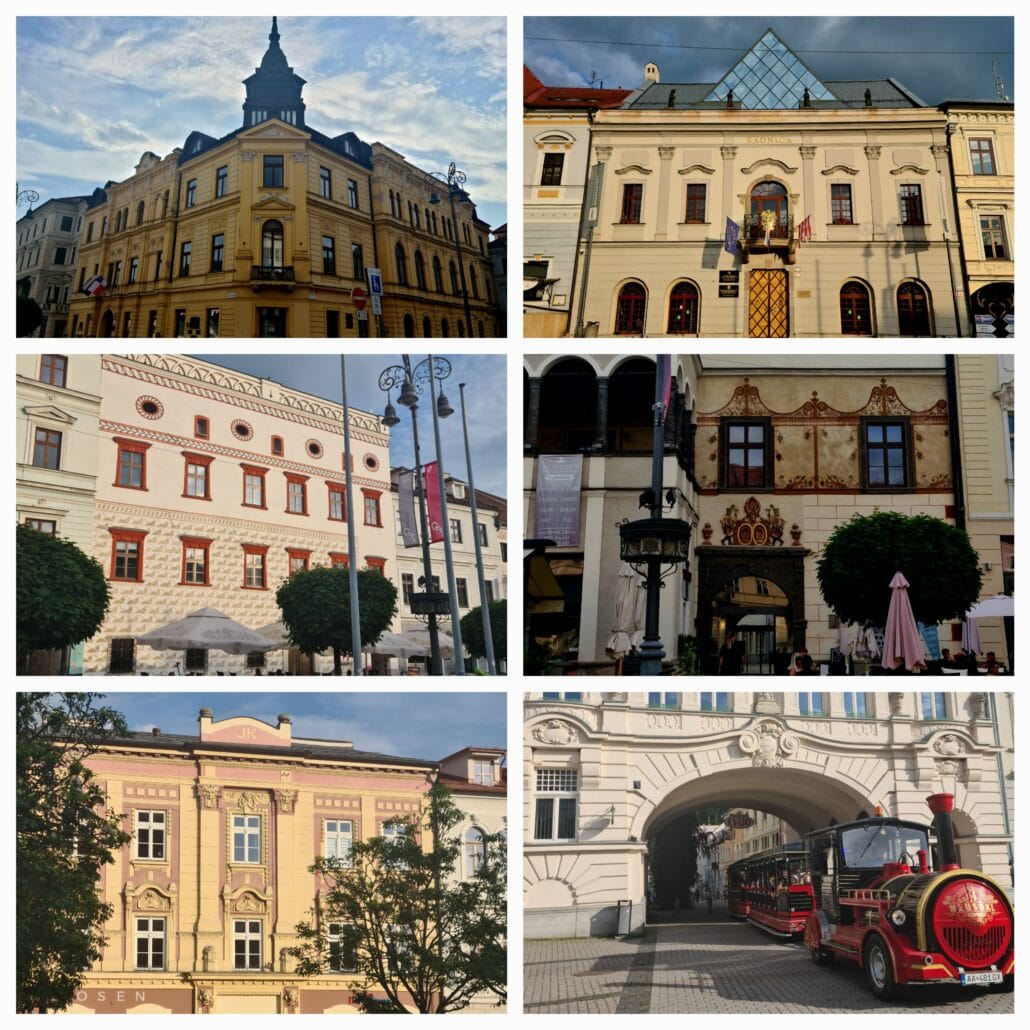
Of the many buildings we didn’t get to see inside, one I’ve noted to come back to is Thurzov dom, now home to the Central Slovakian Museum. The exterior, with its red windows, promises an interior not to be missed.
Another, Benického dom, is a 17th-century Renaissance palace built by a Hungarian lieutenant-colonel, Beniczky Tamás. This ornate building was on the theatre circuit, where plays that had been performed at least twice in Vienna (the benchmark of the day) were staged in one of its many rooms. Another rule forbade anything obscene.
We visited two of the churches -The 15th-century Church of the Assumption of the Virgin Mary (the town’s oldest and once part of the castle) and the Cathedral of St Francis Xavier, whose exterior is currently under renovation. The latter is based on the Church of St Gesu in Rome built by the Jesuits back when the town was a Protestant enclave. In the 1770s, when the Jesuits fell foul of Pope Clement XIV, they left and the diocese took it over as its cathedral.
Outside the Church of the Assumption stand two very imposing statues, Štefan Moyzes and Karol Kuzmany. On Catholic, the other Lutheran. The statue symbolises the national and ecumenical unity of the Slovaks.
A tourist train, the Praetorium, runs year-round, taking the new and the curious around the town’s landmarks.
And there is a lot to see.
Like most places though, Sundays and Mondays are when national monuments and museums close, so time your visit.
Unlike the nearby Banská Štiavnica, the food offer wasn’t as varied. It was difficult to find anything I could eat. The one vegan restaurant, right underneath our flat, opened for lunch. That said, the people watching more than made up for it and the ready availability of early morning coffee spots serving up plant-based milk was a bonus.
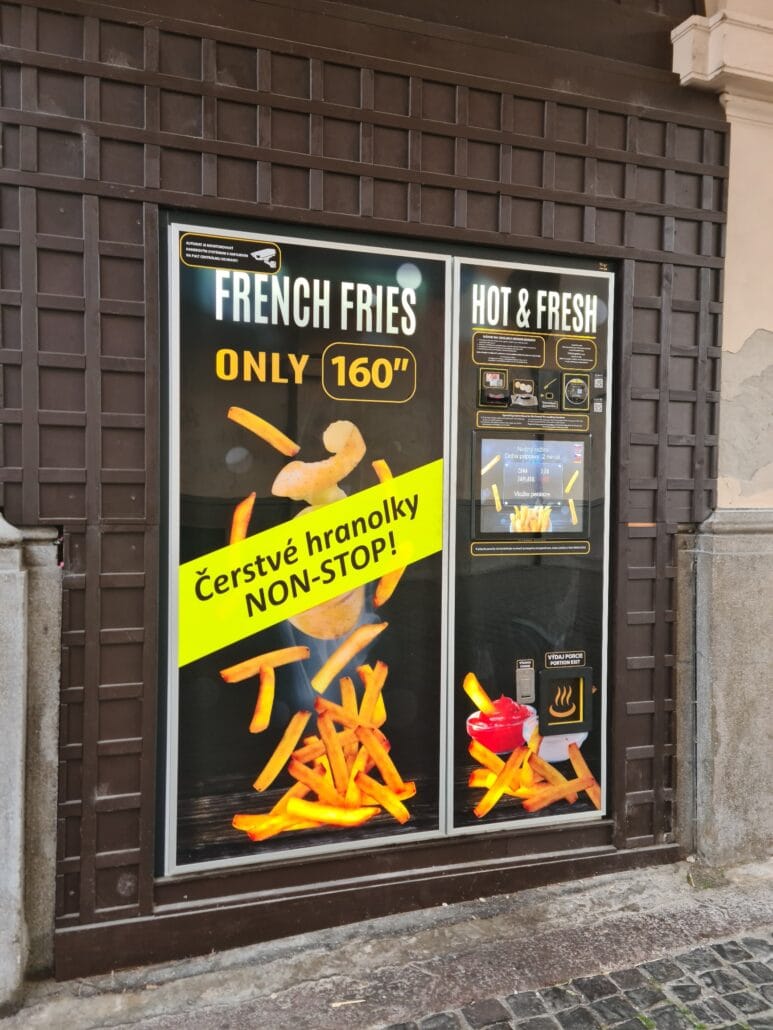
I’ll say nothing of the French fry vending machine.
Notes for next time
- Find the Church of St Francis of Assisi to see the frescoes
- Visit the open-air museum of insurgency
- Don’t come on a Sunday/Monday – everything is closed

2 responses
I wanted you to give History of the Fry vending machine. I cant get it off my mind.
Beautiful place,
Weird and wonderful