Mamallapuram (Mahabalipuram), a port city some 60 km south of Chennai, wasn’t on my list of places to see in that I’d never heard of it before this trip. That doesn’t surprise me. India is massive, with so much going on in each state that it would take a lifetime or three to explore it all.
It, too, like many other cities, has undergone a name reversion.
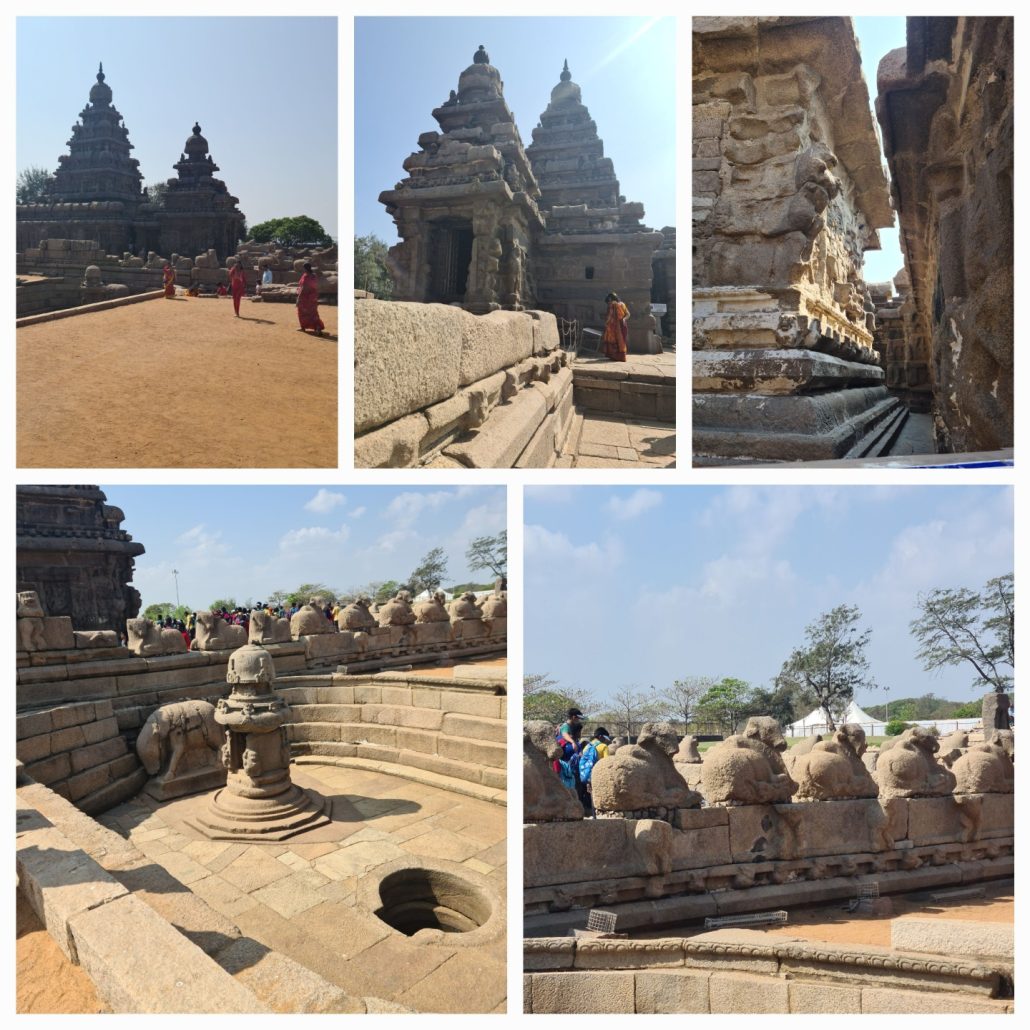
Now a seaside resort, it was once a major port city. Tourists, national and international, flock to it to see the eighth-century Shore Temple. This UNESCO World Heritage site was built by Narasimhavarman II (Rajasimha) of the Pallava dynasty. A stunning example of early Dravidian structural granite architecture (like I’d recognise that on a rainy day :-)), it has retained much of its former grandeur.
One of the oldest structural stone temples in South India, it’s built with blocks of granite, standing bravely in the face of coastal erosion and weathering the storm of time.
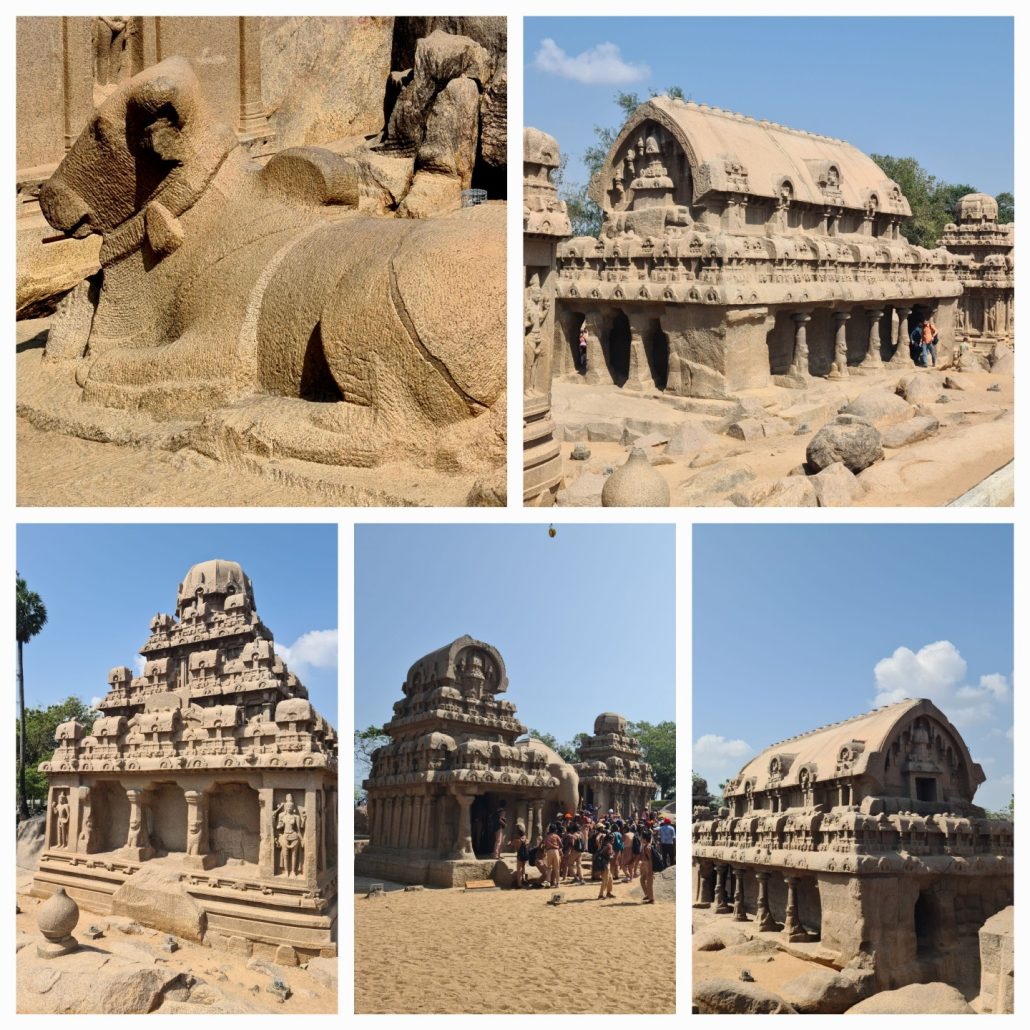
Further inland, in the same city, we visited Pancha Rathas (Five Chariots). Each of the monuments resembles a chariot. Each is carved from the one stone. Amazing really, considering they were carved way more than 1000 years ago.
Each ratha is named after one of five Pandava brothers – Yudhishtira, Bhima, Arjuna, Nakula, and Sahadeva, who shared one wife, Draupadi.
Ye Gads!
I cannot even begin to imagine this.
These six are the main characters of the Hindu epic Mahabharata. And this epic talks about four goals:
Dharma (righteousness, moral values)
Artha (prosperity, economic values)
Kama (pleasure, love, psychological values)
Moksha (liberation, spiritual values, self-realization).
Our guide in Mysuru was right when he said Indian mythology is so fantastic no one needs drugs.
We also went to see Vaan Irai Kal (Stone of the Sky God), also known as Krishna’s Butter Ball. This huge granite boulder, perched on an incline, seemingly defies the laws of gravity. It’s resisted all attempts to push it down the slope.
In 1908, then-governor of the city Arthur Havelock made an attempt to use seven elephants to move the boulder from its position due to safety concerns but with no success.
The more popular name comes from the story that Krishna was in the habit of stealing butter from his mam’s butter handi. And a handi, if you don’t already know, is a cooking pot made from copper or clay.
![The boulder is approximately six metres (20 ft) high and five metres (16 ft) wide and weighs around 250 tonnes (250 long tons; 280 short tons).[14] It seems to float and barely stand on a slope on top of a 1.2-meter (4 ft) high plinth which is a naturally eroded hill. The rock is estimated to be 1,200 years old](https://anyexcusetotravel.com/wp-content/uploads/2026/02/20260122_114525_resized-1030x773.jpg)
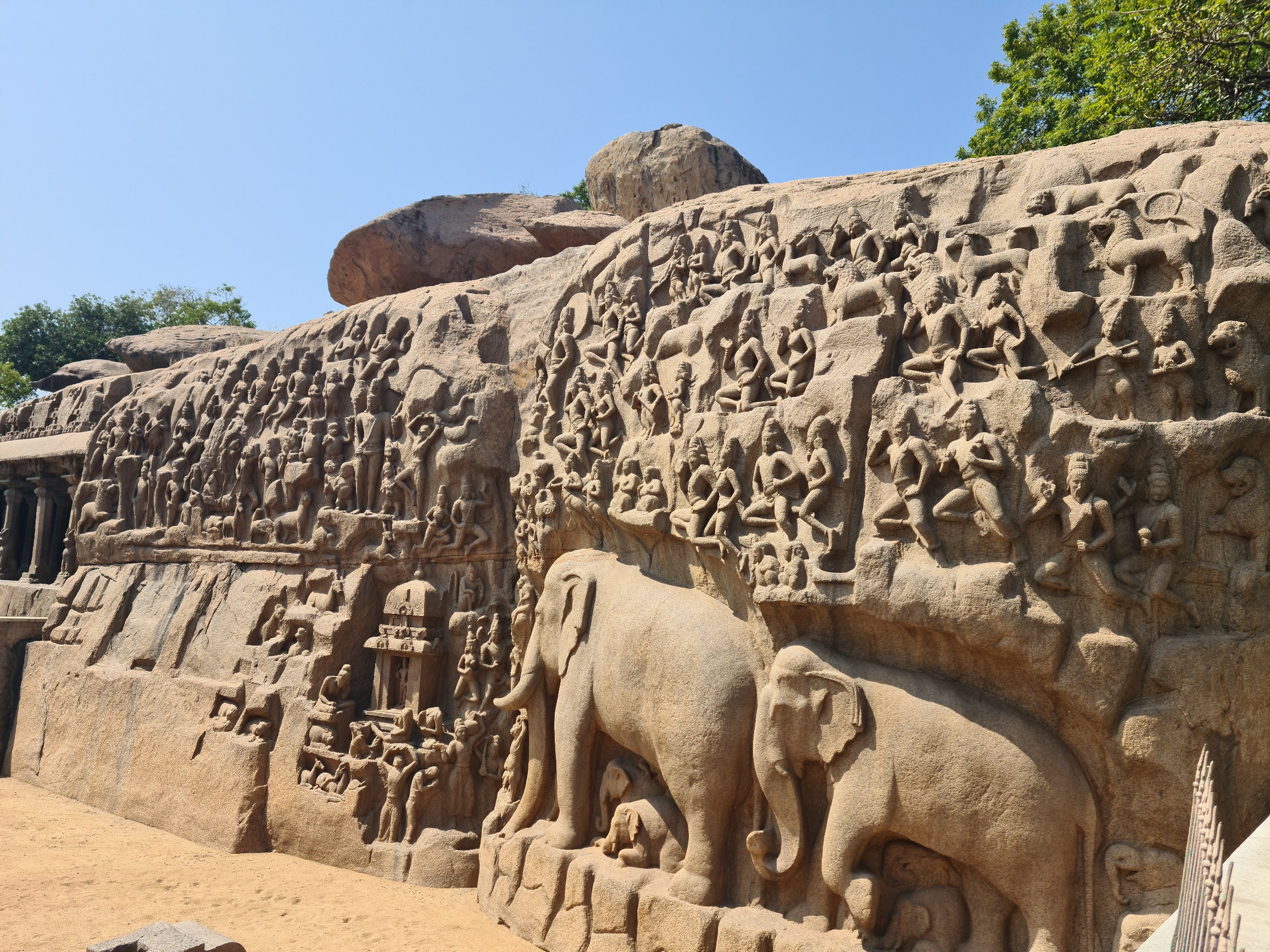
Within spitting distance of the butter ball is an open-air rock relief that measures 29m x 13m. Carved into the rock is the story of the Descent of the Ganges, known locally as Arjuna’s Penance.
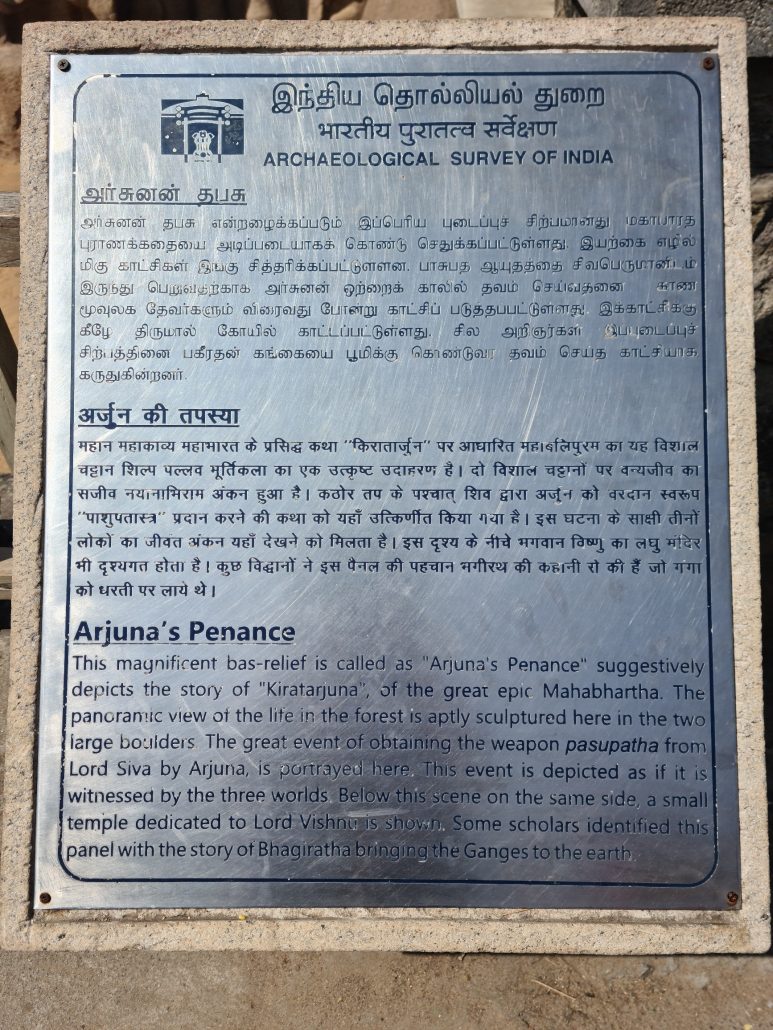
![A collage of photos, two showing Measuring 96 by 43 feet (29 m × 13 m), it is a giant open-air rock relief carved on two monolithic rock boulders. The legend depicted in the relief is the story of the descent of the sacred river Ganges to earth from the heavens led by Bhagiratha. The waters of the Ganges are believed to possess supernatural powers. The descent of the Ganges and Arjuna's Penance are portrayed in stone at the Pallava heritage site.[3][4] The relief is more of a canvas of Indian rock cut sculpture at its best not seen anywhere else in India. The third is two stone monkeys, one picking nits out of the others hair](https://anyexcusetotravel.com/wp-content/uploads/2026/02/20260217_173258_resized-1030x1030.jpg)
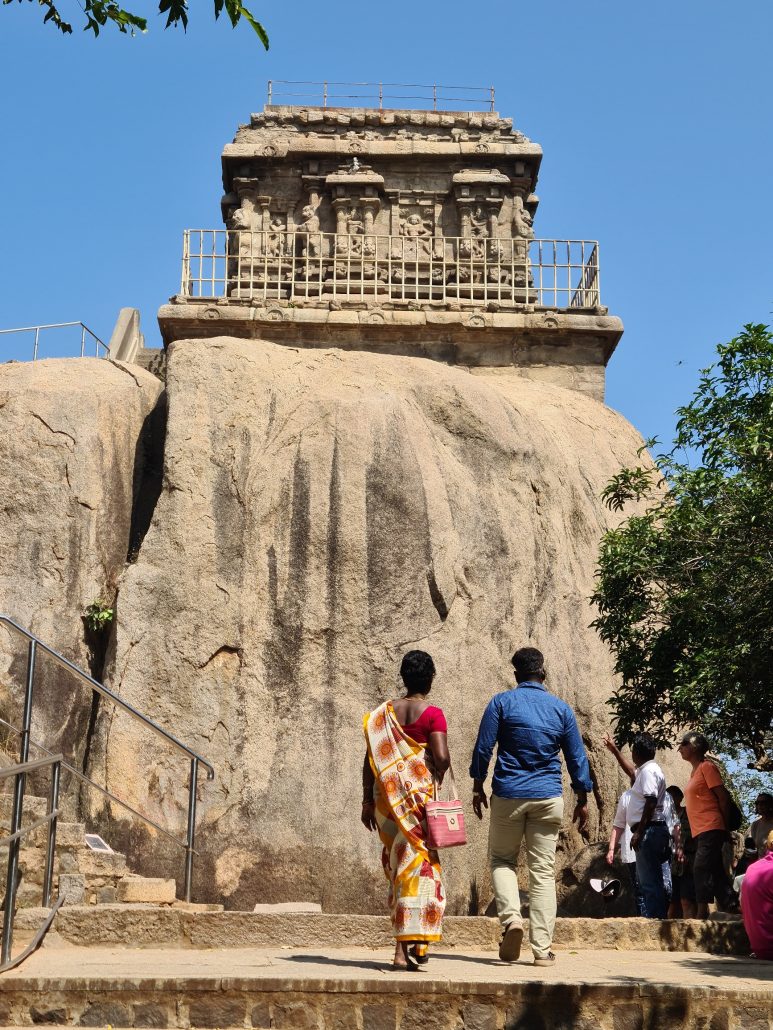
We walked a little way up to see the old lighthouse that was once powered by firewood. Humping logs up that trail and then up to the top of the boulder would have been backbreaking work. It’s been replaced by a modern lighthouse just over the way, but the old one still hangs on.
The “Old” Fire Lighthouse (Olakkannesvara Temple): Built in the early 8th century by Pallava King Rajasimha, this temple—located on a high rock—served as a beacon for ships. Known as the “flame eye” or Olakkannesvara temple, it originally used a fire on its roof to guide sailors, making it a contender for one of the oldest lighthouse structures in Asia.
All around the city, you see men painstakingly carving from stone. Some are using the old hammer and chisel. Others have gone electric. If you’ve money to burn and a large garden to populate, this is the place to come. I have the latter, but not the former. When my lotto win comes in, though, I’ll be back.
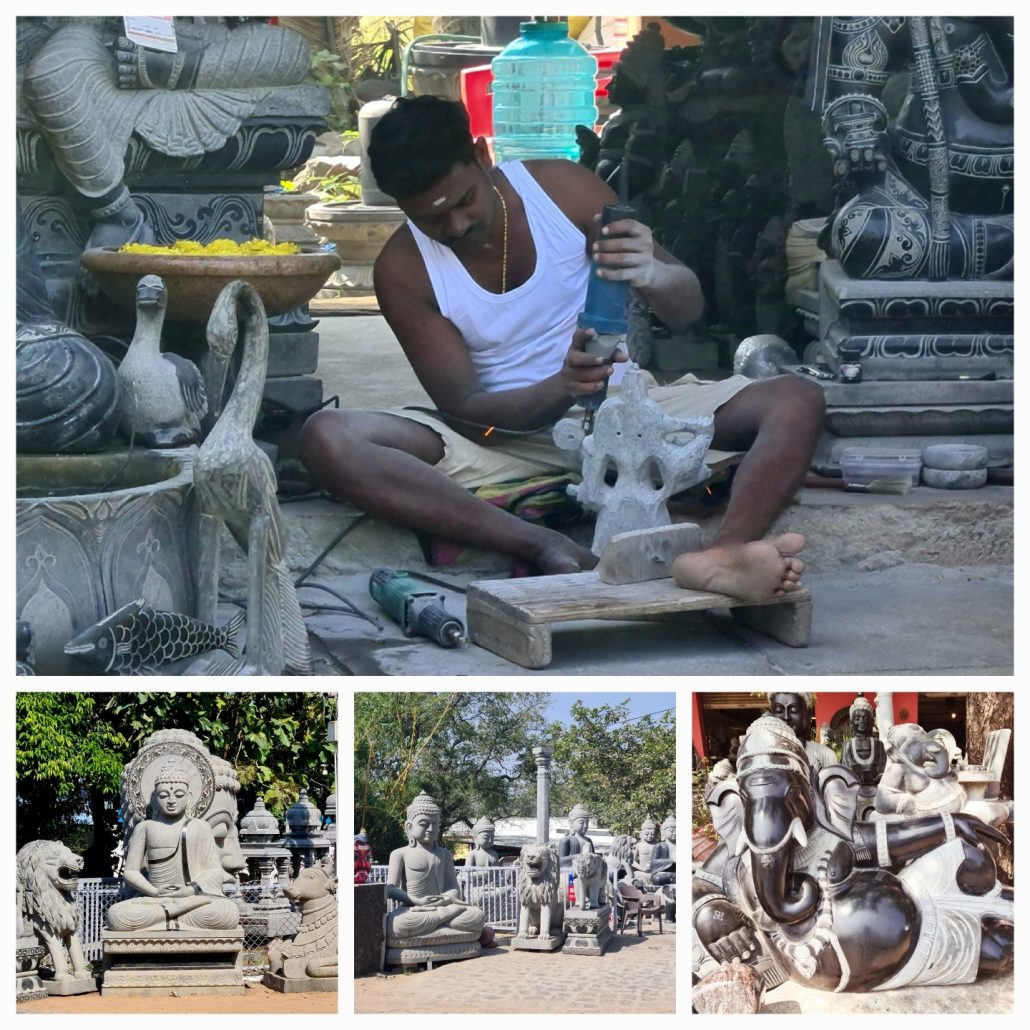
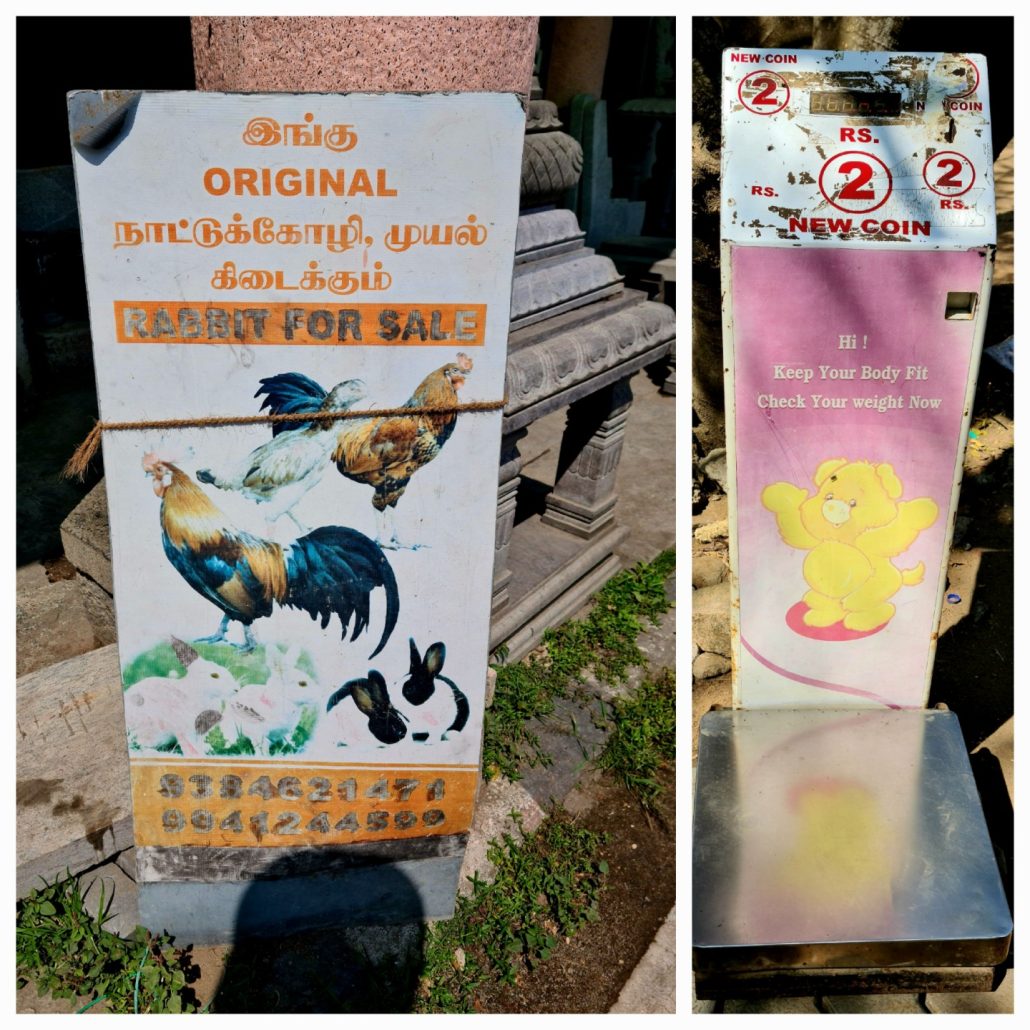
It’s a curious place. It’s on the water, with a beach, but no one was swimming. There are shops and restaurants and everything a resort town could lay claim to. And all this sits alongside granite art that is more than a thousand years old. The old stone carving traditions are alive and well. And as with everywhere we’ve been, there are the delightful signs and curiosities that put the incredible into Incredible India.