

On our way from Ooty in Tamil Nadu to Munnar in Kerala, we stopped off in Coimbatore to pick up a passenger. Our friend SJ would be joining us on the Kerala leg of the trip.
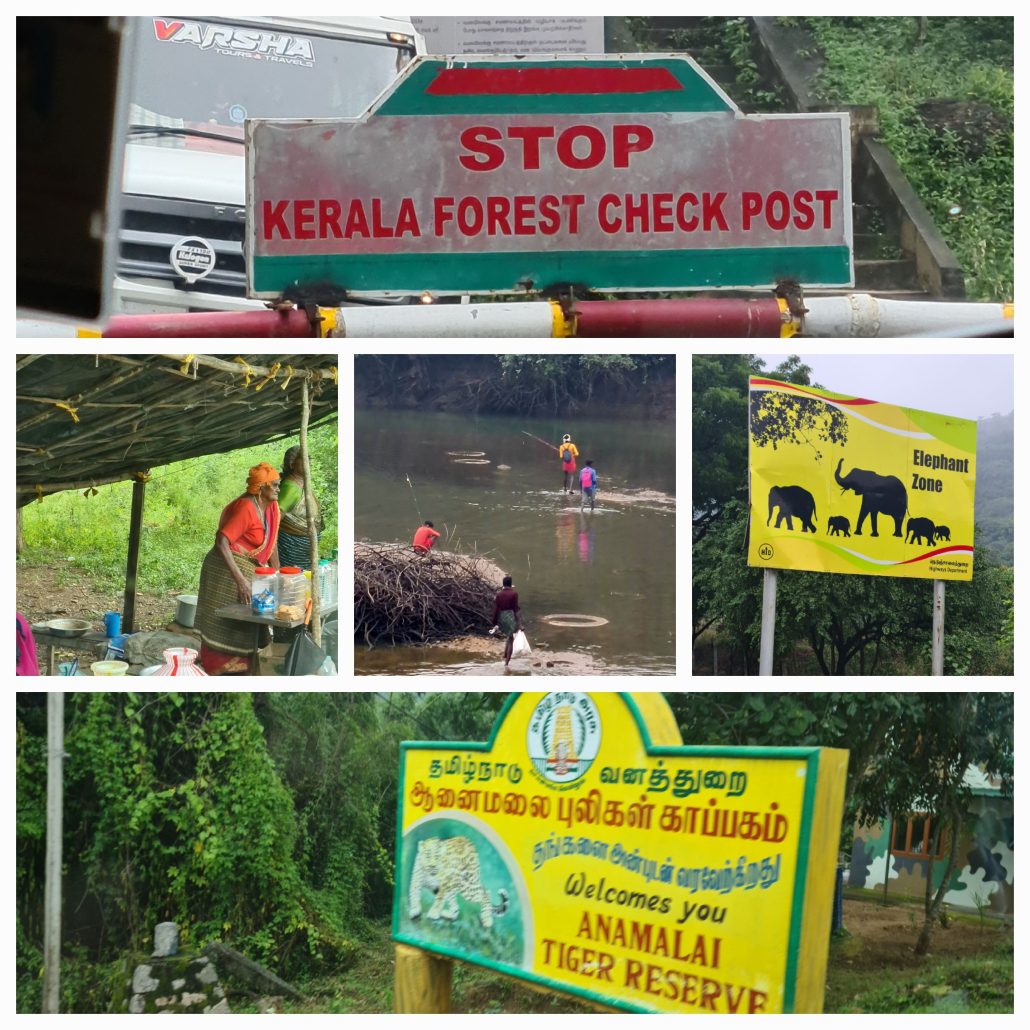
Passing through the forest reserve, we again saw signs warning us we were in an elephant area. Tigers, too. But the wildest thing we saw, other than the monkeys, was a wild bison.
To prove a point, though, both SJ and Shiva shared videos of elephant, leopard, and tiger sightings, so they are there; they just weren’t coming out to say hello.
It was a long day in the car. Three hours to Coimbatore and another six or so to Munnar. And then once in Munnar, about an hour to the hotel. Distances in this part of the world are deceiving.
But I’m getting ahead of myself. We’re not nearly there yet.
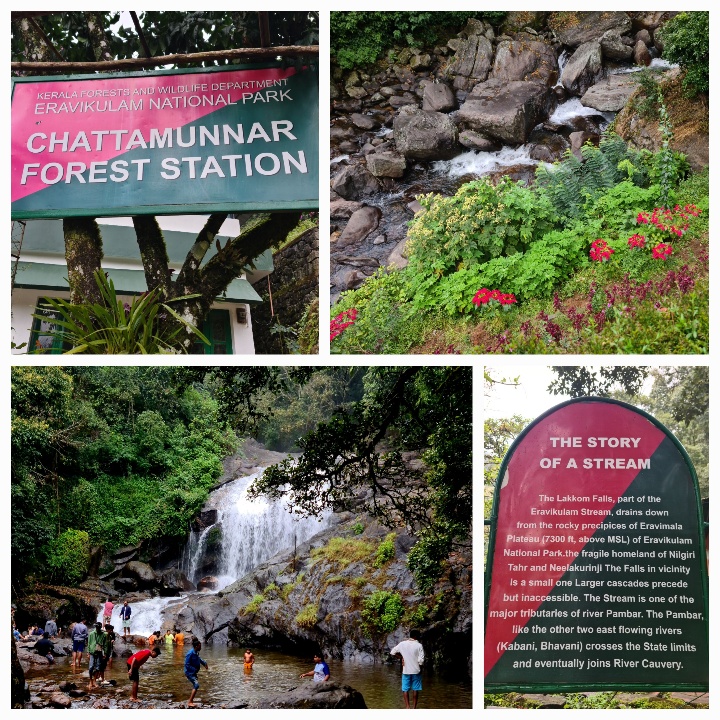
We stopped for a stretch at the Chattamunnar forest station, and wondered at the internal thermostats of the locals. It wasn’t what you’d call a hot day, but that didn’t stop the crowds stripping off to take a dip.
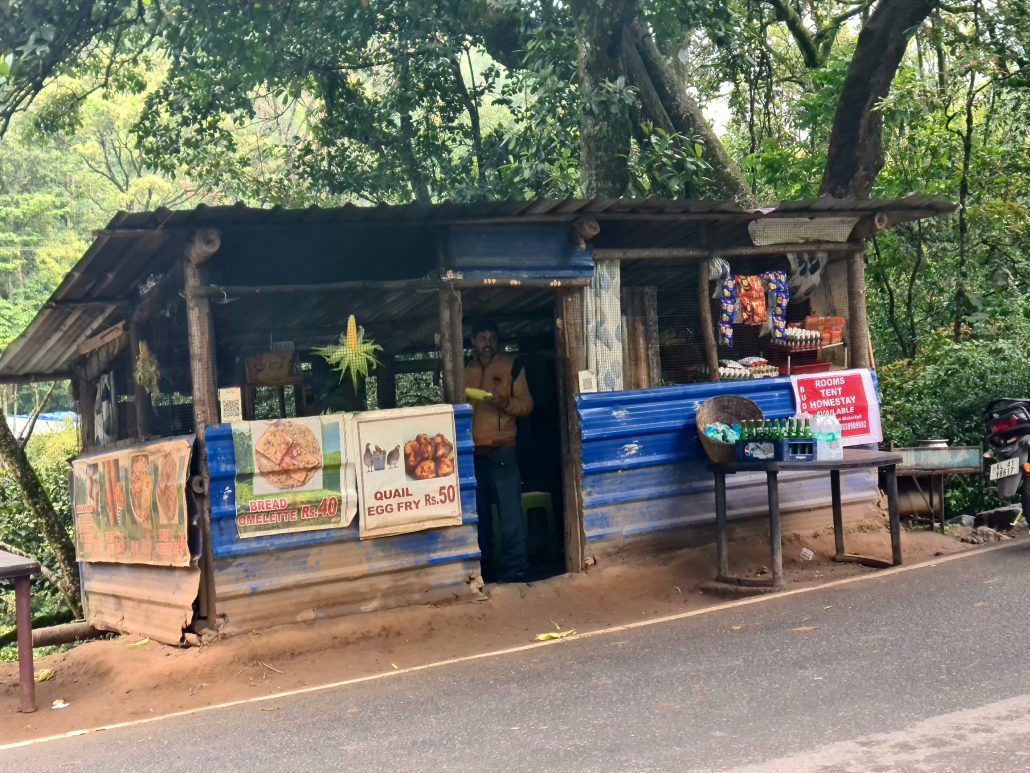
As always, the roadside food stalls were interesting. Quail eggs on a European or North American menu would be considered a delicacy, with a price tag reflecting the same. In India, you can get them fried for less than a euro or a dollar. A little like lobsters in Cuba.
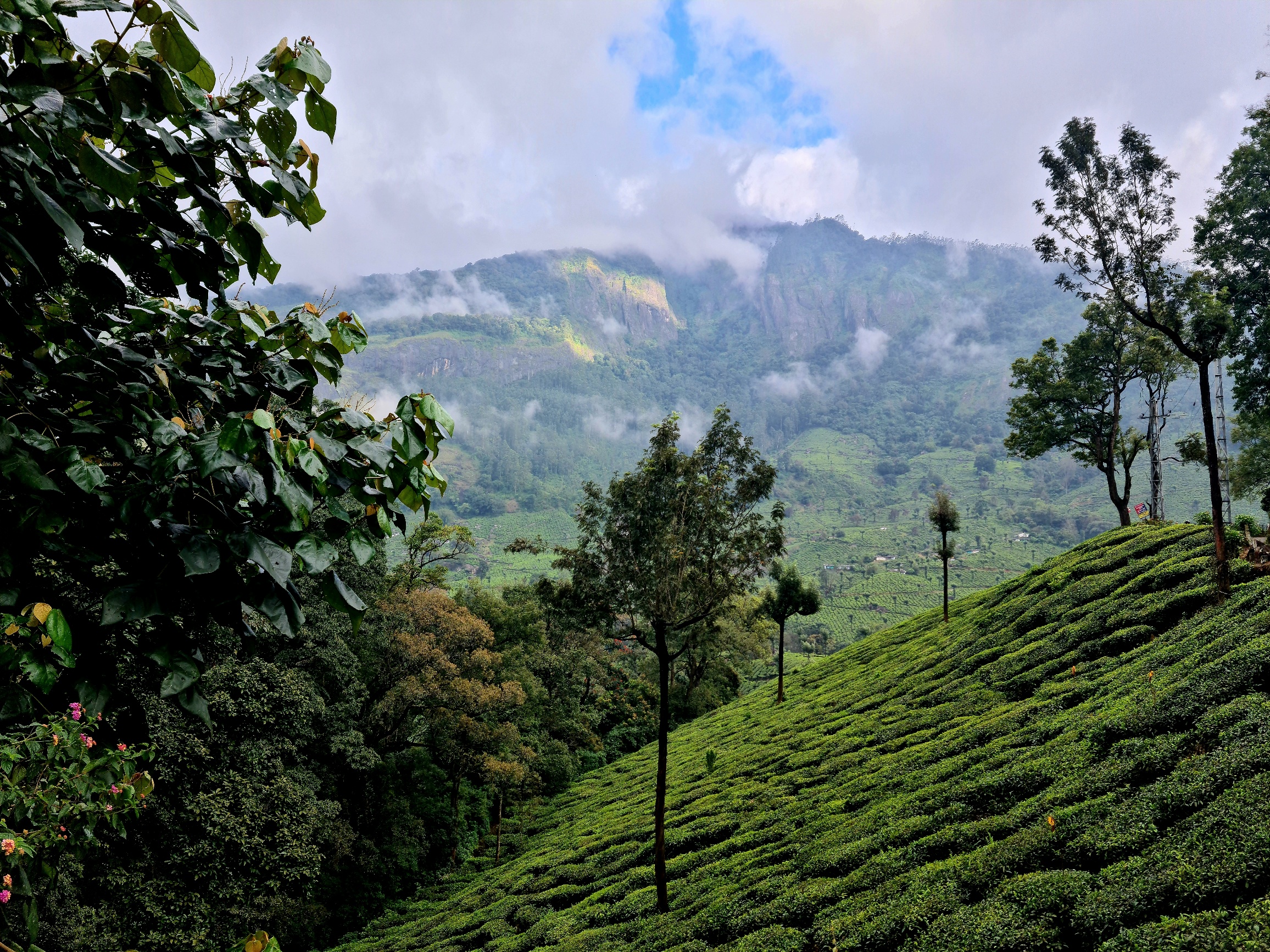
Further on, we finally hit the tea plantations in all their glory. Spectacular doesn’t come close to describing them. Acres upon acres upon acres of tea plants that started off as 50 acres originally planted in the late 1800s, when coffee didn’t quite take off.
Yes, back in the 1860s, British survey teams had their eye on the area for coffee cultivation. This didn’t quite work out, but John Sullivan, who we met in Ooty, and a chap called A. H. Sharp, reckoned tea was the way to go. Sharp planted the first 50 acres around 1880. Ten years later, he had been joined by two dozen or so more planters.
And so it began.
Post independence, things really took off; Tata Tea came on the scene, opening many factories. Tata’s plantations were largely taken over by the Kanan Devan Hills Produce Company (KDHP) in 2005; it’s India’s first employee-owned plantation company. Their participatory management system makes interesting reading.
We didn’t make it to the Kolukkumalai Tea Estate, the ‘world’s highest organic tea plantation, known for its unique flavour from high altitude (7,900 ft) and historic 1930s factory, accessed by a thrilling jeep ride’. But we did see tea. And lots of it.
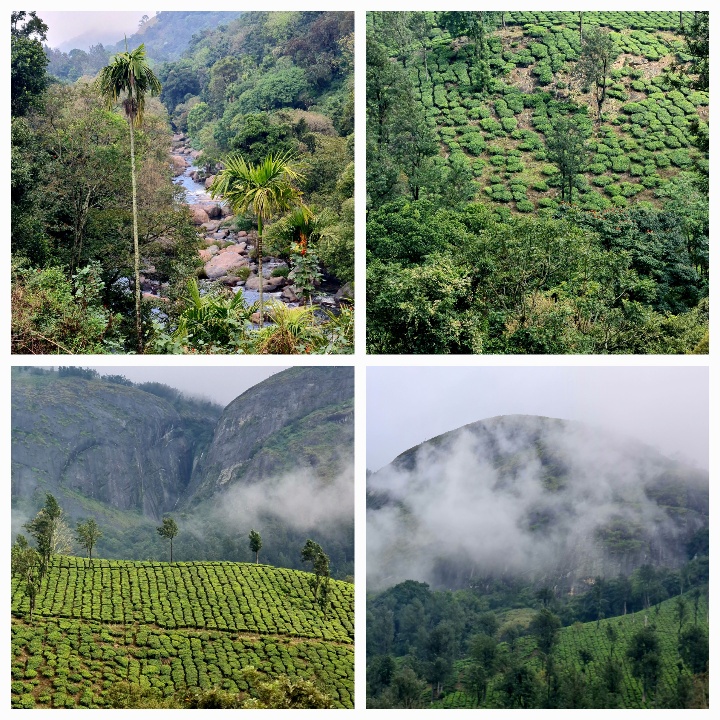
There are plenty of tours available if you’re interested. We’d seen the tea factory in Ooty and had a vague notion of what goes into making tea.
Truth be told, there’s a limit to the amount of information I can take in. When I get to my saturation point, I stop listening.
Understanding the process makes your Munnar tea plantations experience infinitely richer:
Plucking: Skilled workers select only the finest two leaves and a bud
Withering: Leaves are spread to reduce moisture content
Rolling: Mechanical rolling breaks cell walls, releasing essential oils
Fermentation: Oxidation develops flavor and color
Firing: Heat stops fermentation and reduces moisture
Grading: Teas are sorted by size and quality
Each step requires precise timing and expertise passed down through generations.
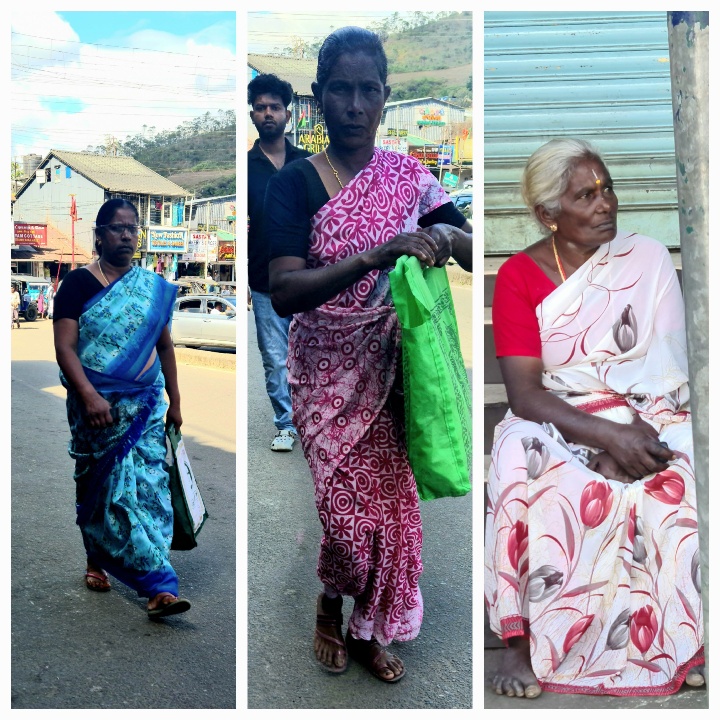
When we arrived in Munnar, it was clear that we’d moved states, not because of any topographical difference or weather change; it was more about the faces. We were no longer the only white kids in town. Kerala seems to be much popular with European and North American tourists than the neighbouring Tamil Nadu.
There was still no shortage of colour, though. I loved it.
We visited the Mount Carmel Basilica, the white Indo-Portuguese church, which began in 1898 in a humble shed on land donated by the KDHP. The first stone building was opened in 1909 by a Spanish priest, Fr Alfonse Maria De Los Angeles. He was a member of the OCD, the Discalced Carmelites, aka the Order of the Discalced Brothers of the Blessed Virgin Mary of Mount Carmel. He died of malaria in 1916 and is buried in the church.
What we see today was built in 1938 and was elevated in 2024 from a parish church to a minor basilica. Quite the promotion.
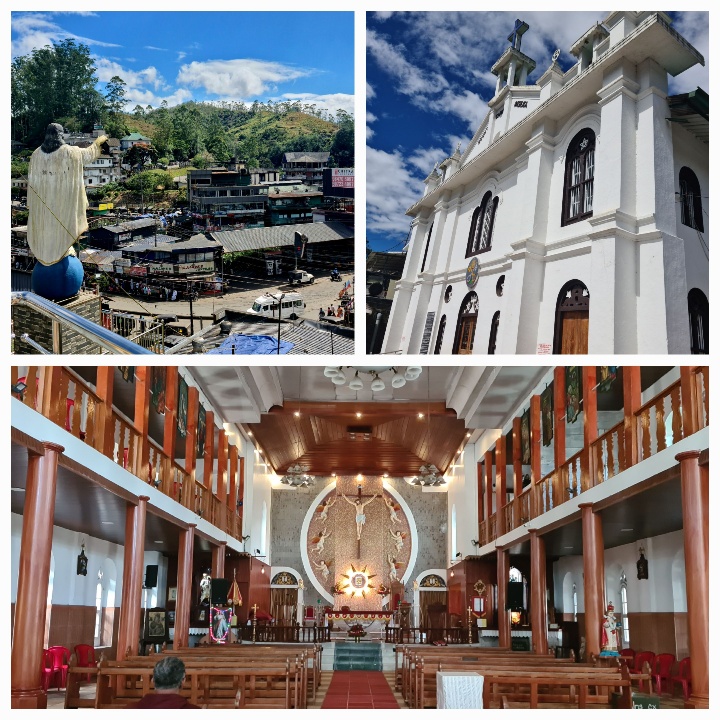
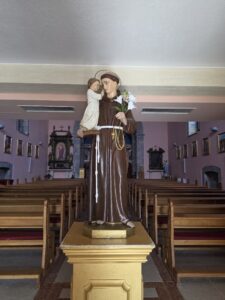
It’s an imposing structure with four relics on display inside, one of which relates to St Anthony of Padua, and is classified as a first-class relic. The RC church has three classes of relics. At the foot of the church, there’s also a shrine to the man. I’ve been bumping into him a lot in this part of the world, to the point where I fear he might confuse me for a stalker.
In 1924, a flood swept through Munnar, damaged the road and destroyed the rail track. When it came to the foot of St. Antony’s Shrine in the town, the flood subsided, and it is believed even today that St. Antony has done a miracle to save Munn. Since then, the Novena to St. Antony is prayed every Tuesday for which people of all denominations, Christians, Hindus and Muslims participate, even to date.
From the outside looking in, it would seem that religions here both live and let live. And often share devotions – as is the case with St Anthony. I wonder if anyone has organised a tour of India following the saint and his various presentations.
The other relics related to Pope John Paul II, Mother Theresa, and St Alphonsa.
Saint Alphonsa of the Immaculate Conception, born as Anna Muttathupadathu, was an Indian Catholic nun and educator. She is the first woman of Indian origin to be canonized as a saint by the Catholic Church, and the first canonized saint of the Syro-Malabar Catholic Church
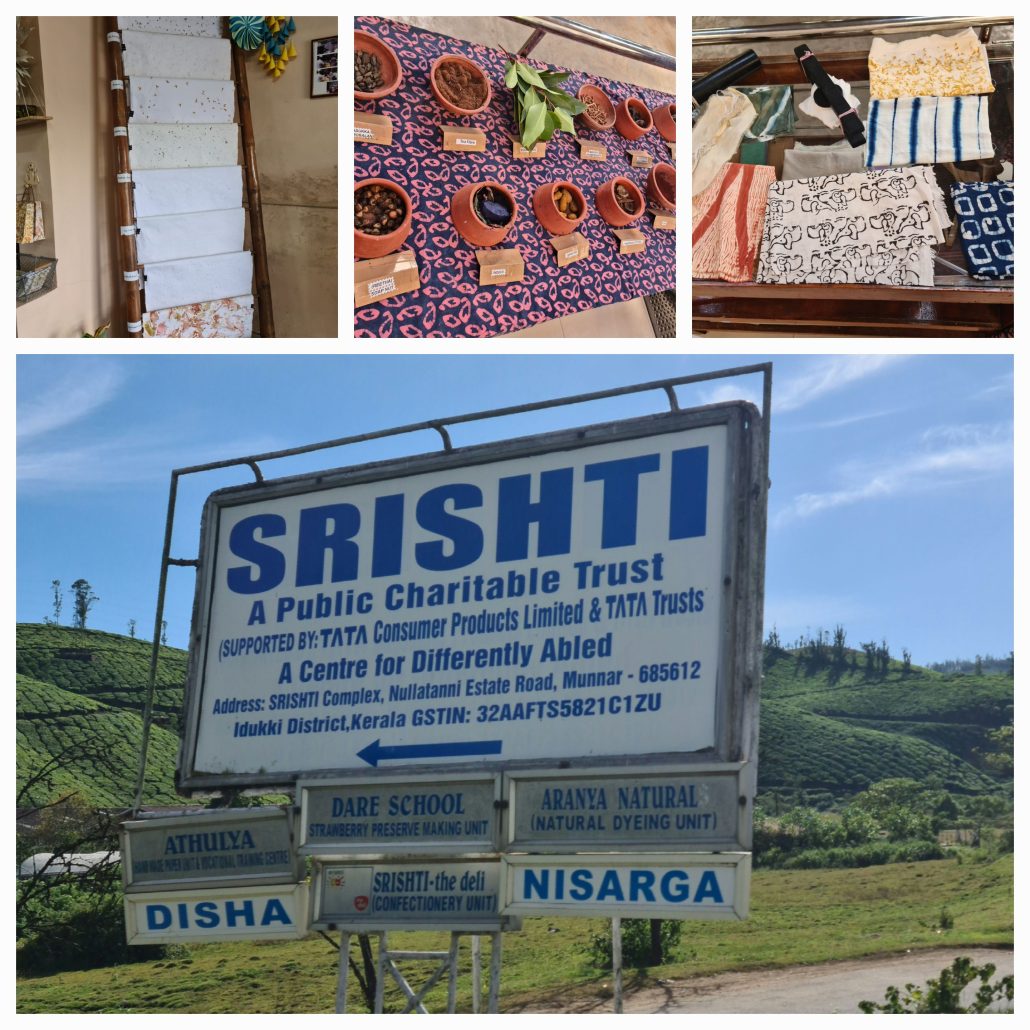
Perhaps the highlight of our time in Munnar was a visit to Srishti. It was the first time I’d come across the expression – differently abled. Later, in Jaipur, I’d see another – specially abled.
Their website homepage is headed by an anonymous quotation:
The problem is not the person’s disability…. The problem is society’s view of the person’s abilities.
We’d gone in search of their famous butter biscuits, but before hitting the bakery, we saw how paper was made from everything from elephant dung to carrot leaves. Then it was on to the textile section to watch block printing, tie dying, and my new favourite, the Japanese shibori. We learned about natural dyes and saw everyone going about their daily work.
Photos of people were not allowed and understandably so. From there, it was over to the baby clothes and bags section before finally getting to the bakery.
We spent money in each place, happy to be contributing to a cause and getting something other than mass-produced tatt.
The DARE School enrols children with severe mental health conditions, dwarfism, the infliction of polio in childhood, hearing and speech disabilities, heart conditions among others. The children are imparted education in functional academics & trained in social & self-help skills along with vocational skills through their formative years.
The graduating youth are further given the opportunity to interact & be nurtured into artists by experts in their respective craft domains from across the globe, developing unique traditional & sustainable craft techniques from a world community of artists.
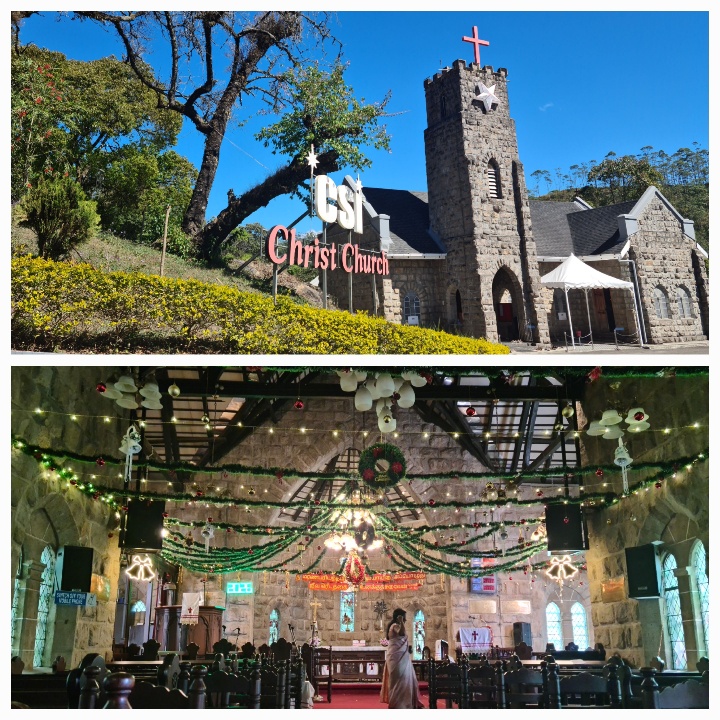
Back in town, I wanted to find the grave of Eleanor Knight, wife of Henry Knight, an enterprising pioneer planter who would become KDHP’s first general manager. I’d come across her story when looking for cemeteries in Munnar. We found it up behind the CSI Church.
Kerala is the home of Ayurveda. I had great plans to have a consultation to see how my doshas were doing. I made an appointment at the place that came top of my search list. I turned up to find a doctor who didn’t seem remotely interested in me. He was on the phone to his mam. Bless.
I just wasn’t feeling the vibe. So I left. After explaining, of course, that he didn’t seem present or interested. It’s not something I’d usually do, once I’d made an appointment. Am I getting braver with age or just not caring as much? Or has the Indian way of thinking begun to seep into my bones?
There was always Kochi.
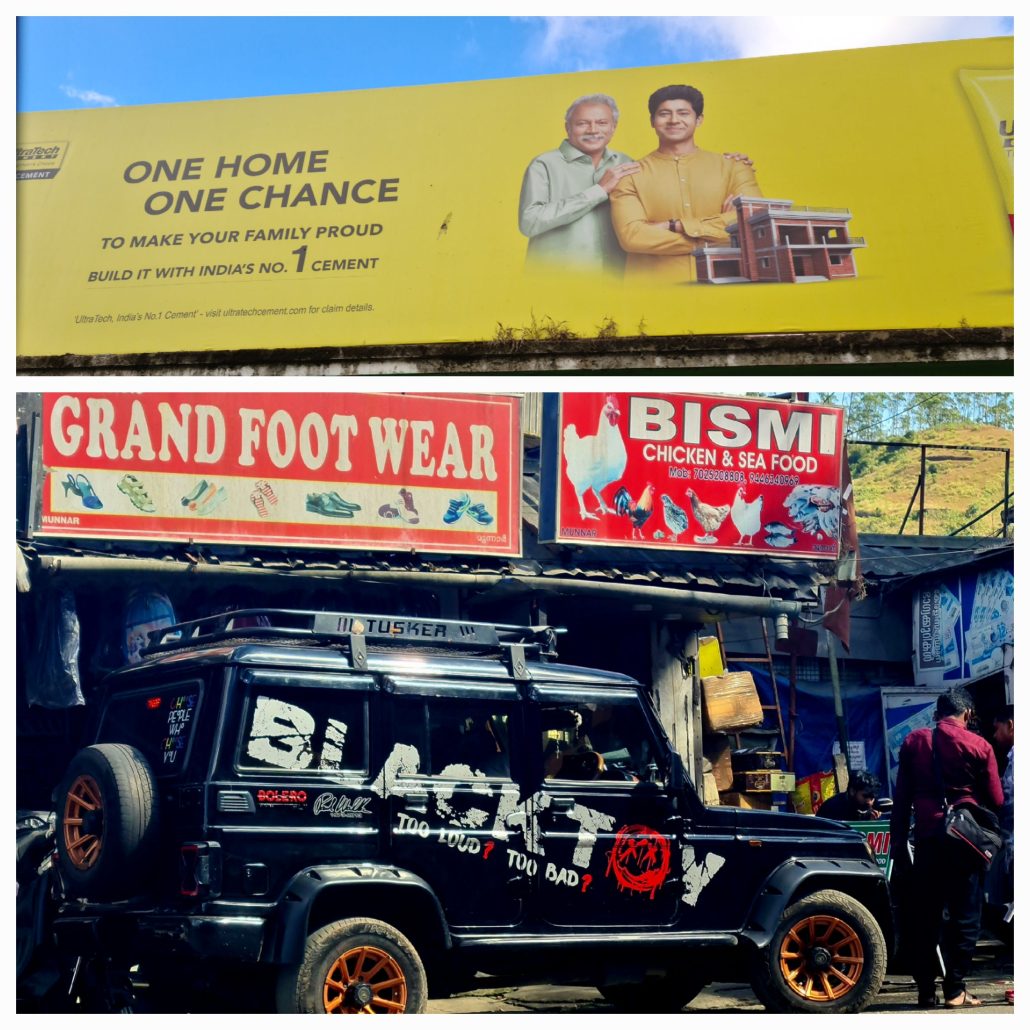
It’s hard work being outside, in the throngs, being swept along with the tides of people going about their day. It’s harder still to find alternative milk or even black coffee. And booze isn’t a given at many restaurants either.
We did find a bar – next to a bar we were discouraged from going into. At least I was. The Ice Bar is a local bar beside the Isaacs Residency (this is where I’d stay were I go visit Munnar again). As I was making a beeline for the door, a couple of chaps having a smoke outside suggested to my two lads that it wasn’t the place for me. I’d be better off in the hotel bar.
I wasn’t up for arguing, as I’d already had the whole local bar experience in Mysuru. So we went inside to the hotel bar. It was cool. And dark. And very bar like. And it had gin and ice and limes.
Oh, the things we take for granted, eh?
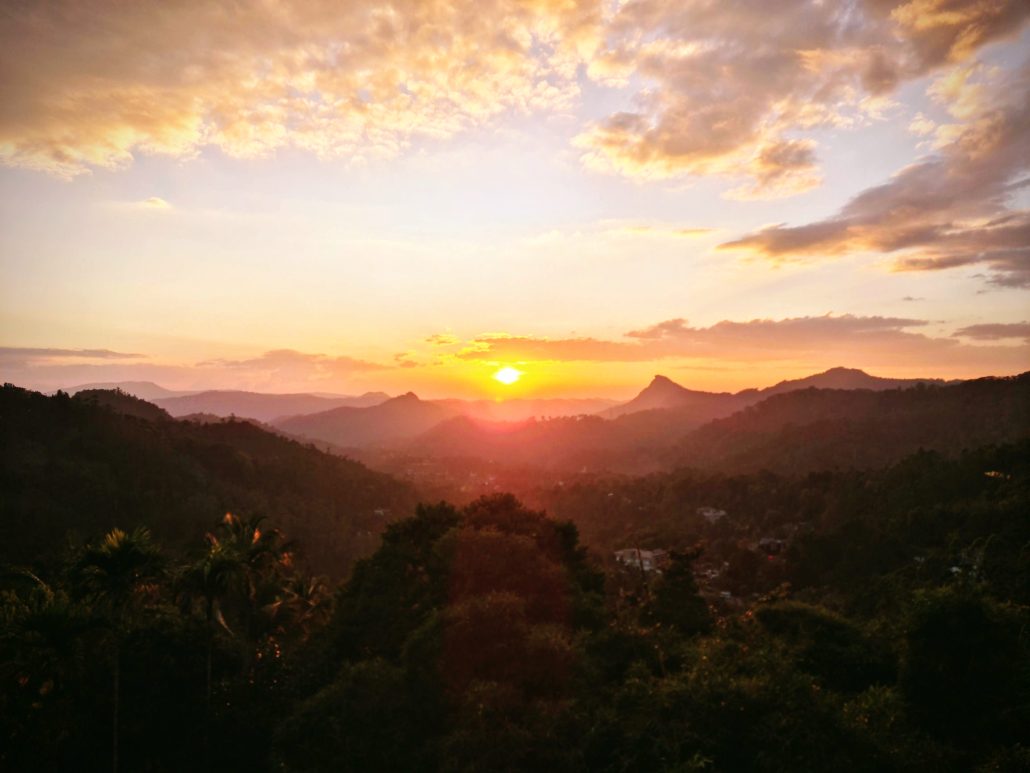
We ate that night at the Underground Grill and watched the sun go down over the Western Ghats.
Next top, Kochi.

2 responses