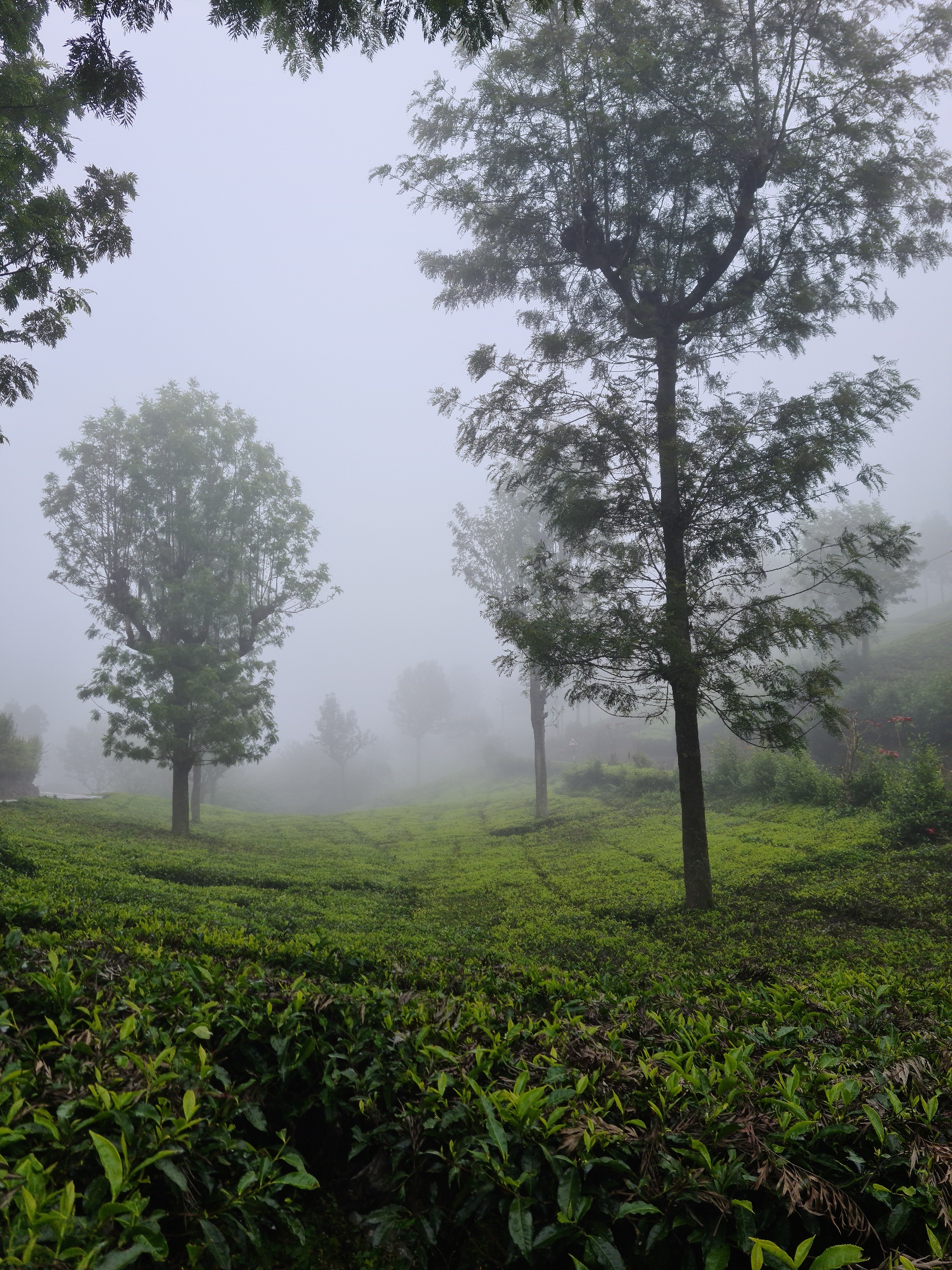
Having made our way through the Wellington Cantonment, we headed towards Coonoor. Like Ooty, it, too, is a hill station, popularised by the sweltering British during the Raj era looking for a cool cuppa.
The Nilgiri Toy Train goes through here, a hillside train journey that I’d have loved to have taken. But it’s peak season, and we didn’t book early enough. I have a note made for next time, though.
The Nilgiri Mountain Railway, colloquially called the “Toy Train” by locals, is a 1,000 mm metre gauge railway in Nilgiris district, Tamil Nadu, India, built by the British in 1908. The railway is operated by the Southern Railway and is the only rack railway in India.
One of the town’s main attractions is Sim’s Park, inaugurated by J.D. Sim in 1874. I had little interest in visiting as I could see that it was crowded – by my standards.
In Coimbatore, later, SJ noted that the day was a holiday. Ah, I said, that’s why there are so many people around. He and Shiva laughed, replying, No, Mary, that’s why there are so few people around – many of the shops are closed.
I’m telling you, India is quirking my perspective.
Anyway, my inner Jocelyn Guenevere Marchantiere Jones was craving a clean loo, preferably in someplace that served an oat milk cappuccino.
While in Bengaluru, at the IME, we’d stumbled over one in a small chain of Indian cafés called Third Wave. I say small because they ‘only’ have 90 cafés in 6 cities across India. Their coffee is Indian, sourced from the foothills of Chikmagalur in the Western Ghats. We, too, were in the Western Ghats, but the nearly 8-hour drive wasn’t something I was keen on. When himself found one in Coonoor, I was bordering on ecstatic.
Travel does that – it gives you a new appreciation for the things you take for granted.
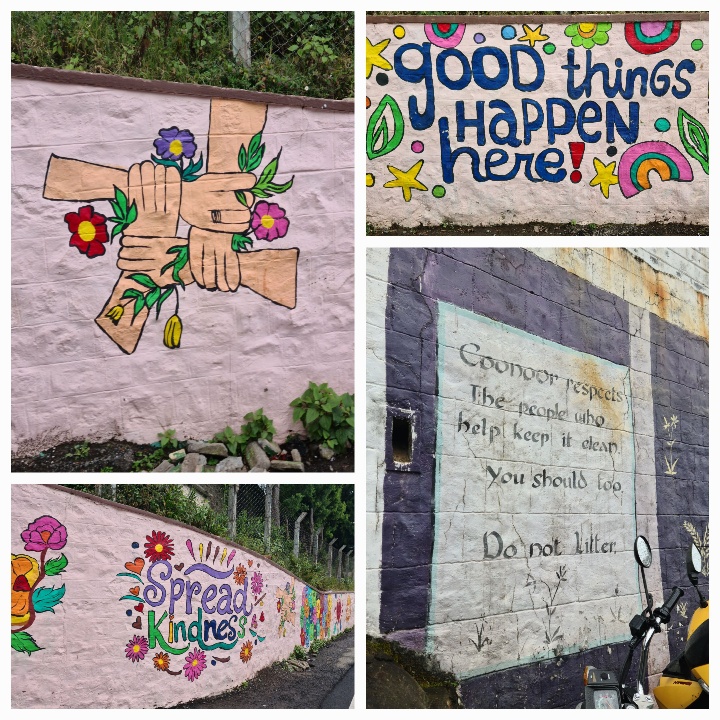
In Coonoor, another colourful hill station, my main focus was to find the old Tiger Hill Cemetery from 1905, the burial place of many of the original British settlers in the Niligiris. It took some finding, but perseverance paid off.
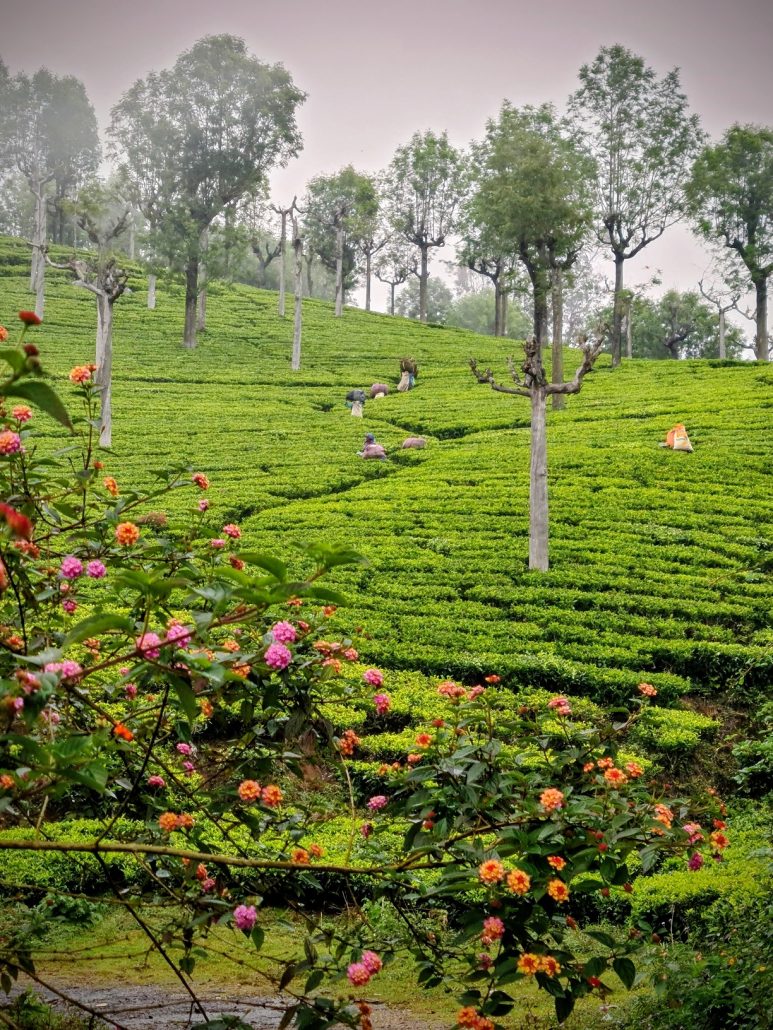
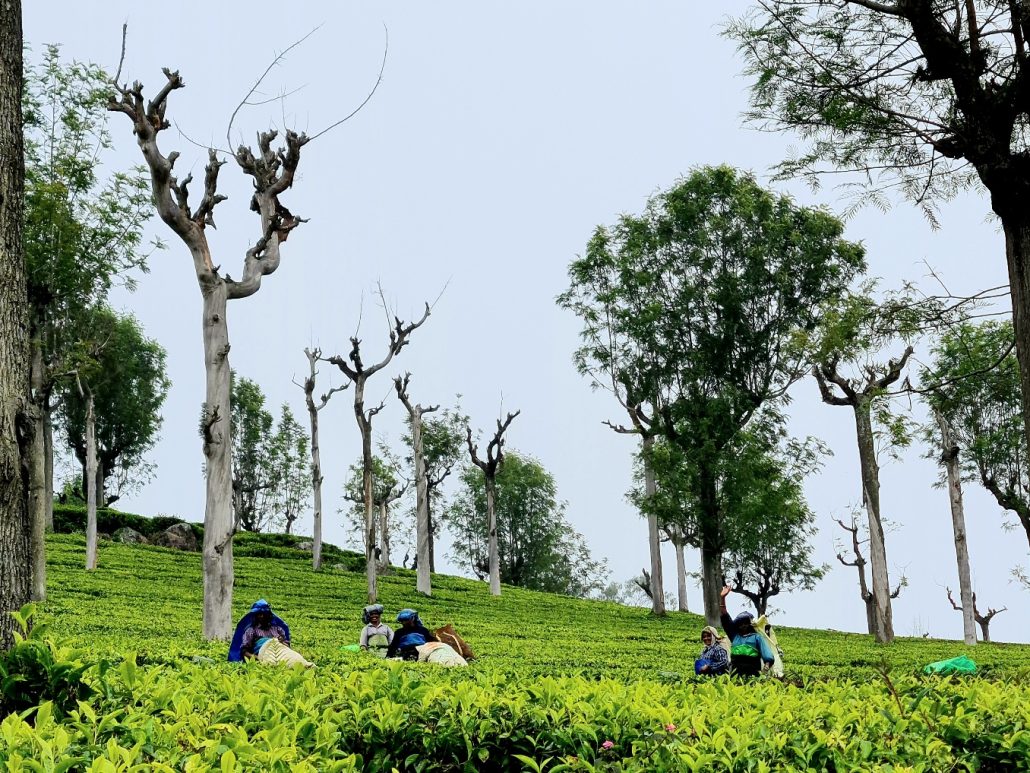
It was quite something to see the local ladies with their smiley heads picking tea leaves – that alone was worth the effort.
Knowing now that churches and cemeteries were more my thing than botanic gardens and amusement parks, Shiva took us to Our Lady of Fatima Church. And wow.
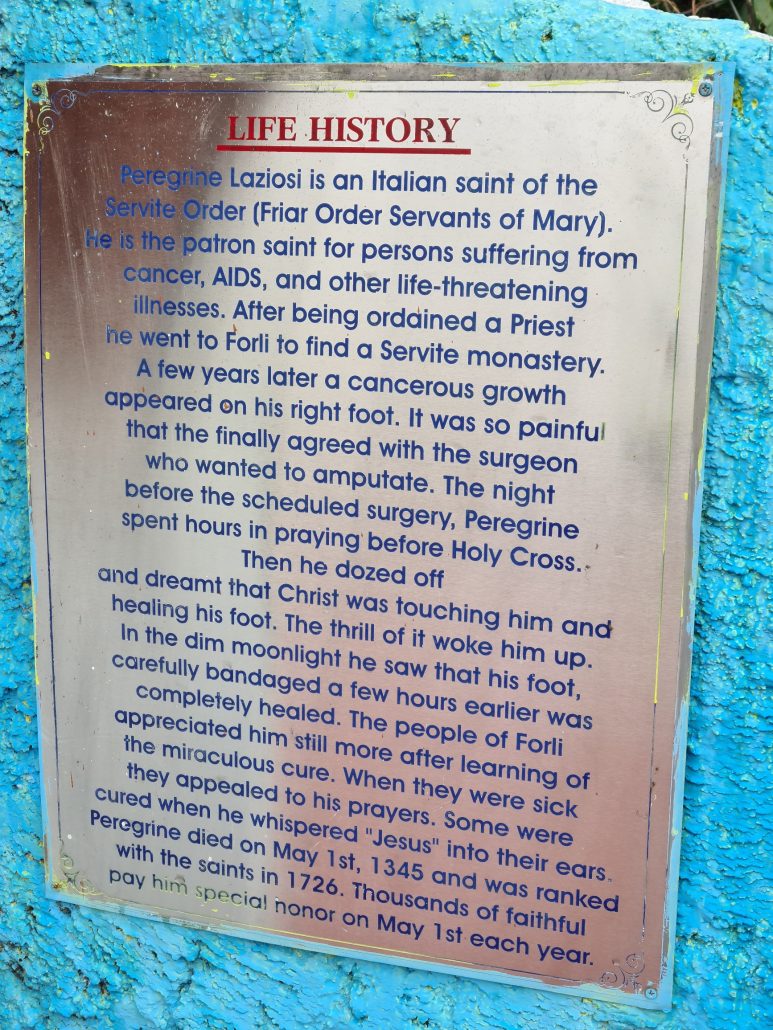
Not because it is old – it was built in 2000. And not because it’s particularly grand. It isn’t. But because in the grounds, there’s a statue of St Pergerine standing watch over some tea plants.
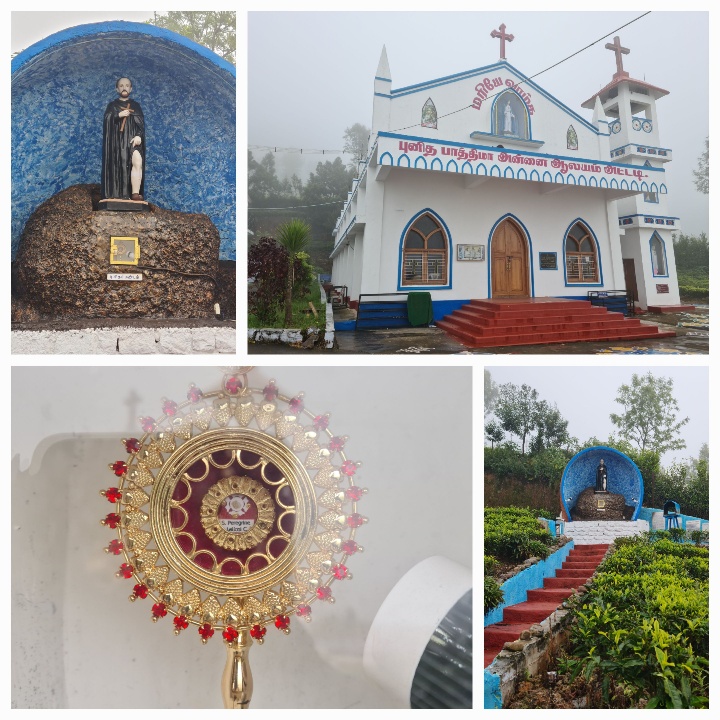
His is not a statue I’ve seen before. And to have it and a relic – that was special, particularly given how so many close friends are battling cancer right now. And his novena started 15 January, the next day. I was well impressed with all the coincidences.
I cheekily relit the candles in the box, as there was nowhere around to buy one. The church, sadly, was locked. And we’d just managed to get in before they locked the gate, too.
Coonoor is also home to the Pasteur Institute of India, an organisation with an interesting backstory.
The death of a young English lady Lily Pakenham Walsh, due to hydrophobia in the year 1902, who could not get antirabies treatment in time, led to the establishment of Pasteur Institute of Southern India. Mr. Henry Phipps, American Philanthropist donated to Lord Curzon, the then Viceroy of India a sum of Rs.50.00 lakhs for the development of Medical Institutions, out of which, a sum of Rupees one lakh was allocated to start the Pasteur Institute of Southern India at Coonoor.
The cool and equitable climate led to the choice of Coonoor as the most suitable location for the construction of the Institute. Spread over an area of 16 acres of land the Institute is situated on a grassy knoll on the upper reaches of Coonoor town amidst beautiful surroundings with lush greenery, manicured lawns and flower gardens.It has a glorious tradition of single minded dedication to alleviate the suffering of humanity by its contribution to the research and development of vaccines in the country.
We were getting closer and closer to our real tea plantation experience, even if I didn’t know it. Already the mist was working its magic on the greenery and expectation filled the air.
Munnar beckoned.