
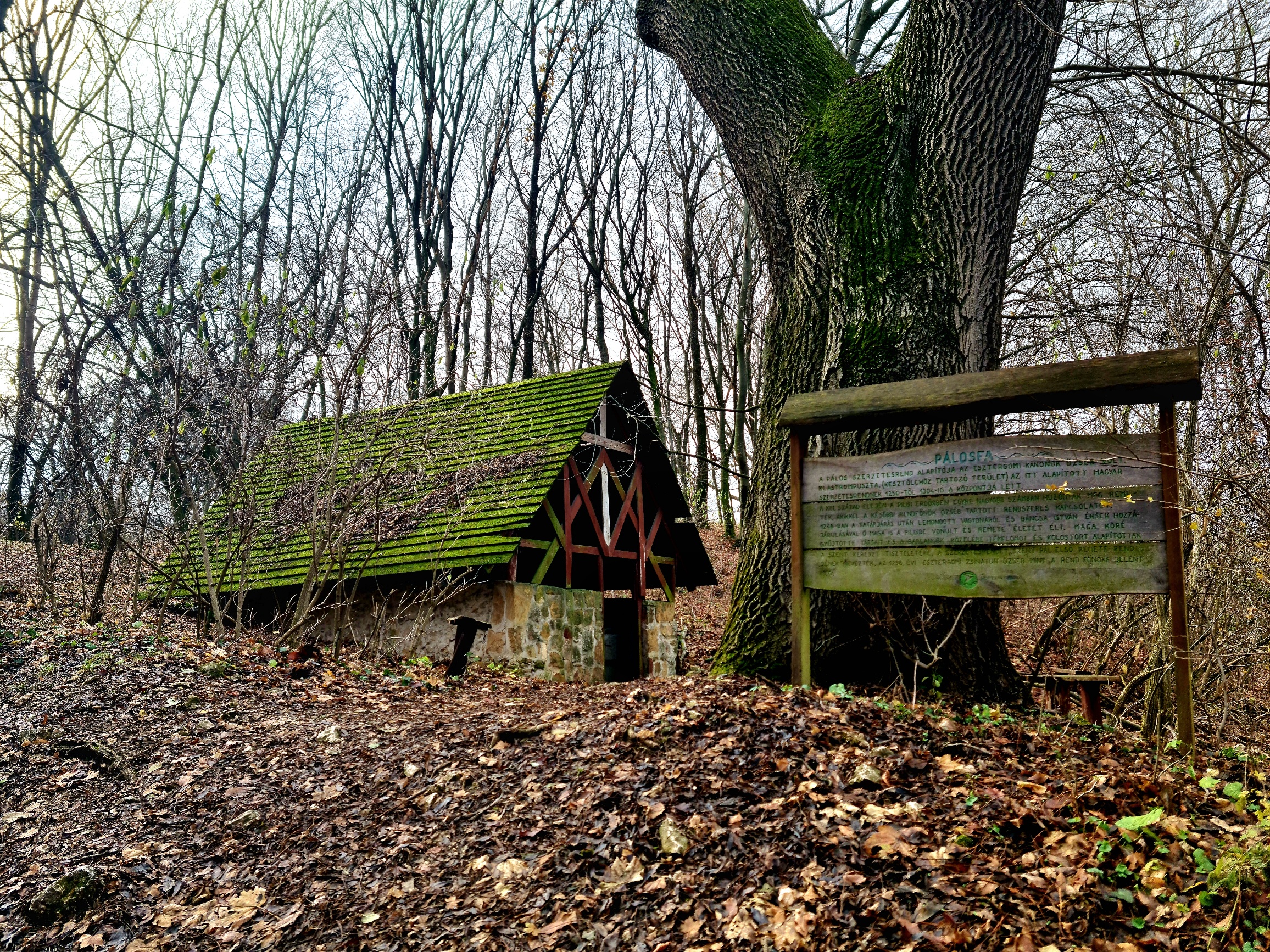
Having fully recovered from my first foray into the hills, I was keen to keep the momentum going and complete another stage of the Kéktúra.
Himself was back in Sierra Leone, so HC and I decided we’d do a stage closer to Budapest.
I needed to improve. To push myself even more.
On my fitness scale, HC is a 10 – he runs marathons. I’m a 5. I wondered how the mixed ability would work out.
He kept reminding me it wasn’t a competition.
We had time. Our only aim was to get to Dorog before daylight went.
We caught the train to Piliscsaba, picked up our first stamp, and headed off into the hills.
We had 18.6 km ahead of us, a 420m climb, and an estimated time of 5 hrs 20 minutes.
The book, he said, rated this as an easy hike.
Ye gads!
At one stage, had we been beset by a gun-toting mad thing intent on killing us, I wouldn’t have had it in me to run.
Easy???
The climbs weren’t as steep as last time, but they were longer. Much longer. And there were more of them.
This time, though, I was taking the time to take it in. I wasn’t walking with the aim of getting somewhere. I was stopping to smell the roses – the figurative ones.
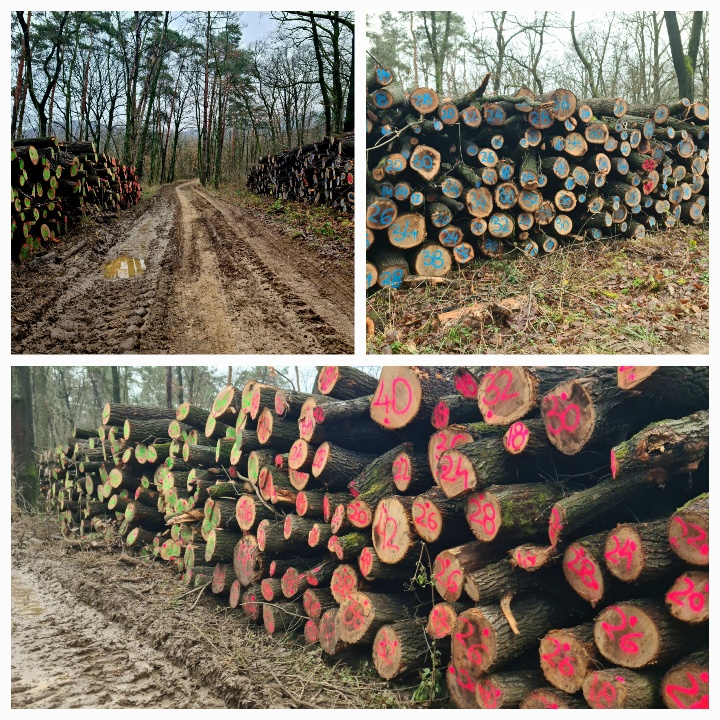
First up, was the smell of freshly logged timber. And the piles. And the numbers. And none of it made sense.
I checked.
Forests are divided into mapped management units in Hungary – erdőrészlet. These numbers might tell us where the tree came from. Or they could say which tree they came from – so all the 24s came from the same tree. And the colours could say where they’re headed. For example, blue measured and approved, destined for industrial processing; red designated for removal or, in some areas, could be high-value saw logs; green, fuel wood.
So much to learn.
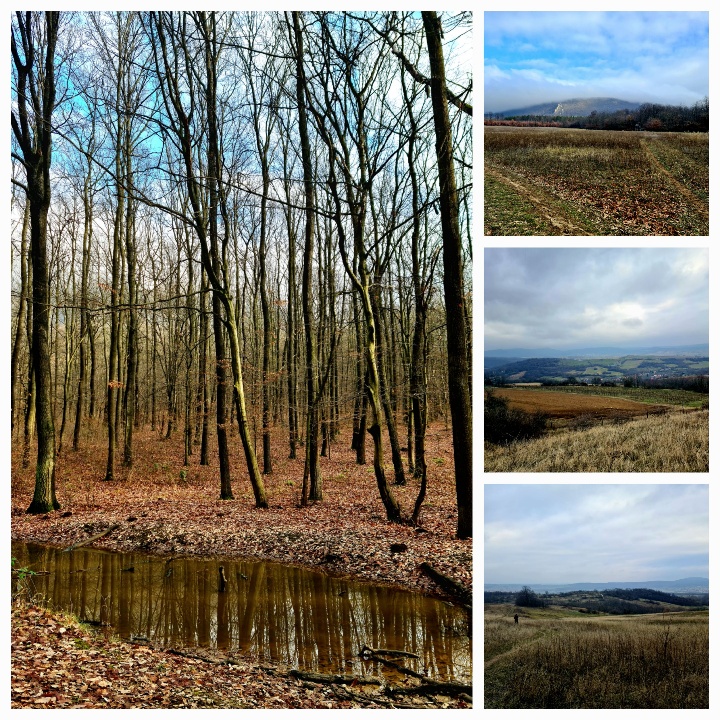
The scenery this time around was more stop-and-look. Or perhaps I wasn’t concentrating so much on getting it over with and was in a better frame of mind. And it wasn’t raining.
At one stage, we walked along a narrow trail on the side of the hills, looking down into the fields below. There was something Wild West-like about the whole thing. The rocky outcrops that had looked like snow from a distance were indeed rocks. I was lightheaded at having been down at the bottom looking up, and now up on top looking down.
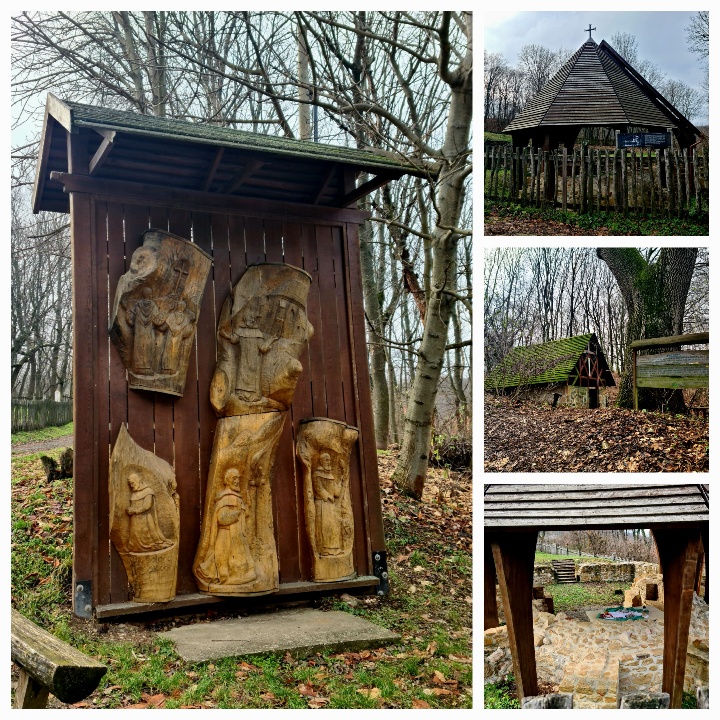
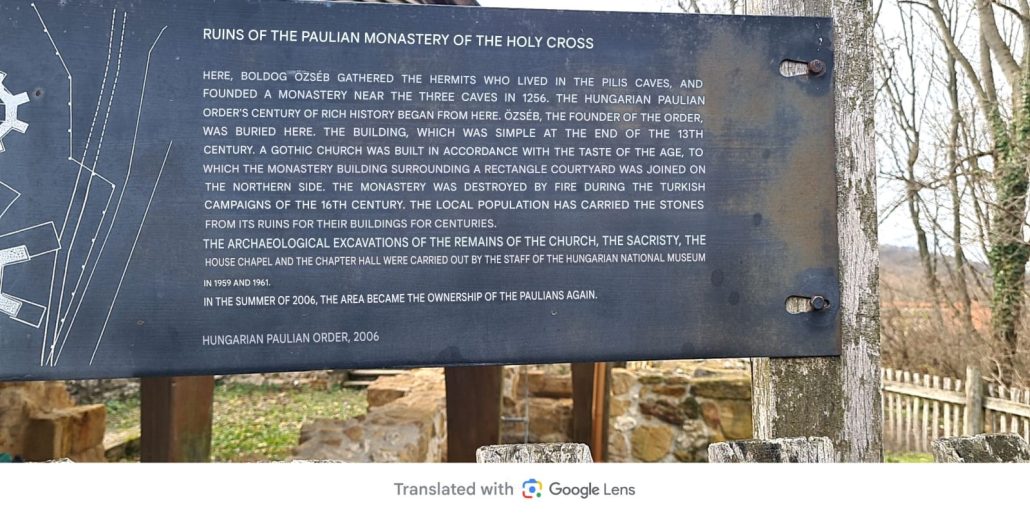
After passing through the village of Piliscsév, we collected our second of three stamps at Klastrompuszta, near the site of the first Pauline monastery in Hungary. I hadn’t known that the Paulines (Order of St Paul the First Hermit) were a Hungarian order. The only order founded in Hungary, apparently. The Holy Cross monastery and the Pauline Order date to 1250, the realized dream of the Canon of Esztergom, Özséb. We also happened upon one of their medicinal gardens. The things you learn when you get outdoors.
Four hours in, I had to pop a pain pill. That was one hour later than last time, so something is better. I was certainly feeling the pain. Particularly when we hit the outskirts of Dorog and started pounding the pavement. The urban part of these walks so far has been the least attractive.
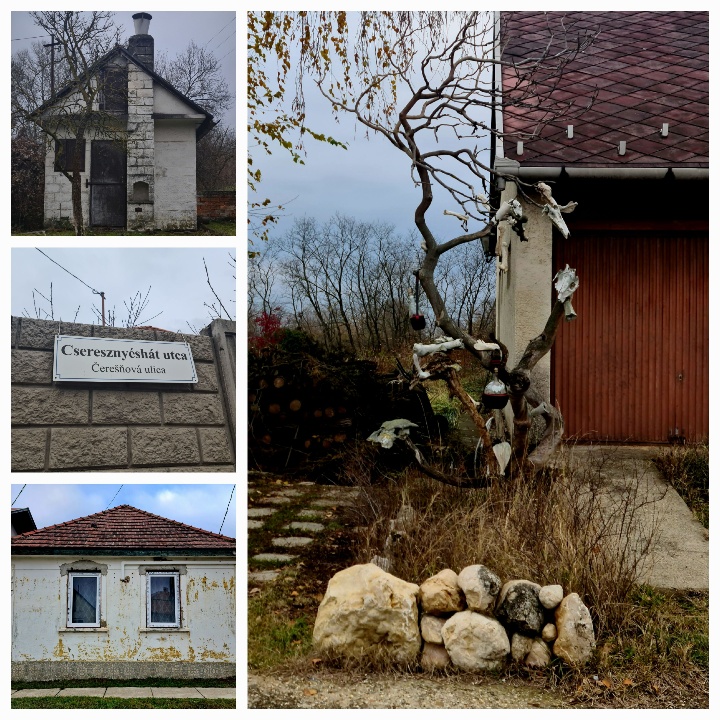
The translated street signs in one village told us we were near the Slovakian border. And the skull tree in someone’s front yard? I’m not sure what that was saying.
We made it 15 minutes shy of the target time. And yes, I know it’s not a competition. But I like a challenge.
We didn’t have long to wait for our train back to Budapest. I still had three hours of travel ahead of me, and my joints were creaking like the original floorboards in a Mississippi antebellum mansion.
For most of the Kéktúra, public transport lets you do it in stages.
Day trips.
This, I like.
I’m still nowhere near ready to take on consecutive days of walking carrying a full pack, but someday, I hope I’ll be there.
I felt the pain the next day, but an hour of stretching with the lovely Alexandra Baksa-Szijj set me right.
The bug has bitten.