
We’d dropped our friends off at the airport in Dubrovnik for their 8 am flight. It had just gone 6 am, and we weren’t flying until 2. We dithered about one last swim – but could we face a flight with salty skin and wet togs?
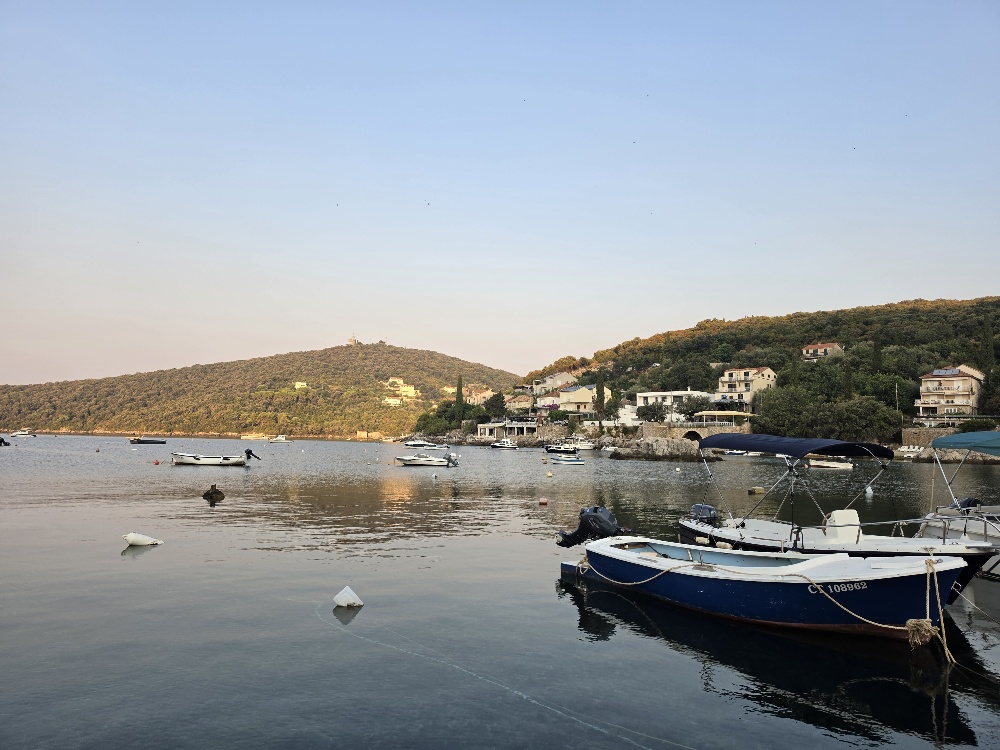
We decided to hedge our bets and head to the fishing village of Molunat, about 40 km from Dubrovnik. In the 2021 census, 234 people were recorded as living here. I imagine that in the summer this quadruples. There are lots of small hotels and guesthouses and an RV/camping site. Add these to a handful of restaurants and a couple of cafés/bars and you have the measure of it.
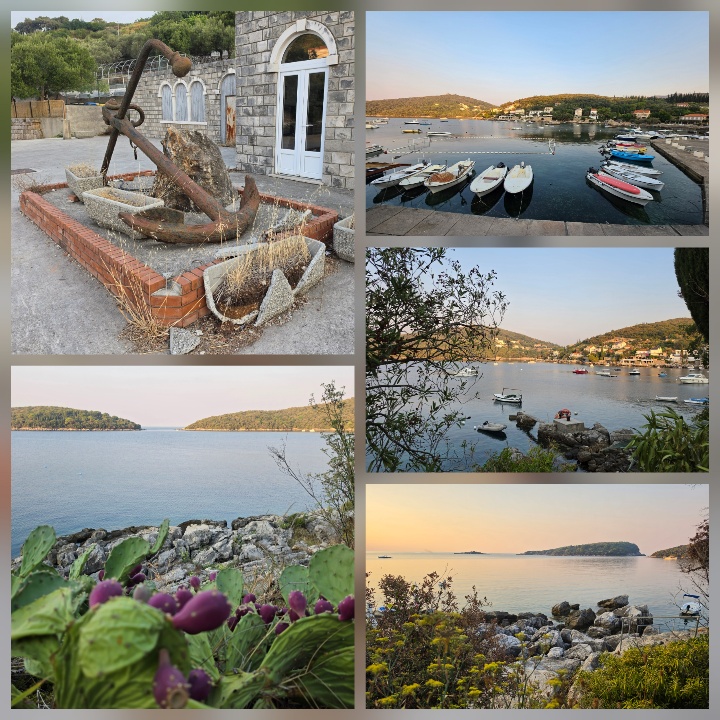
There’s no nightlife. I don’t even know how late the bars stay open. But they don’t open till 8 am – which surprised me for a fishing village.
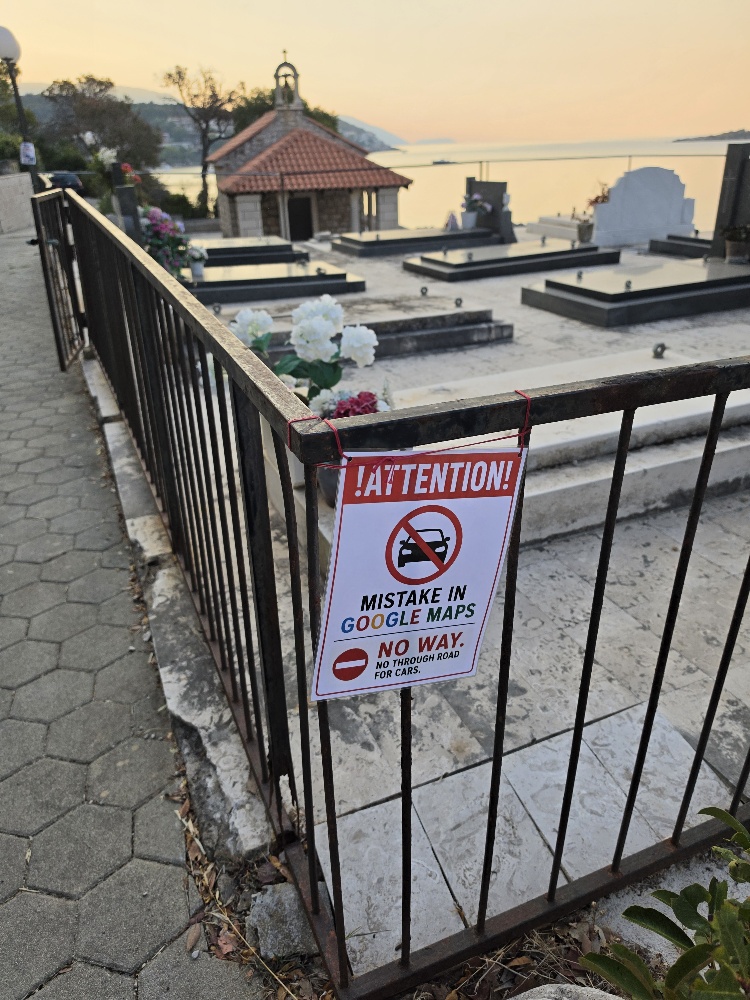
We got there just as the supermarket opened at 7 am, after taking a few wrong turns having believed Google Maps, yet again, and having had to turn around at the cemetery. But they didn’t have anything resembling coffee.
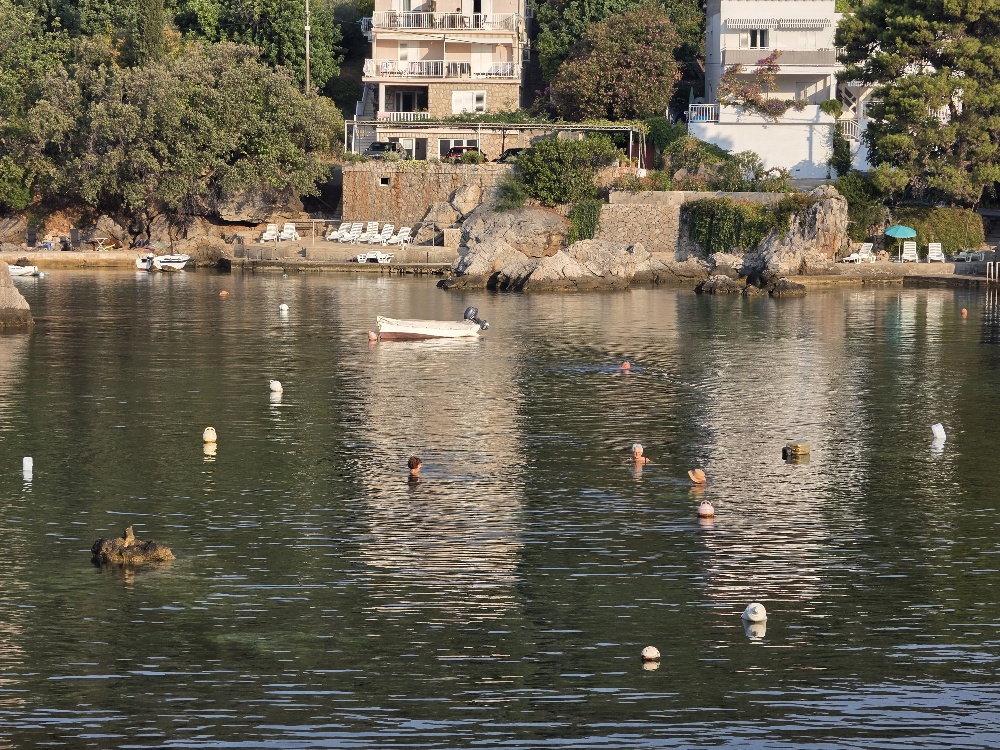
The lady thought the café opened at 8 but wasn’t sure. We walked around for a while before sitting and looking out at the fishing boats in the bay. There was a morning swim chat going on as a succession of older women made their way to the water and into the sea. How lovely that was to watch.
When the café/bar opened, we had our coffees and decided against a swim, preferring to drive right down to the southernmost tip of Croatia to see the Punta Oštro Fortress on the Prevlaka peninsula. We still had time.
We hung a sharp right at the Montenegro border and drove the narrow roads out onto Cape Oštro.
There, we met an older German couple on their motorbike heading for Italy. I had a brief flash of envy until I remembered riding pillion on a scooter in Thailand and ending up in the ditch.
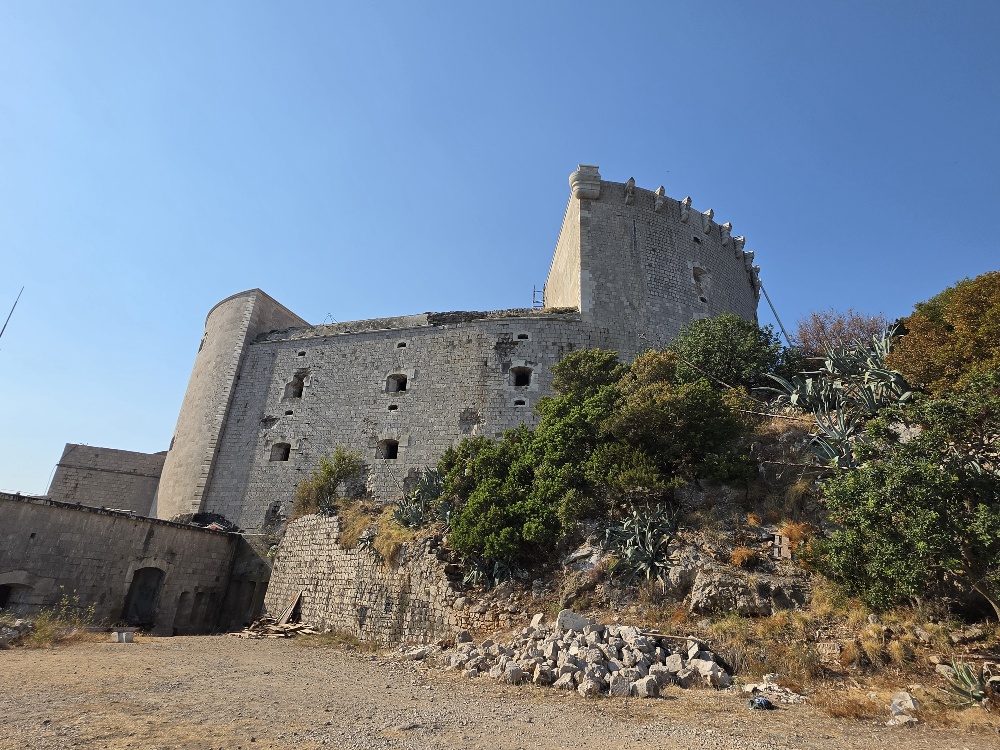
We climbed the hill and into the deserted fortress.
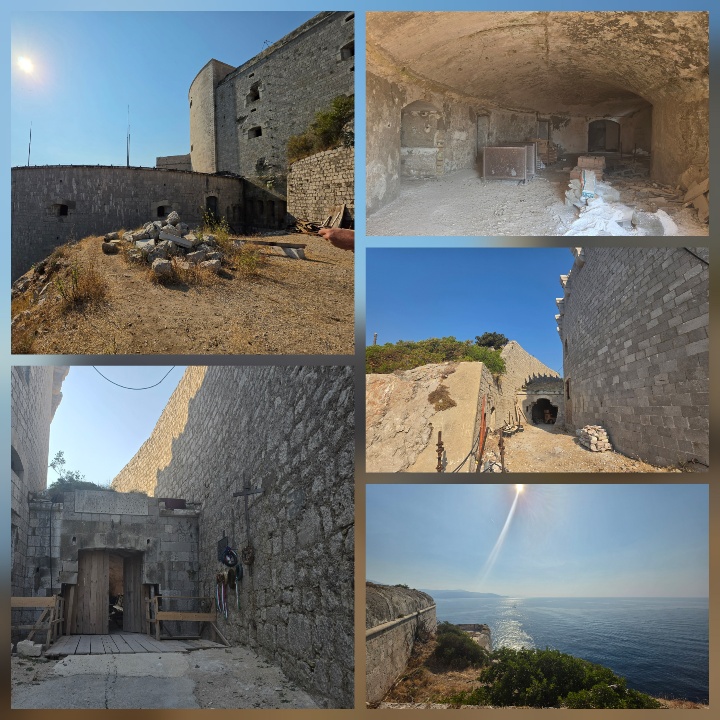
From 1996 until 2002, it was an internationally monitored (UN) military buffer zone.
In the 1850s, during Austrian rule, the Austrians constructed a major coastal-artillery fortress at Punta Oštro. It formed part of a three-fort system:
- Fort Oštro — on the Croatian side
- Fort Mamula — on the island of Lastavica, in Montenegro
- Fort Arza — on the Montenegrin Luštica peninsula
Together, their guns could create overlapping fields of fire across the entrance to the Bay of Kotor. It was a remarkably clever piece of military geography.
There are plans afoot to do something with it, but they flabbergasted me. Who would come this far to shop in fancy shops? The road out to it is a one-car-only road, but there did seem to be a higher road, so possibly a two-way system?
![Sign that says PARK PREVLAKA in green and then in black by a flag of Croatia: Tvrđava (fort) datira iz 1850-tih godina. Austro-ugarska monarhija je u njoj dobila artiljerijsku fortifikaciju za obranu bokokotorskog zaljeva. Godine 1943. nakon kapitulacije Italije pretrpjela je udarce, od strane Njemačke vojske, koji su vidljivi i dan danas. Uz Božju pomoć i razum ljudi tvrđava bi mogla postati obnovljeni čuvar povijesti, upozorenje svima kako osim dobra na Zemlji postoji i zlo, kako je svaki trenutak dragocjen. [The remainder is heavily damaged/obscured, but appears to mention a restaurant, café, hotel, wine cellar, museum and shops.] English, next to a UK flag: Fortress (fcr - original name) dates from 1850-ies. Austro-Hungarian monarchy constructed a canon battery to protect the Boka-kotorska bay. German army bombed it during 1943 after Italian capitulation in WWII and the wounds of that bombing are still visible today. With Gods help and good sense of the people the fortress could become the guardian of the history as well as the warning that together with the goodness there is a lot of evil on the Earth and to remind us to take care of each precious moment of our lives. The final paragraph is substantially obscured by damage/graffiti, but I can make out references to the fortress becoming a restaurant, café, hotel, wine cellar, museum, shops... There is also a large handwritten/graffiti inscription across the sign that appears to read: KAPITALIST BULLSHIT](https://anyexcusetotravel.com/wp-content/uploads/2026/09/20260907_093617_resized.jpg)
Just outside the entrance, we found a nod to Hungary. A commemorative plaque in memory of the heroes of the Battle of the Strait of Otranto erected by the Rotary Club from Győr.
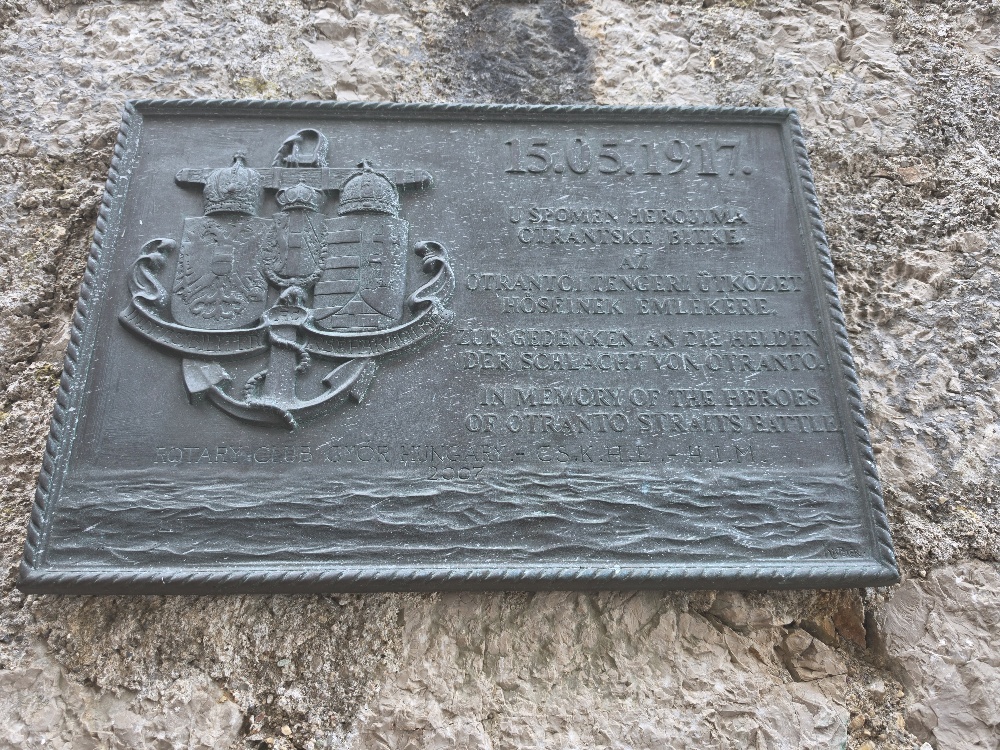
On 15 May 1917, the navy of the Austro-Hungarian Monarchy launched a daring attack at the Strait of Otranto. Under the command of Miklós Horthy, the light cruisers Novara, Saida and Helgoland broke through the Allied naval blockade and inflicted heavy losses on enemy vessels. The engagement, later known as the Battle of the Strait of Otranto, became the most celebrated and successful operation of the Monarchy’s navy and brought Horthy national fame.
Molunat struck me as a lovely spot if you wanted to do nothing for a week except swim and relax. Filed for future reference.