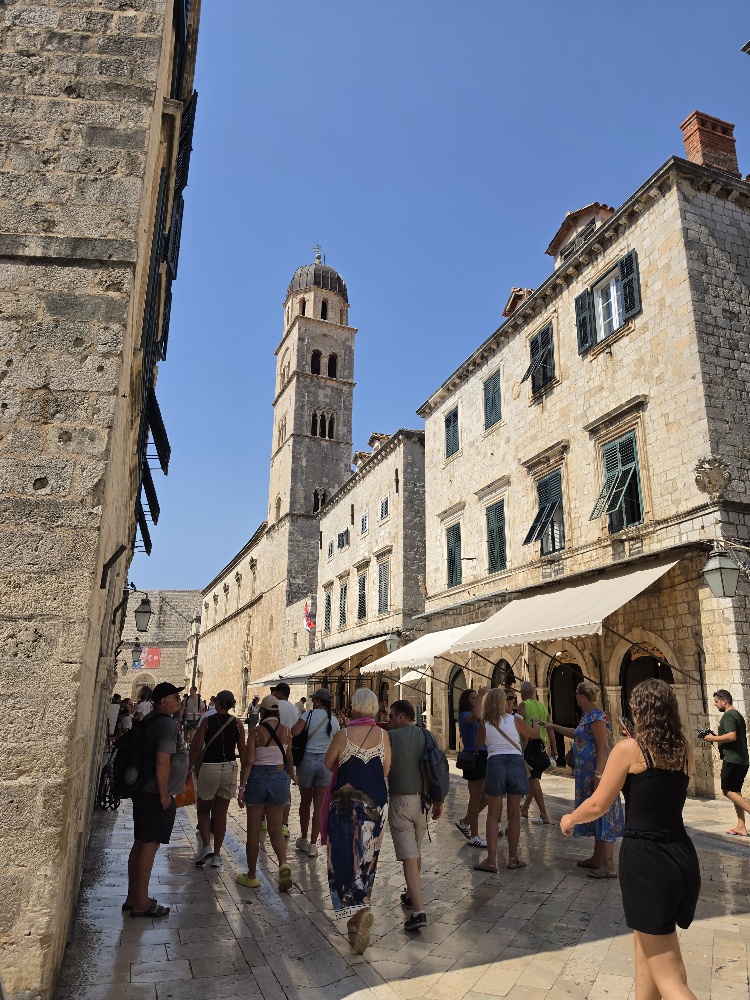
For years I’ve been wondering what the hype was about. Put off by stories of massive crowds and an over-touristed old town, it’s taken me this long to get to Dubrovnik.
Dobrovnik I’ve been to loads of times and love. But Dubrovnik? This was my first visit.
It didn’t help that it was 36 degrees – not ideal temperatures to be milling around with the cacophony of cruise-ship parolees.
But it had to be done.
We were about a 40-minute bus ride from the city, staying out in Slano; to be so near and not make the effort was a regret in the making.
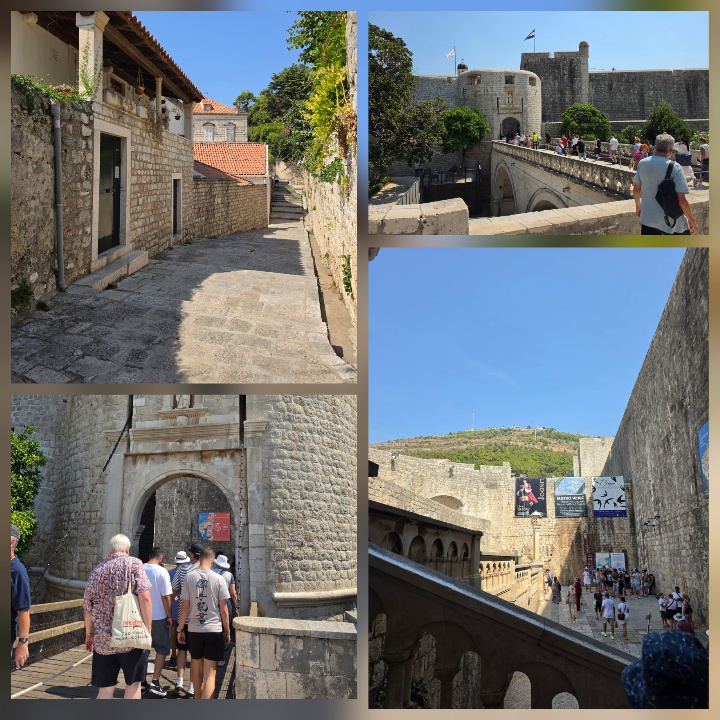
The bus dropped us high up on a main road, and from there we navigated multiple sets of stone steps down into the bowels of the old town. Millions of feet have worn the stones to a dangerous patina. Be warned. I nearly came a cropper twice. It made for slow going.
Once himself found an entrance to the wall, we set off, determined to see what was to be seen or as much as we could in the four and a half hours until our bus back.
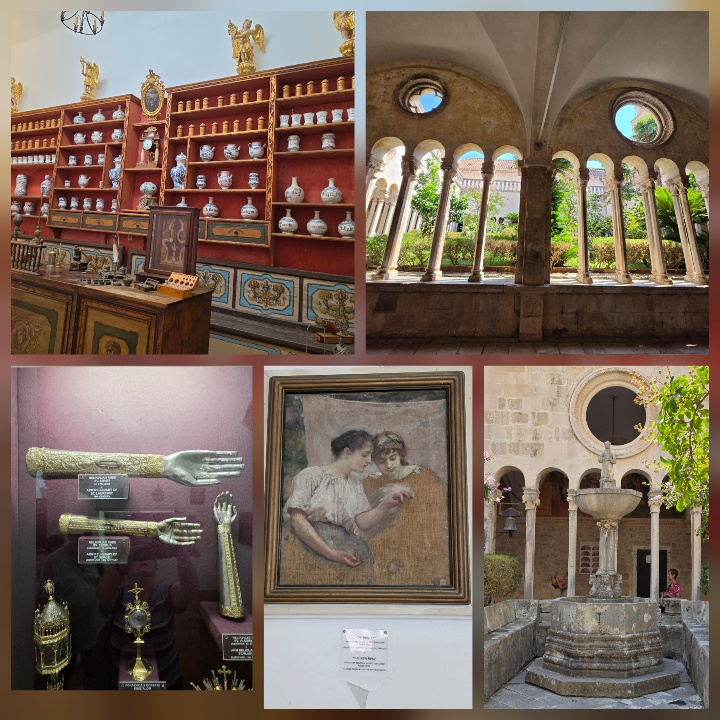
First up was the coolness of the Franciscan Monastery to see the 14th-century pharmacy. Apparently, the current pharmacy in the complex sells stuff they make using recipes from the friars from the 1300s. Hey, if it works, it works.
More curious, though, were the reliquaries (objects made to contain a saint’s relics, such as bone fragments), including one of St Ursula’s head. And a few legs and arms.
October 21st is the feast day of St. Ursula, a holy woman and venerated martyr shrouded in mystery. According to legend she was a 4th century princess from Britain who was martyred by the Huns in Cologne, Germany. Included in her feast day are 11,000 companions who were massacred along with her, many of them virgin handmaids of her royal entourage.
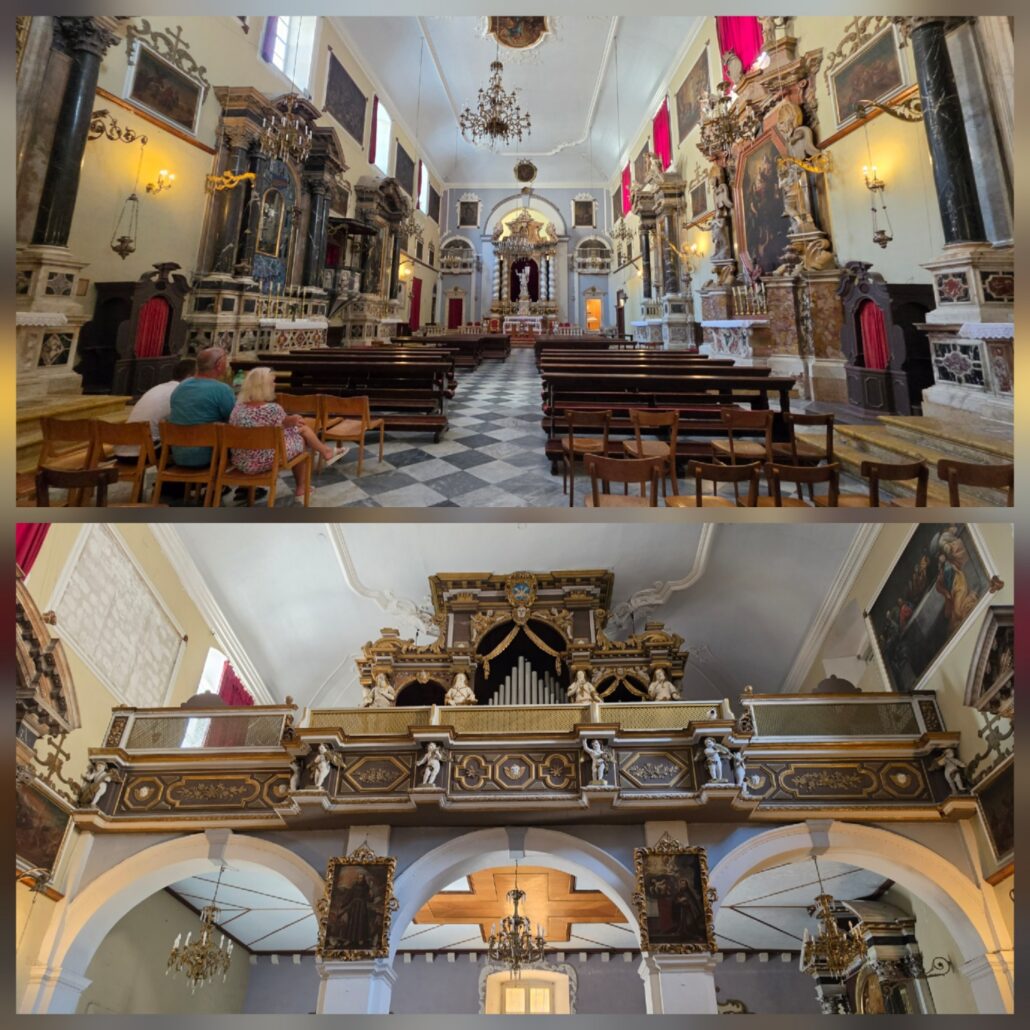
We popped in next door to see the church and get our three wishes.
It was as early as this that the jaded feeling began to set in. We’ve seen a lot of old Venetian-styled towns in recent years, and while I would never pass up the opportunity to pop inside a church and say a quick prayer, I was getting a tad tired of the touristy stuff.
Back out in the heat, we walked the Stradun (Venetian for ‘large road’).
Dividing the Old Town into the north and south, the limestone promenade stretches from the west end’s Pile Gate to the Old Port and is flanked by historic buildings, shops, and cafes.
When we stopped for an ice cream, the young local lad behind the counter heard our accents and started chatting to us in Irish. It was all a tad surreal.
There’s a notable lack of public benches – much-needed public benches. And the street itself was like glass. Again.
Narrow laneways promised all sorts of surprises, and surprisingly, given the near-complete absence of plant-based milk in the country, gluten-free menus were all over the shop.
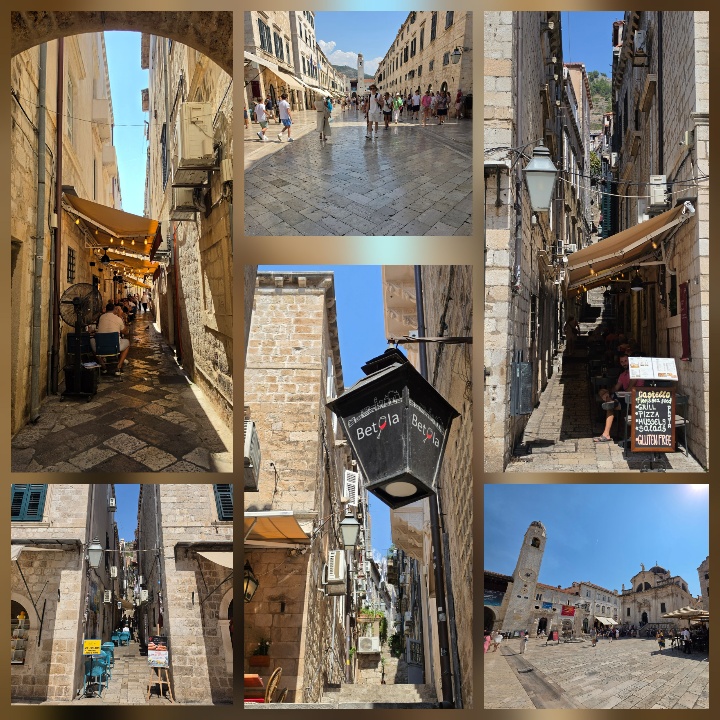
We got as far as the 16th-century Gothic-Renaissance Sponza Palace but opted for the cooler interior of the Baroque St Blaise’s Church.
St Blaise is the city’s patron saint, and the legend goes something like this:
As darkness fell on the 3rd of February 971 a local priest walked through the cobbled streets of the Old City to his parish church, the Church of St. Steven, when he arrived he was surprised to find the door open. With trepidation he entered, before him stood an old man dressed as a bishop, mitre on his head and a staff in his hand. “Address your city fathers the Venetians plan to attack,” whispered the old man from the darkness. “Please identify yourself to me,” asked the priest. To which the old man replied that his name was Blaise. Read the full story.
The church is home to the allegedly incorrupt body of St Silvan, who was martyred in the 4th century. His body was brought to Dubrovnik from Rome in 1847. I did some more checking, and what we saw was a wax body that contains the remains of the original body. And, to further confuse matters, the jury hasn’t yet come back on which of the St Silvan’s is buried here.
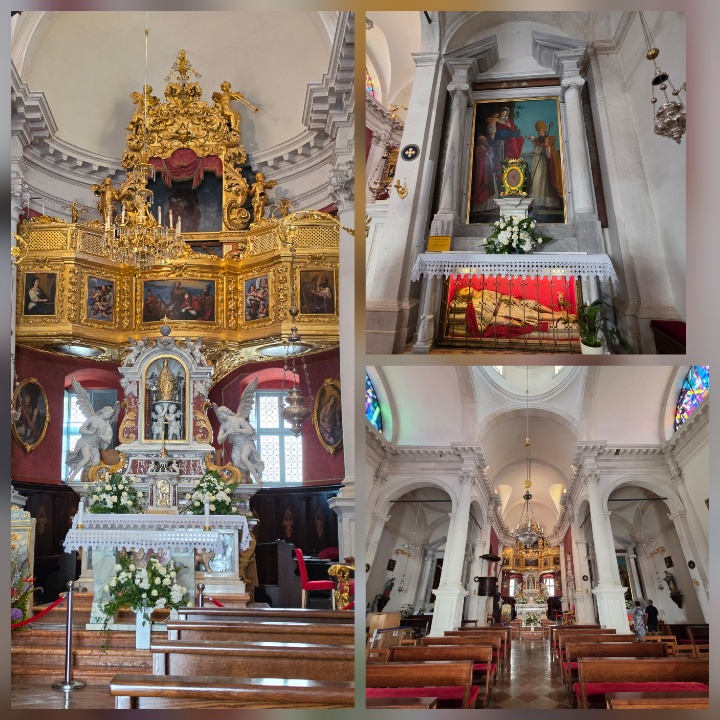
Himself at this stage had gone ahead; he was keen to see the Jesuit steps. TK and I sat on the steps of St Blaise and made an executive decision – we wouldn’t last the pace. There was a 2.30 bus which had our name on it. We could be in the sea by 3.30 and away from the crowds.
A no-brainer.
Getting to the bus station was another story. Finding our way out of the old town was a feat in itself. We stumbled down to the port and saw the Spanish galleon. We had a fleeting moment of hope when we thought we might be able to get a boat back to Slano.
But no.
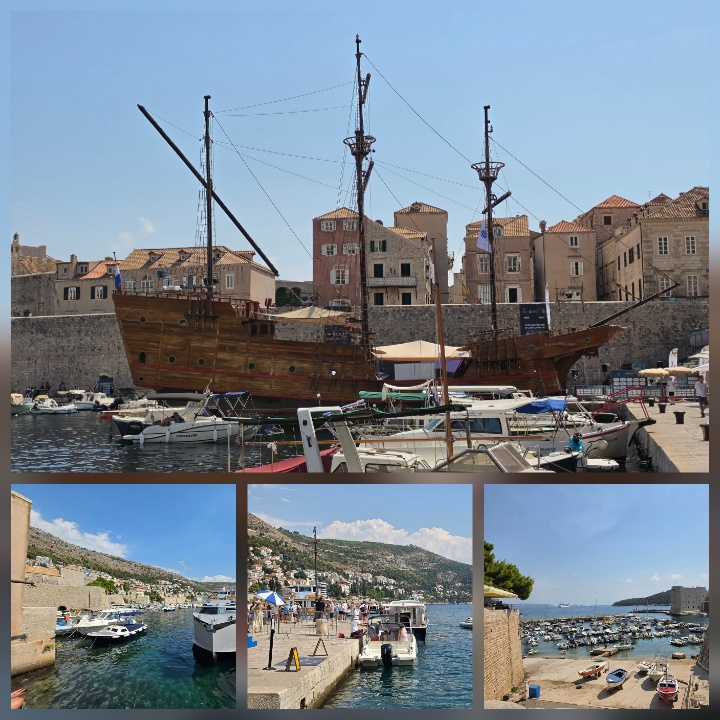
Finally finding our egress, we opted for a taxi to the central bus station rather than walk the 25 minutes or try to figure out a bus timetable and find the right bus. It was too bloody hot to think. The nice man stopped the meter at €30 when we still had a ways to go – taxis ain’t cheap in Dubrovnik.
Was I glad I saw some of the old town? Absolutely.
Would I be in a hurry back? Not at all.
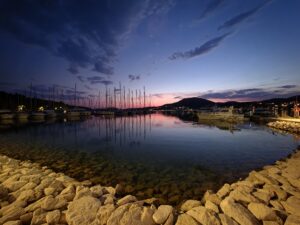
We did go back though, to the city itself. On our last night we stayed over in the Lapad district, ‘a large and popular residential and resort peninsula just west of the historic center’. We enjoyed a leisurely walk down to the public beach known to all and sundry as Sunset Beach. And we did indeed watch the sun go down before walking the gauntlet of cafés, bars, and restaurants that line the main drag.
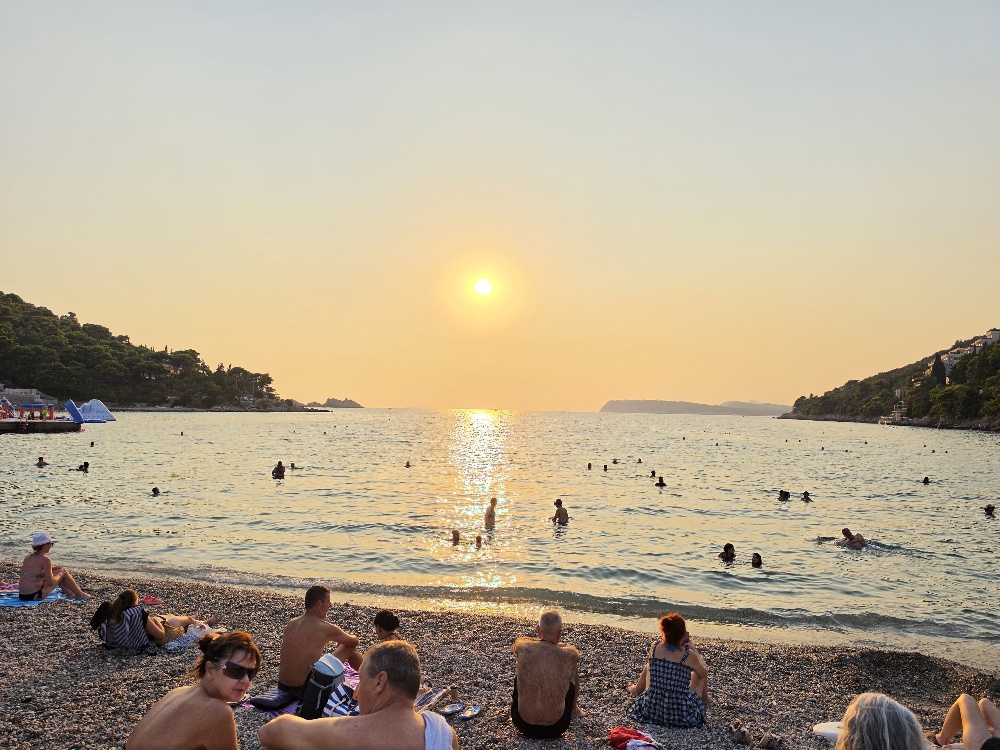
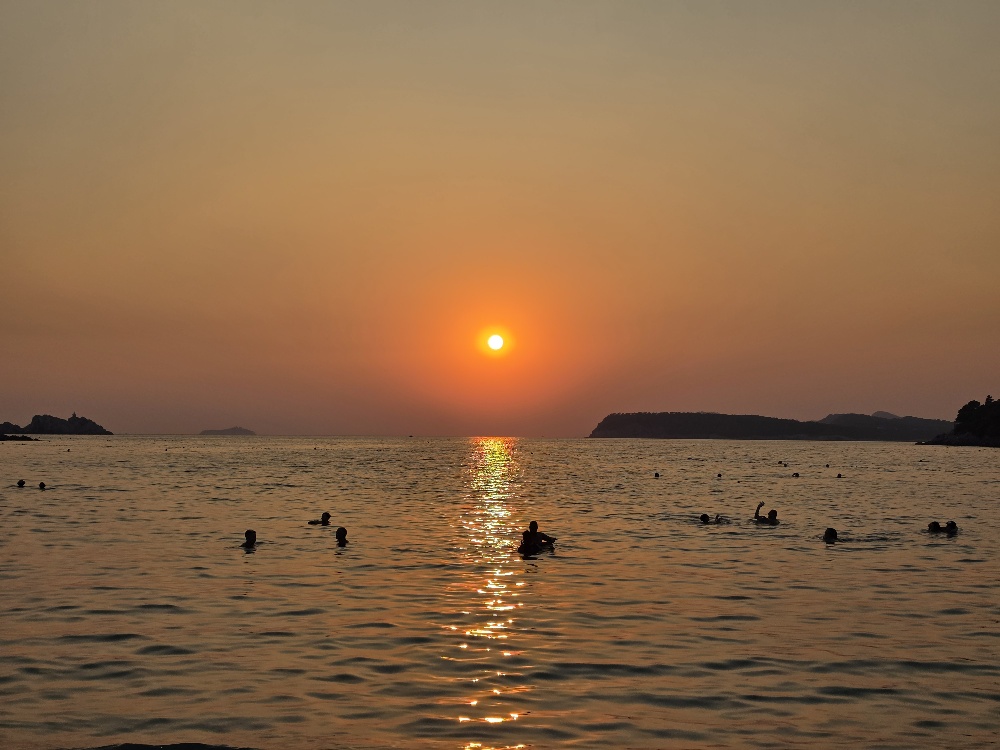
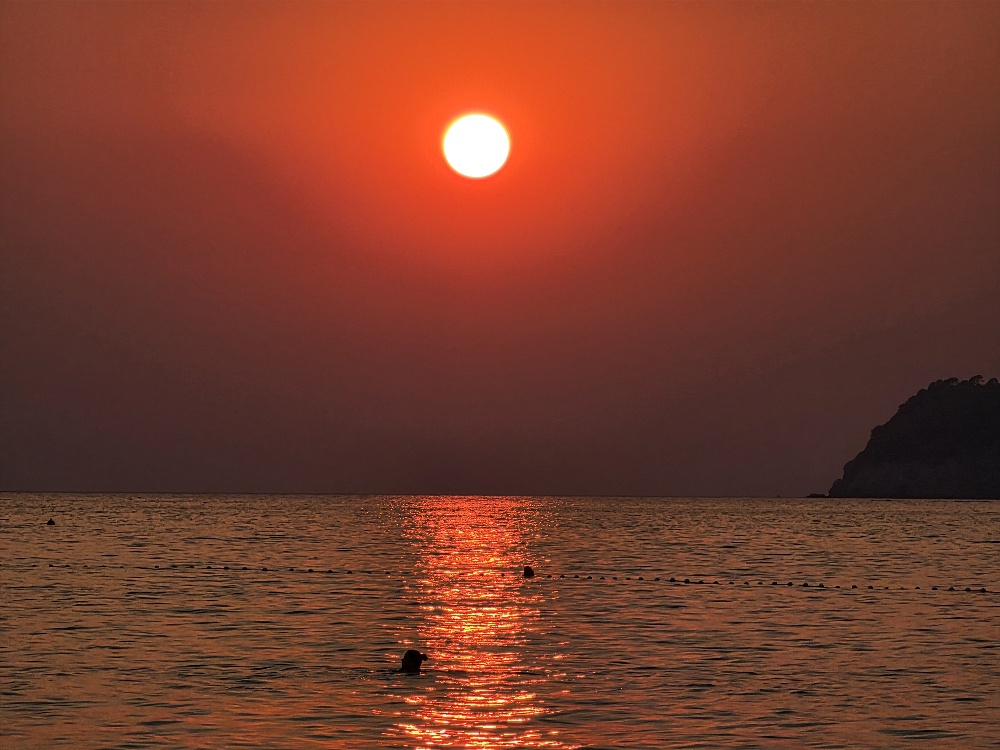
After rejecting the pricier seafood joints by the water, we rocked up at Trinity, an Asian restaurant in a hotel tucked away in a back street. We were lucky to get a table. Most people had reservations. The kind man on the door said we’d have to be done and gone in 90 minutes – which we were fine with. We’d an early start for the airport the following morning.
The food was good. Incredibly good. So good that I’d go back to Dubrovnik just to eat there again. And they had their own twist on my new favourite cocktail, the Paloma.
Heaven. I was in heaven.

So, while I wasn’t mad about the old town, I’d happily stop over again on my way somewhere, stay in Lapad, swim at the beach, and go to Trinity for dinner. This time with a reservation.
The old town? Done with that.