
I didn’t choose to go to Lisbon for my birthday this year; it chose me. Our good friend GP was flying in from the States with our soon-to-be friends S&GL and had a few free days before their onward sea voyage began, so I jumped at the chance to reconnect in person.
I’d not been to Lisbon for years, and truthfully, nothing looked familiar. I didn’t get any sense that I’d been there before.
Odd, I thought. Very odd. But that’s why I keep writing this blog. It helps me remember. That last Lisbon trip was pre-blog so I have no record of what I saw or did and, as I say, nothing looked remotely familiar.
Our plane was late. And the Uber/Bolt wait at the airport was chaotic. Next time, if we’re in time, we’ll take the metro into town. Far easier. We waited an hour with hundreds of others milling around trying to find their cars. The first guy wanted us to walk into the night and meet him at a garage and when we didn’t think that was a great idea, he cancelled us. The second guy did arrive but charged us more than we’d agreed.
By the time we got to the hotel, everywhere was closed.
The next morning, we were up and about early, figuring out public transport, and making our way down towards the water.
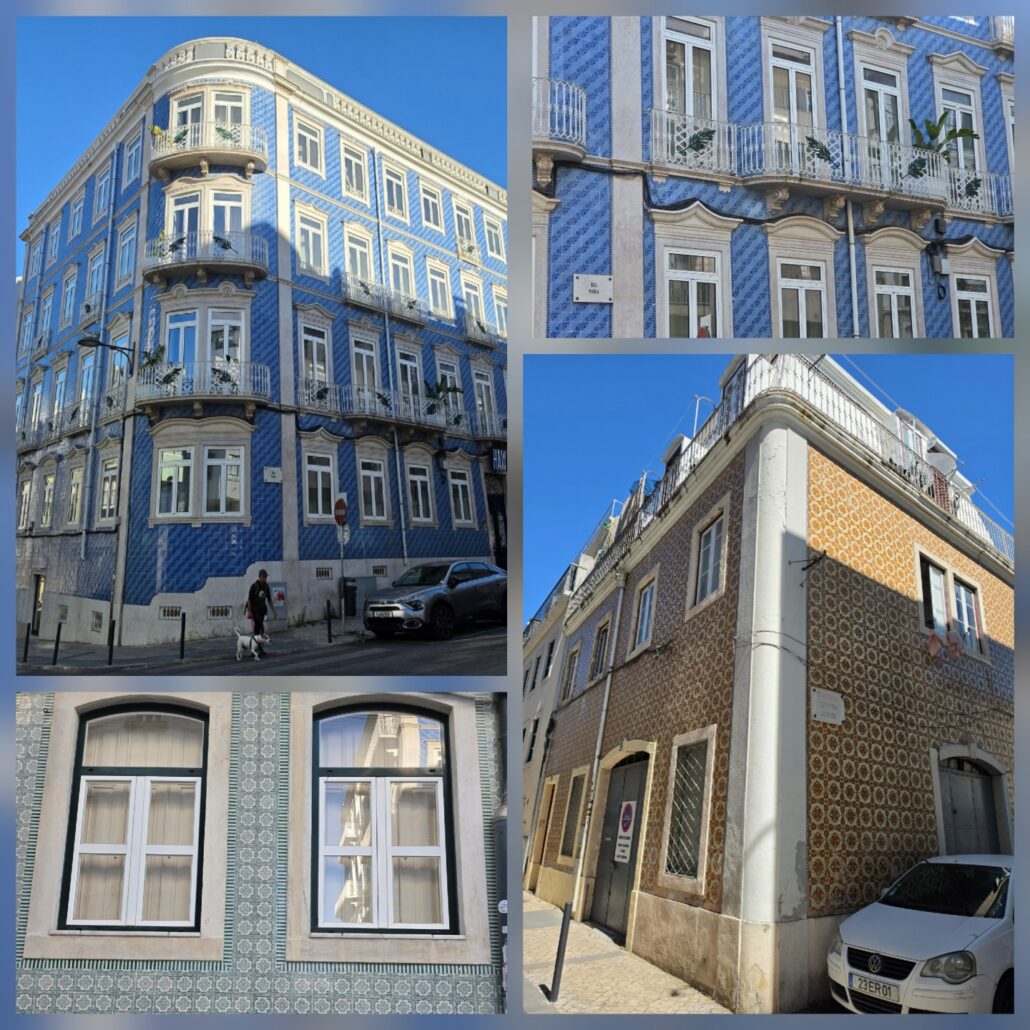
It was a stop-and-start sort of walk. Portuguese tiles fascinate me. My lasting burning question is what happens if one falls off and it’s been a few decades and my tile is out of stock? I have visions of basements full of boxes of spare squares.
This decorative art form, traditionally comprising small glazed tiles is called “azulejos,” derived from the Arabic word الزليج (“al zulaycha”), meaning “small polished stones.” Dating back to the 13th century, the first Portuguese art comprising ceramic tiles appeared shortly after the Moors invaded Portugal, bringing their culture with them. Today painted azulejos that depict scenes and narratives are often installed on benches, train stations, the interiors of churches, sidewalks, and houses.
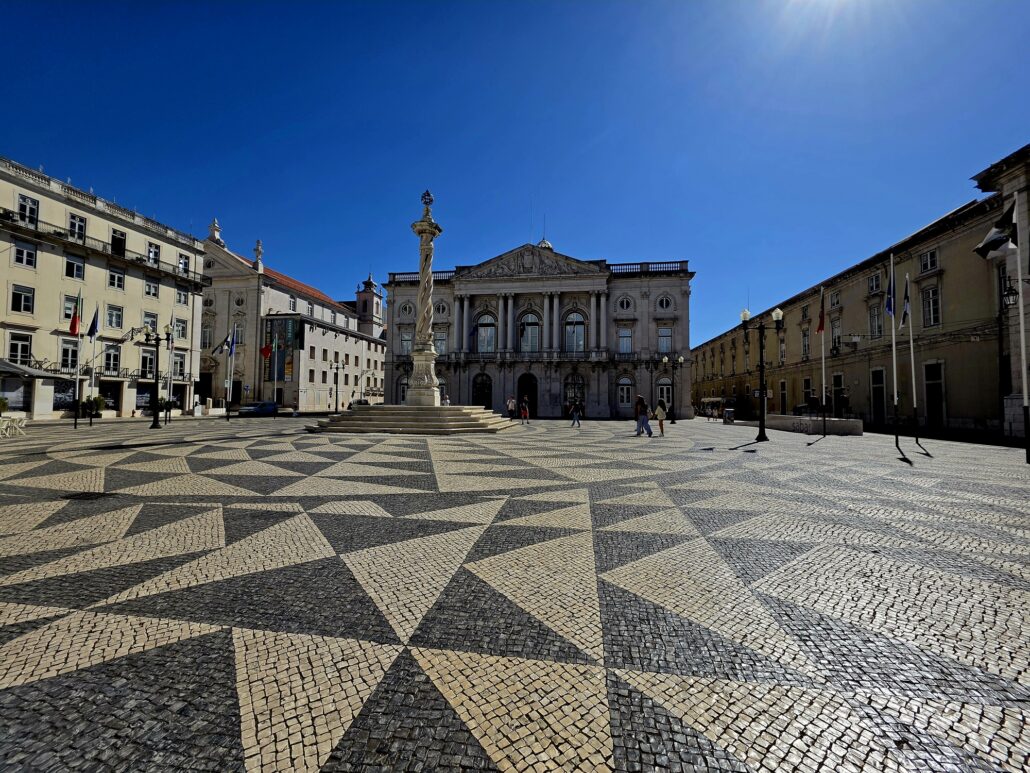
And it’s not all about walls. The pavements and the praças – they’re works of art. Praça do Município (City Square), presided over by the neoclassical Paços do Concelho (City Hall) is stunning.
As the name reveals, “calçada portuguesa” was created in Portugal, although in a different form from what we know today. The first records of this traditional form of cobblestone pavement dates back to 1498, when a few streets of Lisbon were paved with granite from the region of Porto, in northern Portugal. The intention was to make way for the King of Portugal’s annual birthday parade, which included a giant white rhinoceros (the King didn’t want the magnificent animal to drag mud on his giant paws!). With the destruction caused by the great earthquake of 1755, which practically destroyed Lisbon, the city was rebuilt but without this type of pavement, which was too expensive for such trying times. It was only in the following century that Lisbon’s pavements and squares were once again adorned with limestone pavement, with a design much closer to what we know today as “calçada portuguesa“. The first example was done in 1842, by the inmates inside the Castle of São Jorge, which at the time was a prison. The zigzag design applied was so unusual, that it aroused great enthusiasm in the press.
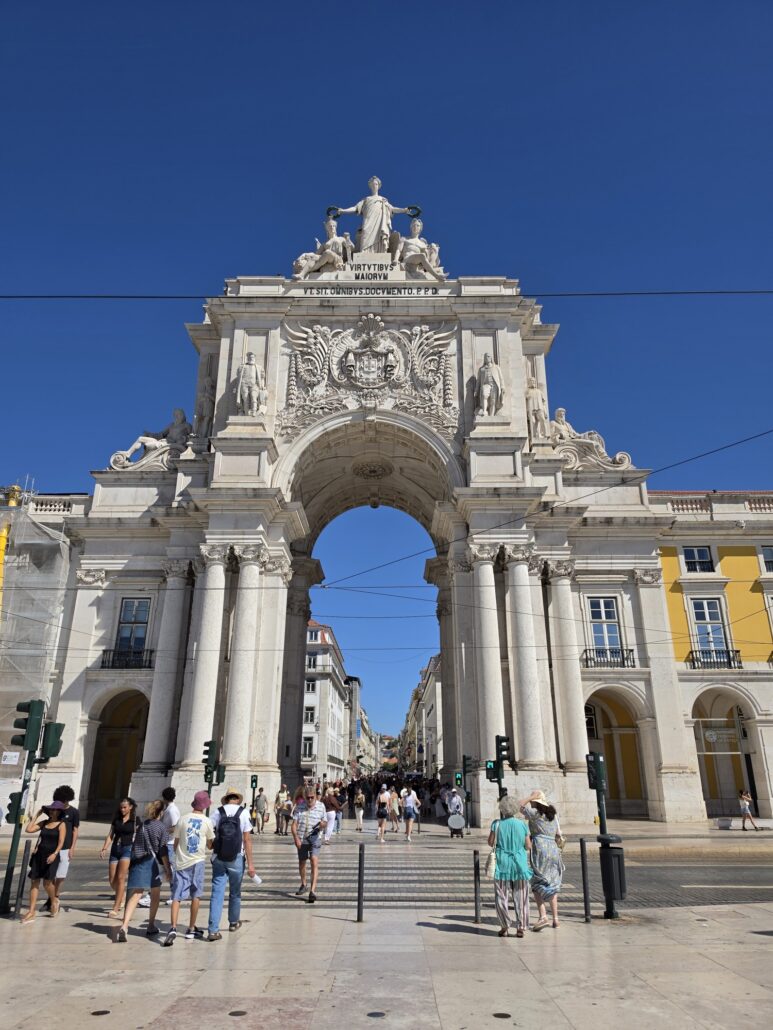
Further on, Aro da Rua Augusta marks the resilience of the people. Built in the aftermath of the 1755 earthquake, fire, and tsunami that brought the city to its knees, it’s a major attraction. And climbable. In that you can go to the top and get a great view of the city and the water. Not that we did. But we could have.
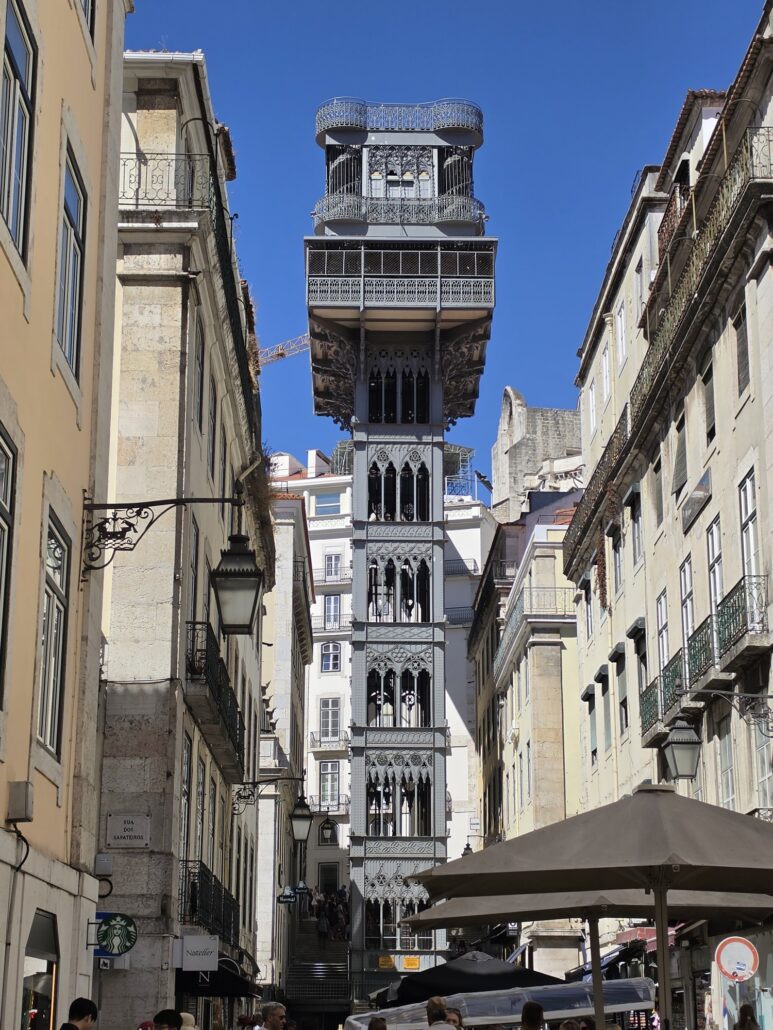
Another curiosity is the 45m (147 ft) tall neo-Gothic iron Elevador de Santa Justa (Santa Justa lift). Connecting the lower streets of the Baixa with the higher Largo do Carmo, it is both a tourist attraction and a means of getting from A to B. In operation since 1902, it reminded me a little of the Eiffel Tower. And, on investigating, that’s not a surprise as the architect, Raoul Mesnier de Ponsard was a fan of Gustav’s work. We didn’t venture up it, either.
We met up with our friends for lunch and left them to recover from their red-eye flights for the afternoon while we went to check out the LX Factory. Described as a ‘former industrial wasteland turned into a must-see creative hub’, it certainly lived up to all the hype.
Sitting under 25 de Abril Bridge, it’s another world. Nuno tells me:
It all began in 1846 when a threads and fabrics company called “Companhia de Fiação e Tecidos Lisbonense”, one of the most important manufacturing complexes in Lisbon, moved to Alcântara, a quarter located on the way to Belém. Other companies moved as well to the 23.000 m2 industrial site during the golden industrial age. Alcântara was a busy place that time, but not anymore…
Now, and since 2008, a new urban fragment has been born again in one of the most industrial abandoned areas of Lisbon. If Lisbon’s metamorphosis started with the Expo98, the next step was the LX Factory – It’s a giant atelier full of galleries to discover with traditional restaurants, design shops and even concert halls.
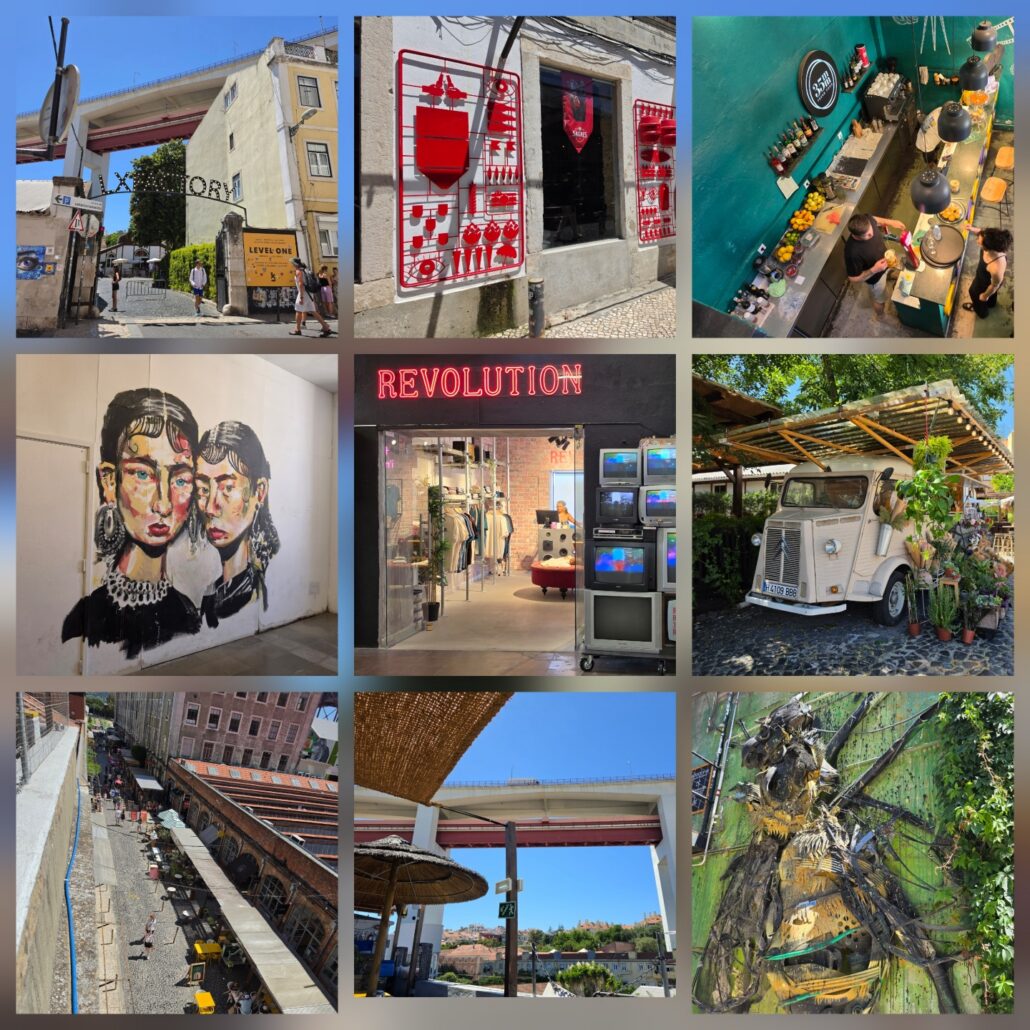
We wowed our way through the buildings and the streets, taking time out for my new favourite cocktail, the Paloma. A tip for you – while the bars at street level offer €5 happy-hour cocktails, it’s worth climbing the stairs to the Hostel Rooftop bar. While they don’t do a happy hour, their cocktails are twice the size and much stronger.
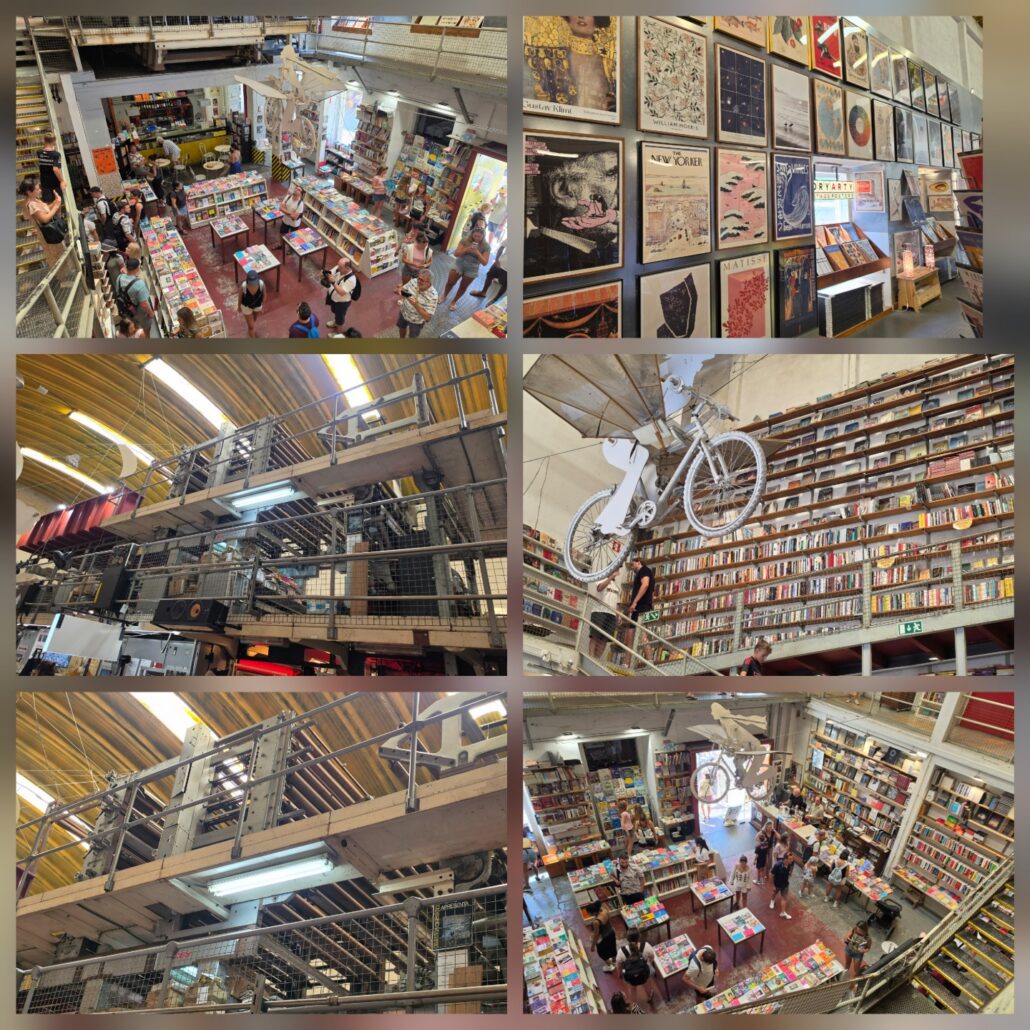
What blew my mind, though, was the bookshop and it’s original printing press. It’s like something out of a movie.
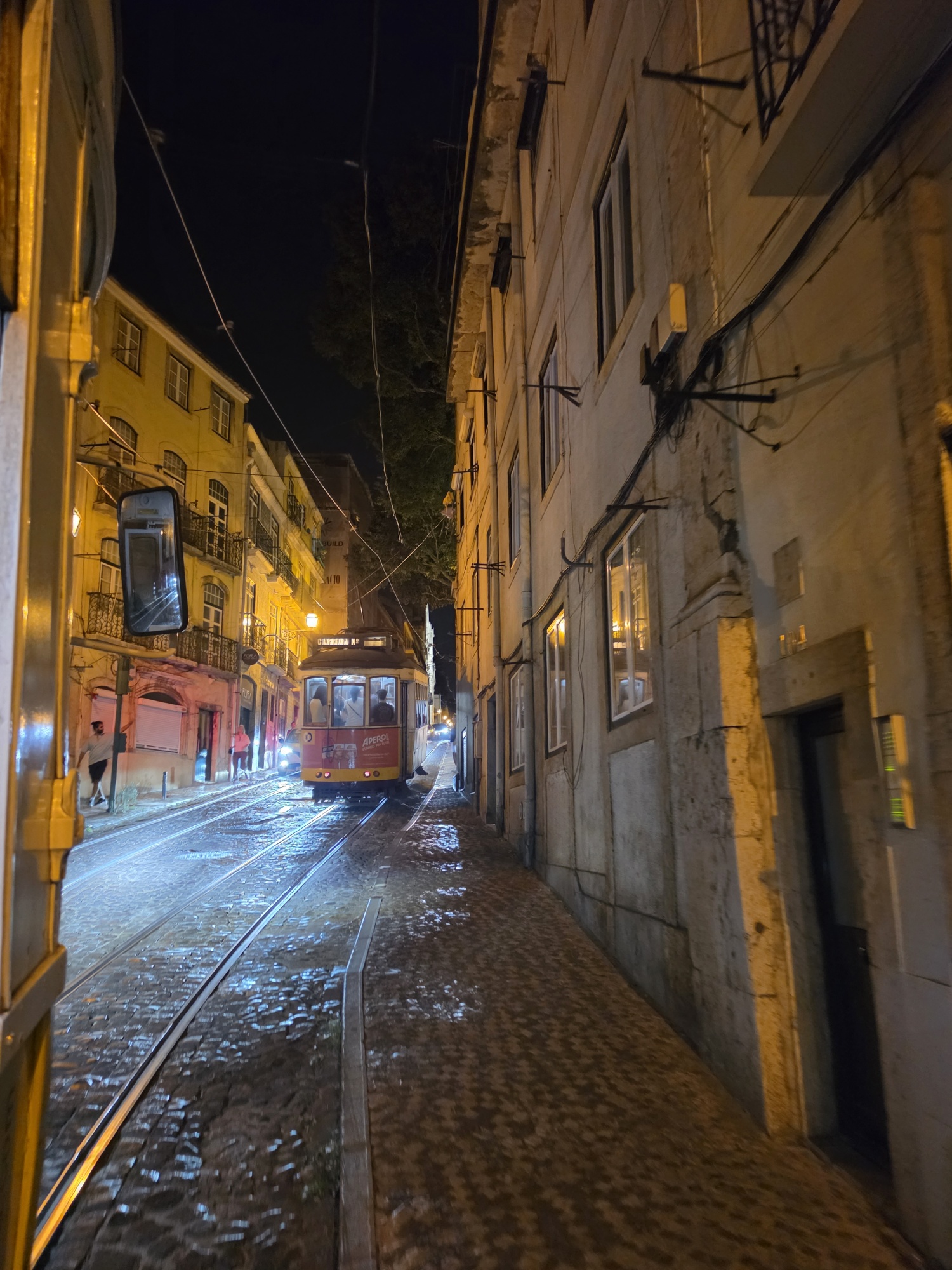
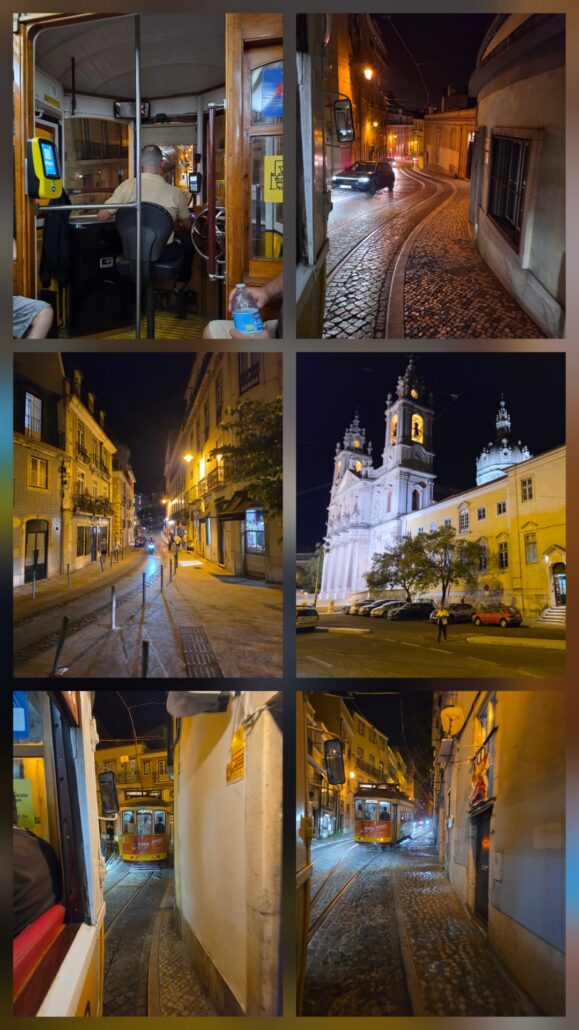
Nighttime in Lisbon is the best time to take the iconic 28 tram. I’ll admit to being a tad disappointed in it. Is it worth the queues? Am not convinced.
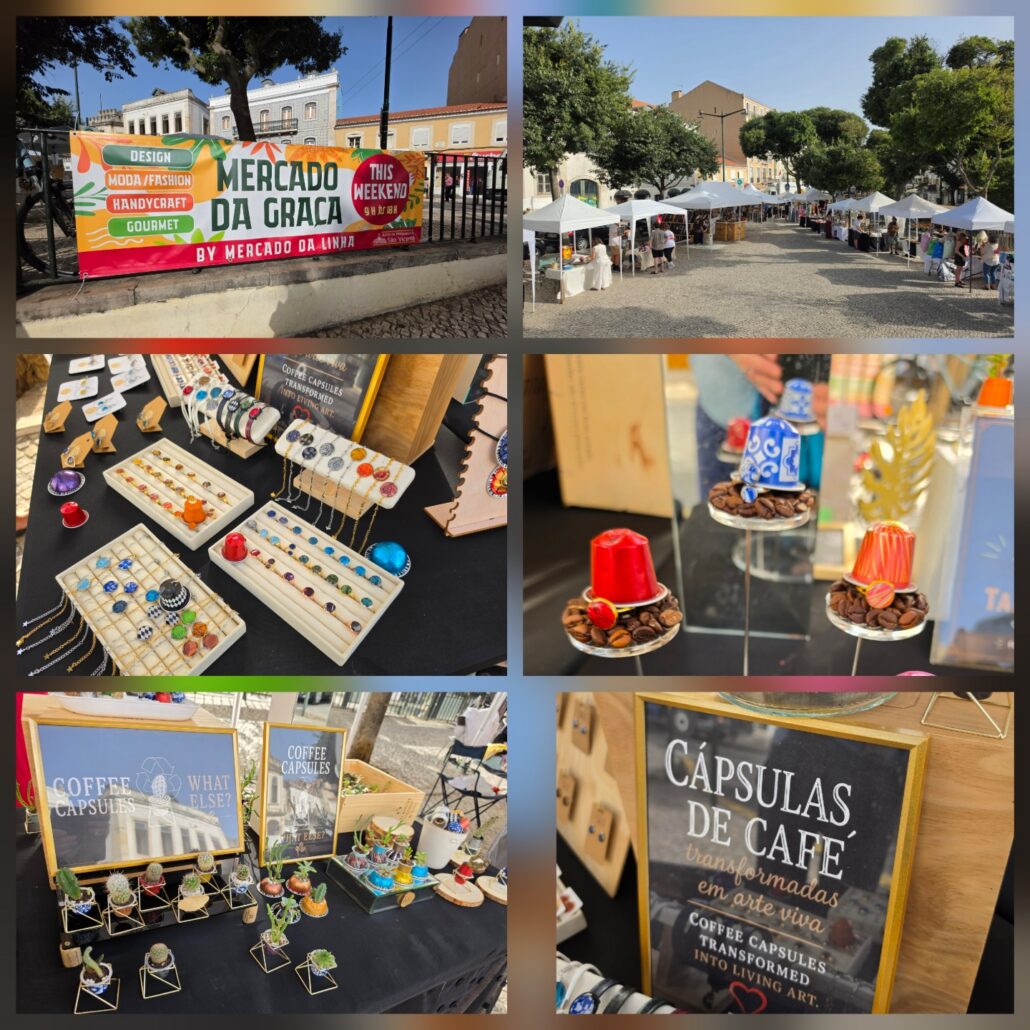
But it is worth taking to see Lisbon’s Cemitério dos Prazeres. And, on a Saturday, you might be lucky enough to pass the Mercado da Graca. Check for dates. Some of the stalls were still setting up when we got there. Lisbon isn’t an early riser. My best pick was the very inventive transformation of coffee capsules into living art. Check them out on Instagram. Mini plants and jewellery.
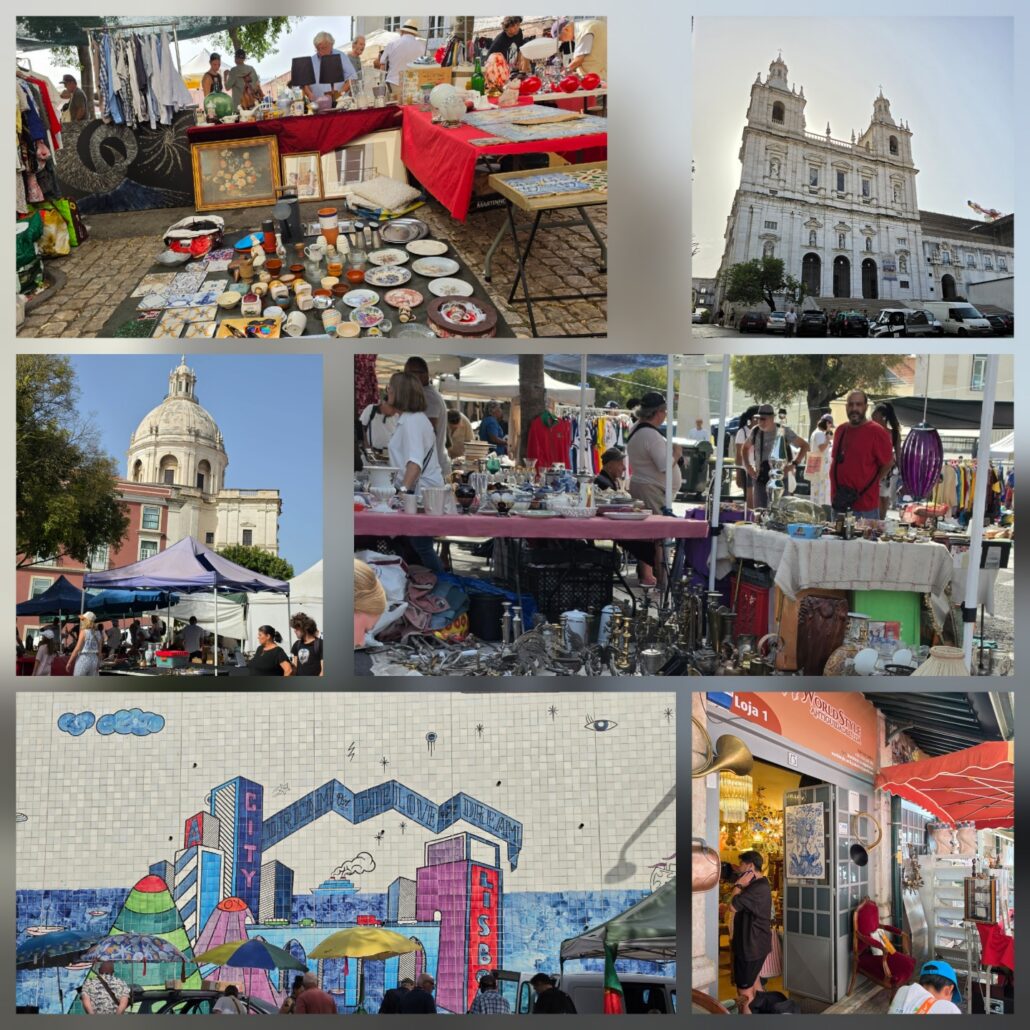
From there, it was on to the Feira da Landra (flea market) in Campo de Santa Clara, behind the monastery of São Vicente de Fora. Not for the first time I cursed the limited baggage allowance but was equally grateful for it, too. I could have done damage. And a tip for fellow dairy-free, gluten-free heads, this is where you want to come for coffee and pastries. A winner.
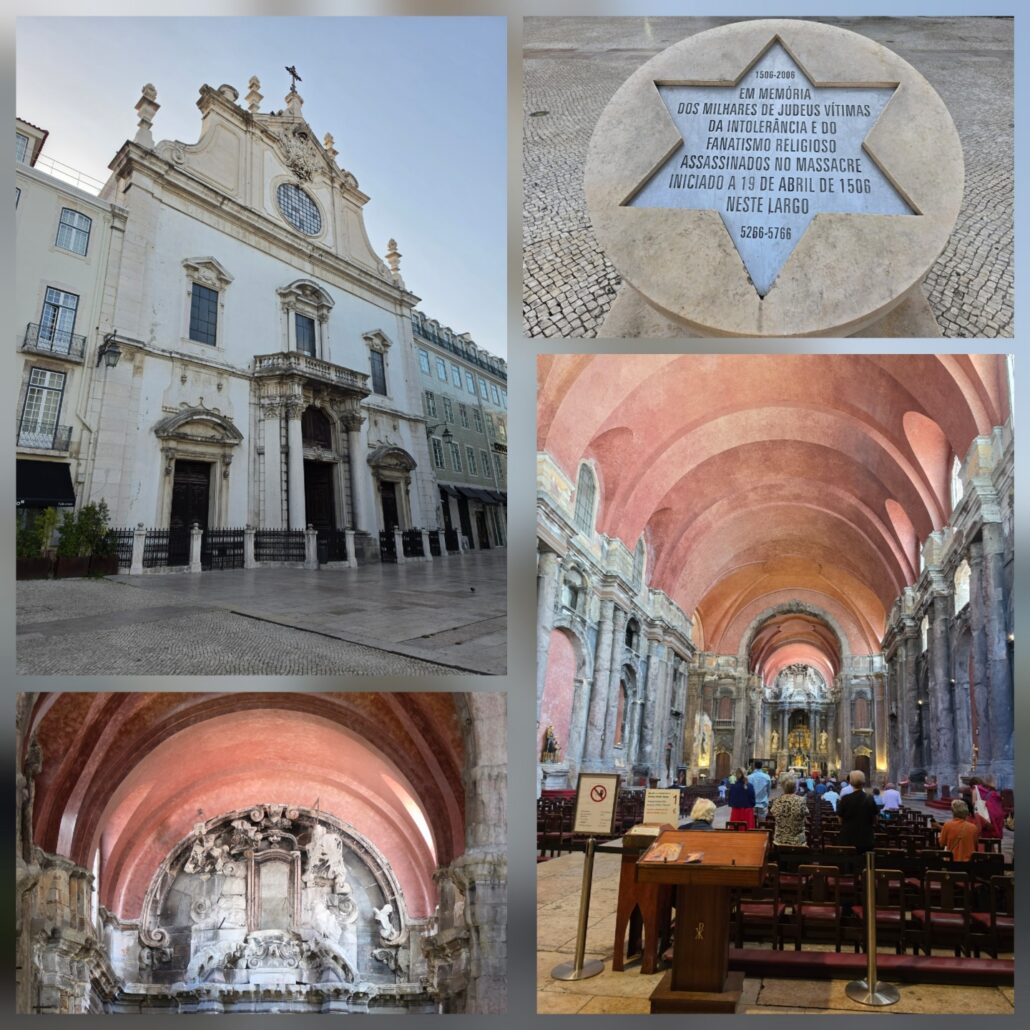
Lisbon is a happy city. Noticeably happy. The multi-ethnic locals are friendly and chatty, and they seem to love their jobs, in marked contrast with other cities I could name. The feeling is contagious. One man, begging outside the 13th-century Igreja de São Domingos (Church of St Dominic), told me he’d take food over money but that he didn’t want anything with sugar in it.
Once the largest church in Lisbon, St Dominic’s survived a bad fire in 1959; the damage is still visible inside. Earlier, it had survived the 1591 earthquake and barely survived the 1755 one. Once home to the Inquisition, it could tell stories if it could talk. In the square outside is a memorial to ‘the 1506 Lisbon massacre when thousands of New Christians (previously converted Jews) were murdered by the Christian mob’.
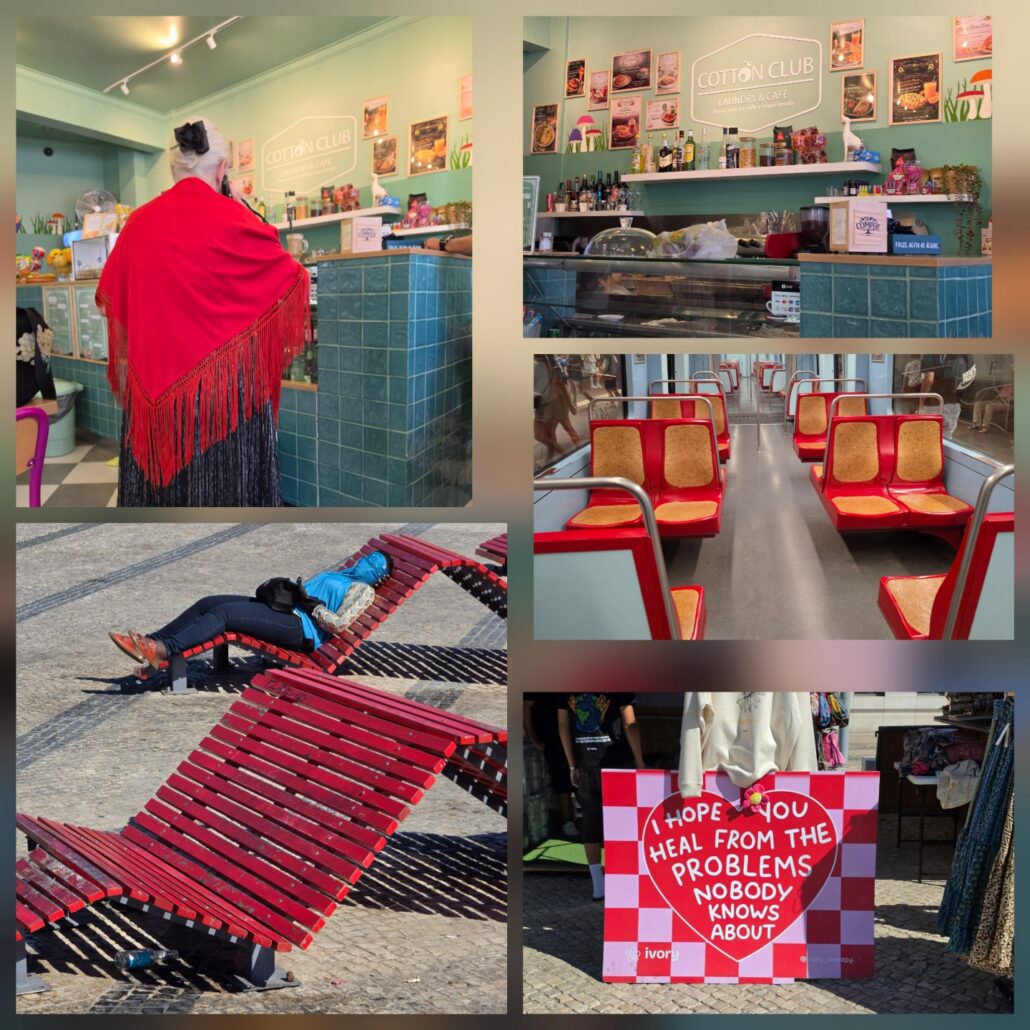
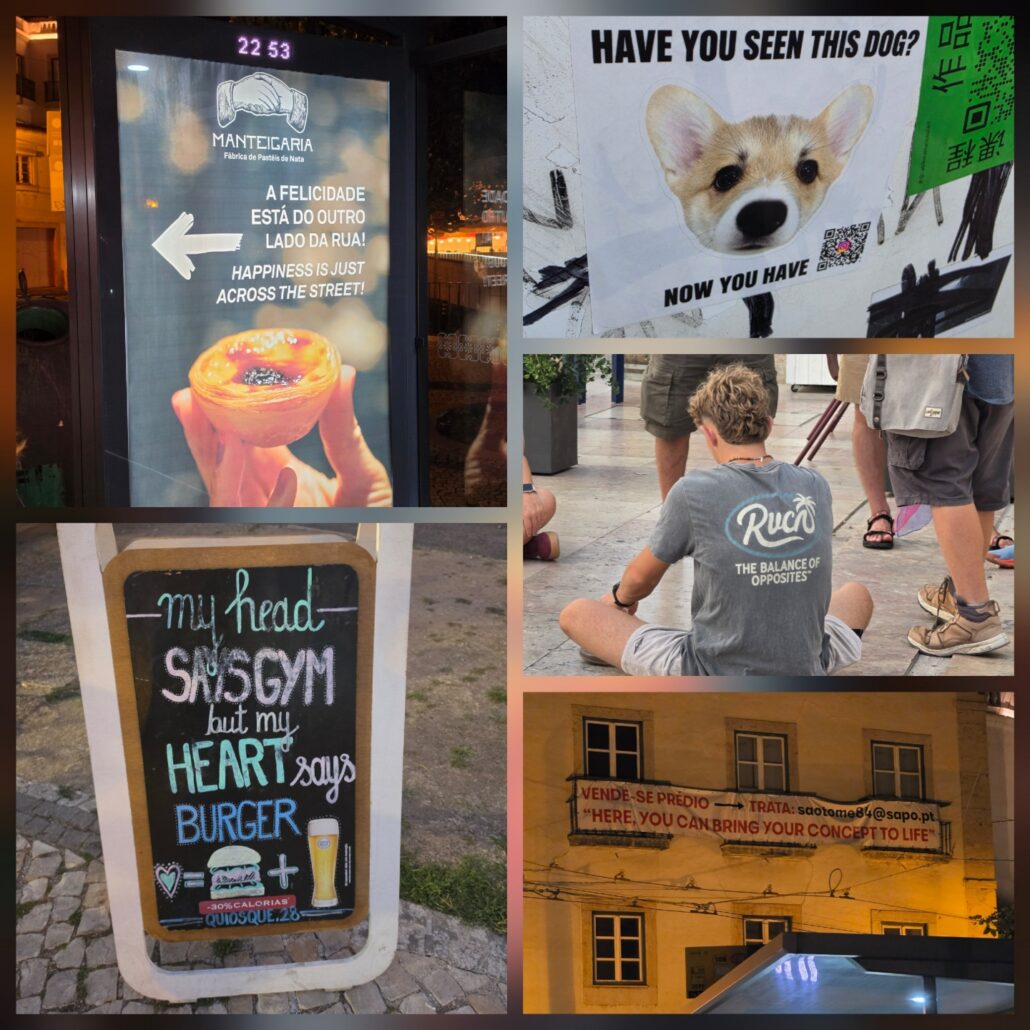
We only saw a fraction of what the city has to offer. Yet everywhere we looked, our eyes caught something interesting. From the cork-inlay metro seats to the beds by the water, and the host of quirky signs.
Recommendations
- For coffee and pastries and a good breakfast (while you’re doing your laundry), head to the Cotton Club Laundry and Café. Rua Andrade, 15/15A, Lisboa, Lisbon, Portugal, 1170-016.
- For wine, we went back twice to see Marco at O Pif. Founded by a French woman, they only serve Portuguese wines and are both knowledgeable and friendly. Rua Maria 43A, 1170-318. Highly recommended.
- For cocktails, definitely LX Rooftop. Above LX Hostel (Piso 3), Rua Rodrigues de Faria 103, Alcântara.
- For a leisurely lunch, you’d be hard pushed to do better than Moderna on Rua dos Correeiros, 230. Big portions of tasty food.
- For a posh dinner, reserve a table (inside or out) at the Cervejaria-liberdade on Avenida da Liberdade 185. They do excellent seafood.
- For a more casual dinner, try Mamma Donna Martim Moniz on Rua Dom Duarte nº4 A. They do a nice line in cocktails, too.
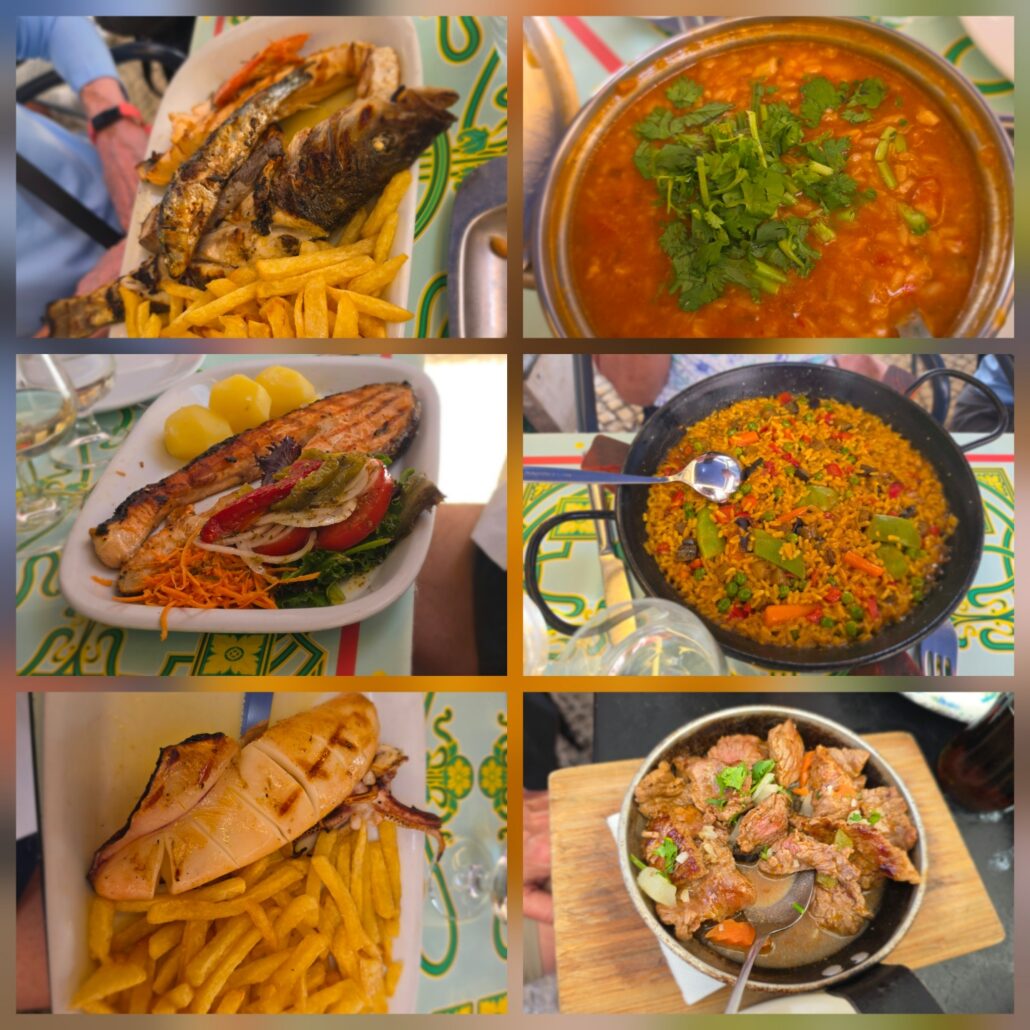
Interestingly, Lisbon is much better at food than Porto. I forgot to take photos of the birthday dinner; I was so taken up with it all. Not a bad thing.
Would I recommend Lisbon?
Absolutely.
We’ll be back.
Public transport is a dream. The people are friendly. The wine is to die for and the food … you can’t get enough of it. Plenty by way of things to do in the city, it’s also the base point for day trips to Sintra, Mafra, Fatima, Ericeira, and so many more places.