

One of the best things about living in Hungary is that it’s within easy access of fascinating destinations that make exploring the wider neighbourhood very appealing. When I have a rare free weekend with no plans whatsoever, my feet start to itch. I could stay home and file. Or sort my socks. Or colour code my library. But if the borders beckon, I can’t resist. I don’t even try.
One of my favourite 36-hour getaways is to cross the Serbian border into Subotica (Szabadka to Hungarians). We caught the 8.05 train from Keleti Station on Saturday morning having booked into the cute little Hotel Gloria in the middle of the city. It’s within walking distance from the station and has its own modest spa that I usually have to myself: a Jacuzzi, steam room, and sauna with complimentary robes, slippers, and towels. The staff there are marvellous: friendly, helpful, and very professional.
Exiting the train station, the view of the art nouveau Raichle House is stunning and but it’s just a taste of what’s to come. The Town Hall and the Synagogue are even more amazing, both built in the same style by Budapest architects Marcell Komor and Dezső Jakab. They’re gobsmackingly gorgeous by day, but even more impressive by night. Sadly, the Zsolnay tile fountain is under wraps for winter. It, too, is magnificent.
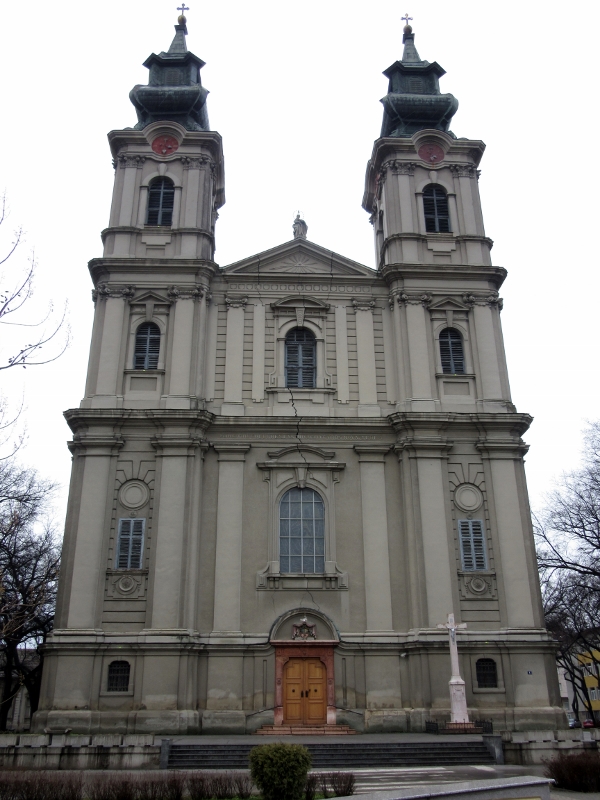
Both the Franciscan Monastery and the Serbian Orthodox Church are worth some time. Both are beautiful. In marked contrast, the Roman Catholic Cathedral has an alarming crack down the façade that conjures up all sorts of terrifying images as to what might happen one day.
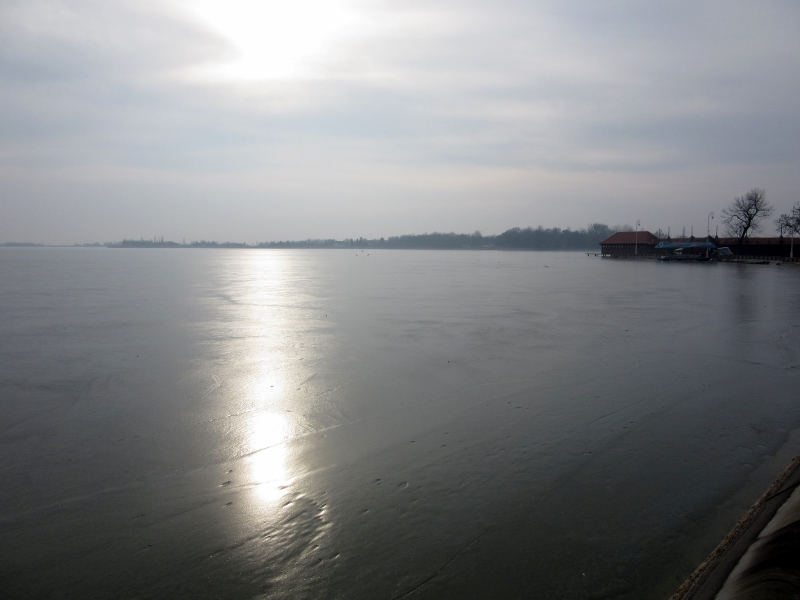
We took the bus out to Palic Lake late afternoon, travelling back in time to days when women in long dresses and parasols strolled around this great expanse of now frozen water. We stopped off at a local pub to the amusement of the Hungarian-speaking locals who were fascinated by an Irish woman (badly) speaking their language in Serbia. And, as always, the warmth of Serbian hospitality melted my bones.
That night, having secured a reservation at Boss Caffe, we ate in style. Zang, their Chinese chef, has been doing great things for Chinese cuisine in the region for about seven years. Most of the menu is Italian, but I’d been dreaming of his eggplant chips and beef fillet with spicy zucchini since my last visit. The restaurant is at the high end of the local market but it’s relatively inexpensive, with service that is unmatched in my experience. Someone should poach Felix and have him set up a training school for wait staff in the rest of the world.
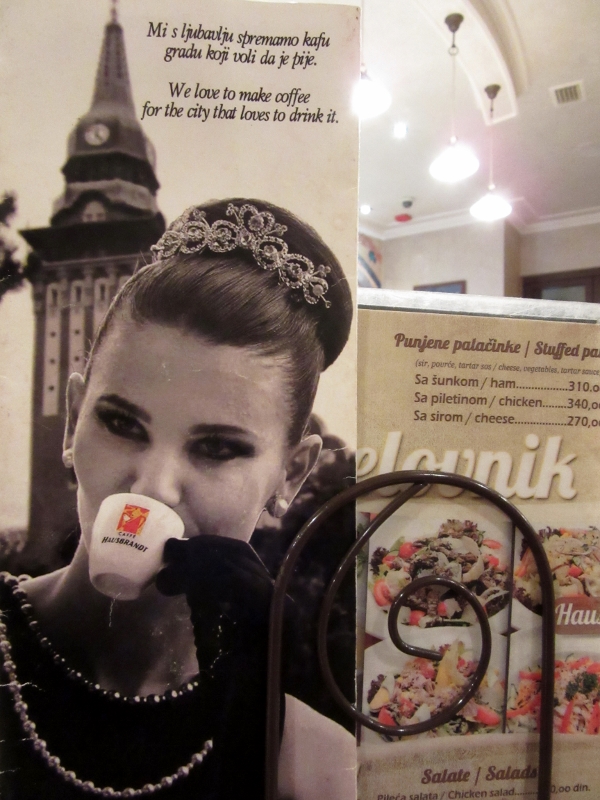
Serbians love their coffee and know how to serve it. The Hausbrandt Caffe does a great trade in imported Italian coffees served with good conversation and a smile and they saw a lot of us. Best Food, a Serbian fast food restaurant that would make a small fortune in franchise, enticed us back twice for their mouth-watering sandwiches and local meats cooked to order by … yes … friendly, efficient staff that negotiated the language barrier with both ease and interest.
We caught the 15.22 train back to Budapest on Sunday having had a lazy morning searching for the new monument to a favourite Hungarian poet, Kosztolányi Dezső. And as had happened on the way in, the train sat for 45 minutes about 100 m out of the station while passports were checked. Then, across the border in Hungary, some 10 km later, we sat for another 45 minutes while passports were checked again and customs did their bit. Disturbingly, this time, the hotel had given us a stamped form that we had to surrender on exit showing that we’d be registered as foreign visitors. A dark patch on an otherwise glorious 36 hours.
First published in the Budapest Times 19 February 2016

2 responses
Note to self: http://www.visitsubotica.rs/en/content/922