Why I love living in Budapest No. 3

I started my countdown of the top ten reasons why I love living in Budapest back in 2010 and never made it quite past No. 4.  That’s not to say that the last year or so hasn’t given me reason to change my mind –  but I’ve hardly been here. I’ve been back a month now, without any trips, and am finally rediscovering what’s so great about. So different. So unique.There is an abbreviation that is bandied about by some in Budapest – OIH – used to describe certain things about life in the city that could happen only in Hungary. Other than the language, methinks that everything that happens here, happens somewhere else as well. I’ve had crap customer service here; I’ve had crap customer service in Ireland. I’ve had to deal with bureauracy here; I’ve had to deal with bureauracy in the States. I’ve heard tales of crooked politicians and dubious deals that could have happened the world over – just with a cast of different actors speaking a different language. I’m under no illusions about this city, or this country; I have my moments of doubt and worry and concern about its future.

The area in front of the theatre’s main entrance stretches like a ship into an artificially constructed expanse of water that is sometimes there.

But I live here by choice. And one of the many reasons I find it so engaging is that so often it simply doesn’t make sense. Just when you think you have a handle on it, it literally defies all reason. Quintus Horatius Flaccus, a Roman poet from about 65 BC suggested we ‘mix a little foolishness with [our] serious plans; it’s lovely to be silly at the right moment.’ The National Theatre is one fine example of how Flaccus was taken literally, by someone. When I first saw it back in 2007, I was pretty impressed at the audacity of it; the brazenness. But as the giant corporates have pitched their offices right next door and are gradually encroaching on the garden-cum-statue park, it simply begs the question: where are the planners?

We architects and urban planners aren’t the visible symbols of oppression, like the military or the police. We’re more sophisticated, more educated, and more socially conscious. We’re the soft cops.

Robert Goodman, After the Planners
 
Tímár József (1902-1960)
Coincidently, I watched Dustin Hoffman play Willy Loman in Arthur Miller’s Death of  Salesman the other night. I remembered seeing the statue of Tímár József’s in the same role a few years back in the gardens of the Nemzeti Színház and went back to see it again. It captures the essence of the character beautifully. In a not-so-rare flight of fancy, this time though, I saw him as even more depressed. More tired. More weary. The big buildings are closing in around him; the green park that once fanned behind him, is now a building site; the wire fence is coming closer and closer as every piece of available land is taken over by commerce.
Willy Loman with Moses in the background
I believe there was a big hue and crywhen this Nemzeti Színház was first envisaged, commissioned, designed, and built. It was before my time. It’s such a shame that it is being hemmed in by glass and concrete. And that the frontage has been lost to nothingness. It’s such a shame that no-one seems to take pride in it; that is has become a national symbol for cronyism and political meddling in the arts. But as John Huston says, in his role of Noah Cross in the movie Chinatown, ‘Politicians, ugly buildings, and whores all get respectable, if they last long enough.’ It’s still worth a visit.

Share:

Sign up here to get an email whenever I post something new.

Never miss a post

More Posts

Medjugorje, Bosnia & Herzegovina

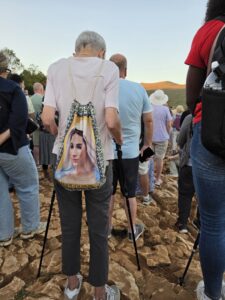
In 1981, something happened in the village of Medjugorje that would change the shape of things to come. Dramatically. Our Lady appeared to six young

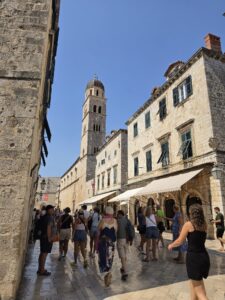
A sunlit historic stone street lined with traditional buildings, green-shuttered windows, and awnings, with a tall stone bell tower rising in the center under a clear blue sky. Tourists walk through the busy pedestrian street.

Dubrovnik, Croatia

For years I’ve been wondering what the hype was about. Put off by stories of massive crowds and an over-touristed old town, it’s taken me

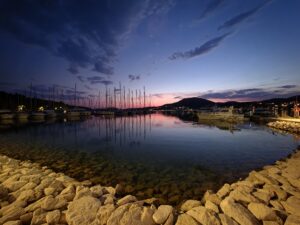
Yacht harbour at sunset with rocks on the foreground and boats with masts in the background. Sunset giving off a pink hue to a dark blue sky

Slano, Croatia

Some 27 km northwest of Dubrovnik lies the village of Slano. Home to fewer than 600 locals, its population swells in the summer months. Boats

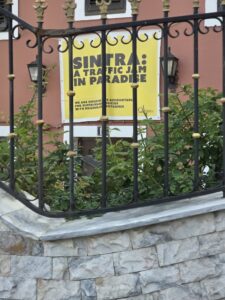
Yellow sign with black writing behind a railing on a red house. Sign reads: Sintra: a traffic jam in paradise. We are holding (?)s accountable for sustainable policies with measurable outcomes

Sintra, Portugal

A few years back, when staying in the lovely Ericeira, we popped over to Sintra to see Pena Palace. I don’t remember much of the

0 responses

  1. Pingback: 2016 Grateful 16

Leave a Reply

Your email address will not be published. Required fields are marked *

This site uses Akismet to reduce spam. Learn how your comment data is processed.

0 responses

  1. Pingback: 2016 Grateful 16

Leave a Reply

Your email address will not be published. Required fields are marked *

This site uses Akismet to reduce spam. Learn how your comment data is processed.