
Tintoretto. What a great name. With a great story. Of course, there’s always the chance it might not be quite true. I heard it from an Irish man who can spin a great yarn. Tintoretto was a nickname (meaning ‘little dyer’) for one Jacopo Robusti, who was born in Venice back in 1519. The way I’ve heard tell it, he considered himself the one true Venetian painter, as he was actually born in the city – the others were mere blow-ins. From what I’ve heard, Tintoretto did something to upset the powers that were and there was no way in Hades that he would ever get a city commission to paint as much as a fence, let alone a church ceiling. This was a tad strange, given that he trained under Titian himself and at the age of 20 was already considered a master.
When the bods at the Scuola di San Rocco were looking for an artist to paint their ceilings and walls, more than one hopeful showed up. From what I gather, Tintoretto was told not to bother. He wasn’t going to be the one hired. But he showed up anyway. On the day, he was the only one not carrying some rolled-up canvases under his arm.
Out of manners, most likely, the bods called him in and asked why he’d bothered to show up. They were commissioning just one small circle in the dome on the understanding that whoever got that commission would paint it all. Tintoretto, so the story goes, or at least the story I heard, calmly went over and pulled a string. Away came a cloth and behind it was the painting St Roch in Glory already painted. A real Blue Peter moment – and a classic ‘here’s something I prepared earlier’.
He stood before them and solemnly bequeathed his painting to the Institute in the name of God, knowing full well that in the fine print in the Deeds of Foundation (or the Venetian equivalent) it had been written that nothing given to it in the name of God could be refused.
For the next 20 years, Tintoretto worked at painting the walls and ceilings. If you see nothing else in Venice, the Sala Capitolare in the La Scuola Grande di San Rocco is not to be missed. Words can’t describe the magnificence of it all. And my camera phone doesn’t do it justice.


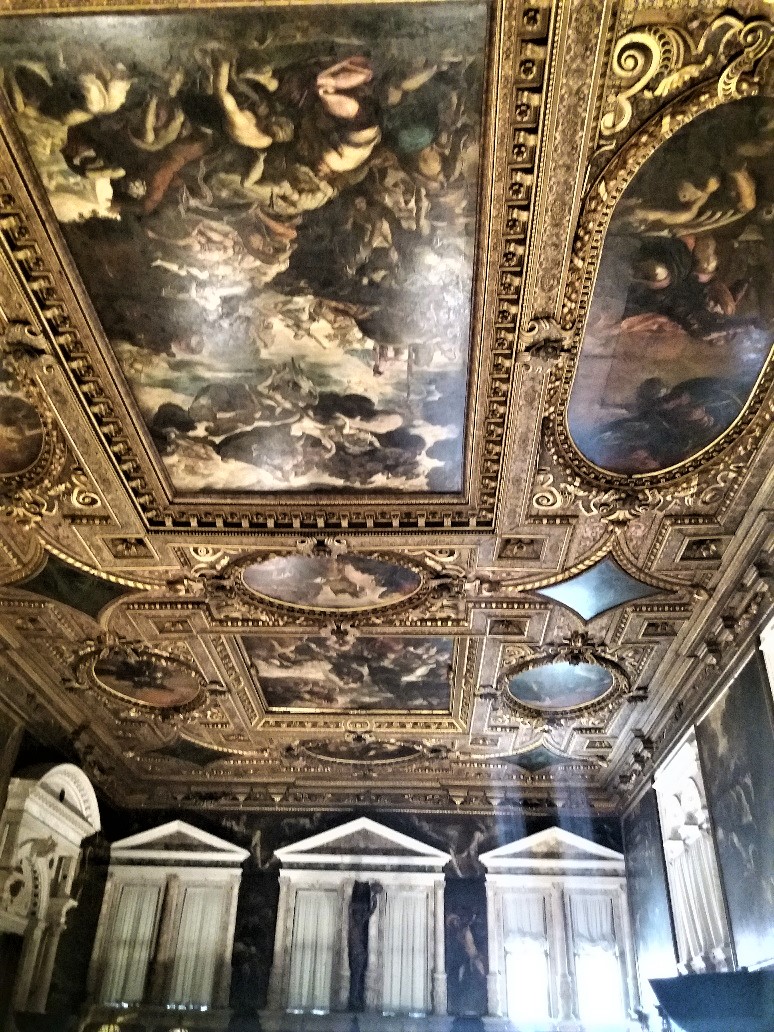
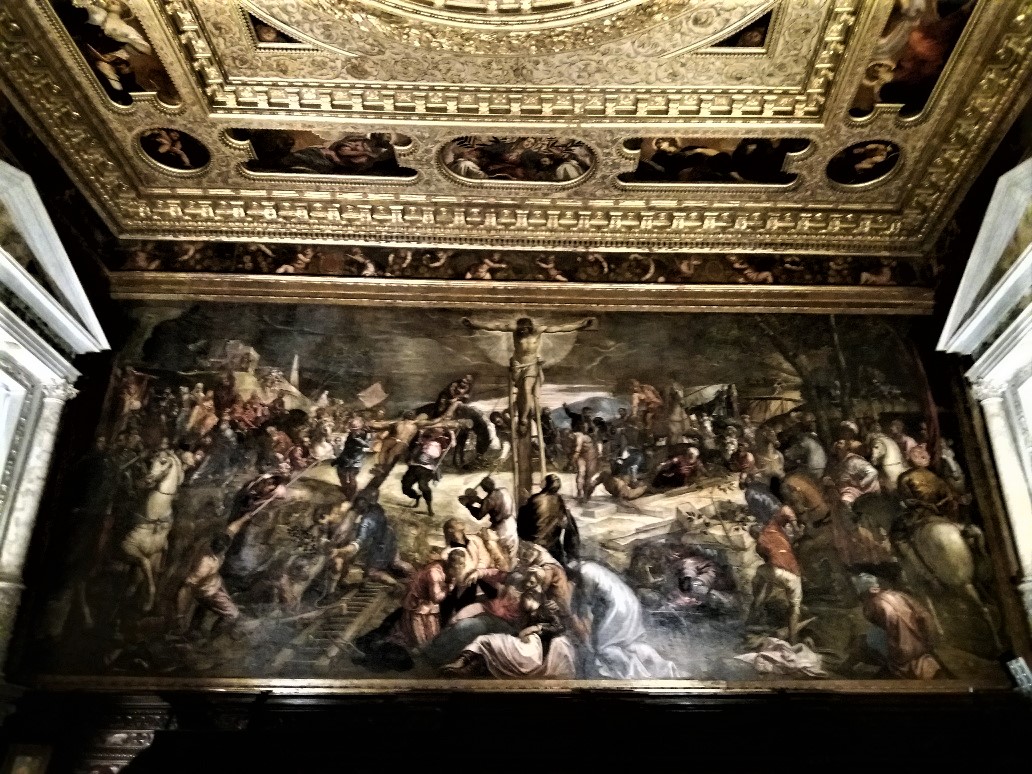
His painting of the Crucifixion is quite something. You could lose yourself in it and not notice the time passing by. And, if the paintings themselves weren’t enough, the wooden allegoric sculptures by Pianta that surround the room add a sense of otherness that is compelling.


St Roch is the patron saint of plague victims – and back in the sixteenth century when his type of miracle was often needed, the money poured in. Granted a special title of Arch-Confraternity by Pope Pius VI, it was the only one of its ilk to survive the fall of the Republic. Today, it has 300 members who continue its charitable works as well as look after its artistic heritage.
Admission €10. Water-bus to S. Toma. San Polo, 3052 – 30125 Venezia. Website. Open 9.30 to 5.30 with the last admission at 4.30 pm.


5 responses